
Spice1 recipes
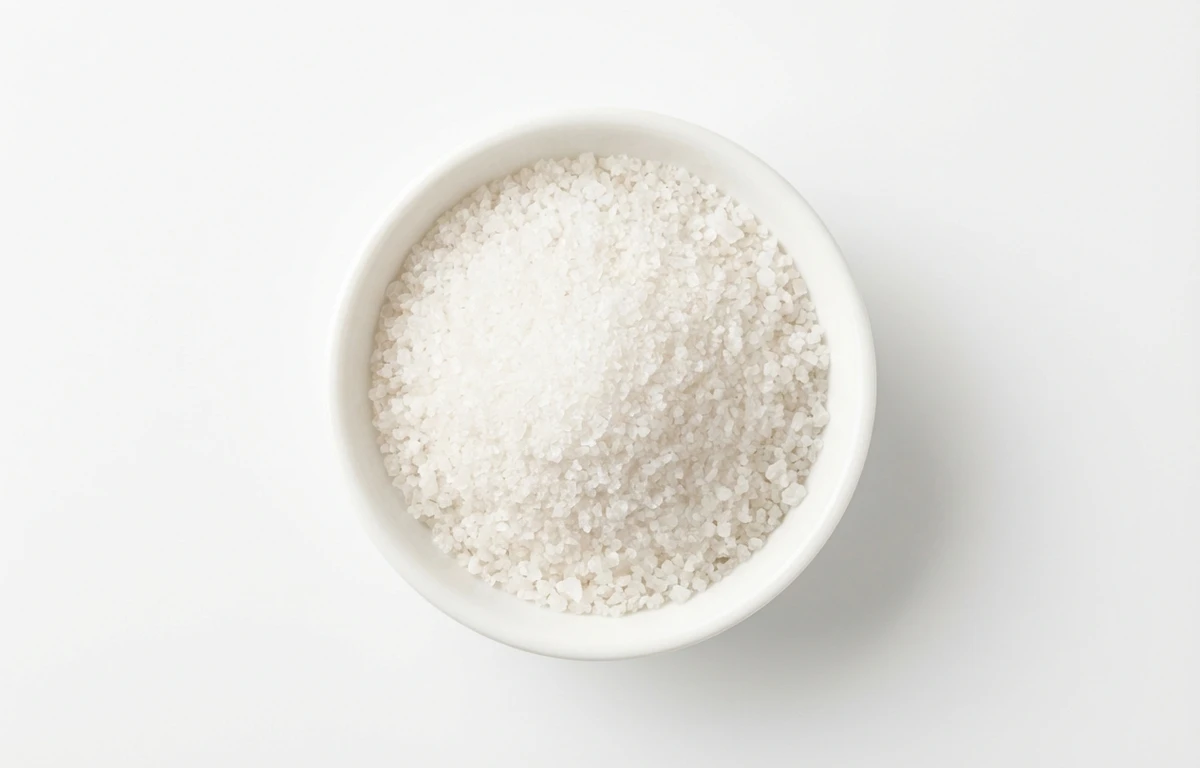
non-iodized salt.
VegetarianVeganGluten-freeDairy-freeNut-freePeanut-freeSoy-freeEgg-freeShellfish-freeHoney-freeAlcohol-freeHalalKosher
SERVING
CALORIES
0
PROTEIN
0g
CARBS
0g
FAT
0g
FIBER
0g
NUTRITION PROFILE · per 100 g
Everything in this ingredient.
MACRONUTRIENTS
Calories0kcal—
Protein0g0%
Carbohydrates0g0%
Fiber0g0%
Sugar0g0%
Total fat0g0%
Saturated fat0g0%
Trans fat0g—
Cholesterol0mg0%
Water0.20g—
MINERALS
Sodium38758mg1685%
Potassium8.0mg0%
Calcium24mg2%
Iron0.30mg2%
Magnesium1.0mg0%
Phosphorus0mg0%
Zinc0.10mg1%
Copper0.03mg3%
Manganese0.10mg4%
Selenium0.10µg0%
VITAMINS
Vitamin A0µg0%
Vitamin C0mg0%
Vitamin D0µg0%
Vitamin E0mg0%
Vitamin K0µg0%
Thiamin (B1)0mg0%
Riboflavin (B2)0mg0%
Niacin (B3)0mg0%
Pantothenic acid (B5)0mg0%
Vitamin B60mg0%
Folate (B9)0µg0%
Vitamin B120µg0%
%DV based on a 2,000 cal diet. Source: USDA FoodData Central. A dash in the %DV column means there’s no established Daily Value for that nutrient.
MEASUREMENT CONVERSIONS
How much is what.
1 cup292g
1 tablespoon18g
1 teaspoon6g
1 ml1.2g
1 liter1200g
HEALTH BENEFITS
Why eat it.
- ✓Essential for maintaining proper fluid balance and hydration in the body.
- ✓Plays a crucial role in nerve impulse transmission and muscle function.
- ✓Aids in the regulation of blood volume and blood pressure.
- ✓Helps with the absorption of certain nutrients in the small intestine.
COOKING TIPS
In the kitchen.
- 1Ideal for pickling, canning, and fermenting, as the lack of iodine prevents discoloration and cloudy brine.
- 2Preferred for brining meats and poultry due to its pure, clean flavor without any potential bitterness from additives.
- 3Use as a finishing salt to add texture and a burst of pure saline flavor to dishes just before serving.
- 4In baking, especially with yeast, it is a good choice as iodine can sometimes inhibit yeast activity.
STORAGE
Keep it fresh.
- Store in an airtight container in a cool, dry place to prevent clumping from moisture absorption.
- Non-iodized salt has an indefinite shelf life as it is a mineral and does not spoil.
FAQ
Frequently asked questions.
Is non-iodized salt healthy?
Non-iodized salt is essential for several bodily functions, including maintaining fluid balance, nerve transmission, and muscle function. However, like all salts, it is high in sodium, and excessive intake can contribute to high blood pressure and other health issues. It should be consumed in moderation as part of a balanced diet.
What are the health benefits of non-iodized salt?
Non-iodized salt is crucial for maintaining proper fluid balance and hydration in the body. It plays a vital role in nerve impulse transmission and muscle function, aids in the regulation of blood volume and blood pressure, and helps with the absorption of certain nutrients in the small intestine.
What are the nutritional facts for non-iodized salt?
Per 100g, non-iodized salt contains 0 calories, 0g protein, 0g carbohydrates, and 0g fat. Its primary component is sodium chloride, which is a mineral and does not provide macronutrients.
Is non-iodized salt vegan or gluten-free?
Yes, non-iodized salt is both vegan and gluten-free. It is a naturally occurring mineral compound and does not contain any animal products or gluten-containing ingredients.
Can people with specific dietary needs, like diabetics, use non-iodized salt?
Yes, diabetics can use non-iodized salt. Salt itself does not directly impact blood sugar levels. However, all individuals, including diabetics, should monitor their overall sodium intake to manage blood pressure and cardiovascular health.
What are the common uses for non-iodized salt in cooking?
Non-iodized salt is widely used for general seasoning in cooking and baking. It is particularly favored for pickling, brining, and fermenting, as the absence of iodine can prevent discoloration and off-flavors in preserved foods.
What is the main difference between iodized and non-iodized salt?
The primary difference is the presence of iodine. Iodized salt has small amounts of potassium iodide or sodium iodide added to help prevent iodine deficiency, which can lead to thyroid issues. Non-iodized salt does not contain this added iodine.
How should non-iodized salt be stored to maintain its quality?
Non-iodized salt should be stored in a cool, dry place in an airtight container. This prevents moisture absorption, which can cause the salt to clump, and protects it from absorbing odors from other foods.
Does non-iodized salt expire?
No, non-iodized salt does not expire. As a stable mineral compound, it has an indefinite shelf life. While it won't spoil, it can absorb moisture and clump over time, but this does not affect its safety or effectiveness.
Is non-iodized salt the same as kosher salt or sea salt?
Not necessarily, but many kosher salts and sea salts are non-iodized. 'Non-iodized' refers to the absence of added iodine, while 'kosher salt' describes its crystal structure (larger, flaky) and 'sea salt' indicates its origin from evaporated seawater, often containing trace minerals.
RECIPES
Cook with non-iodized salt.
1 recipes · sorted by what’s quick



















