
Other4 recipes
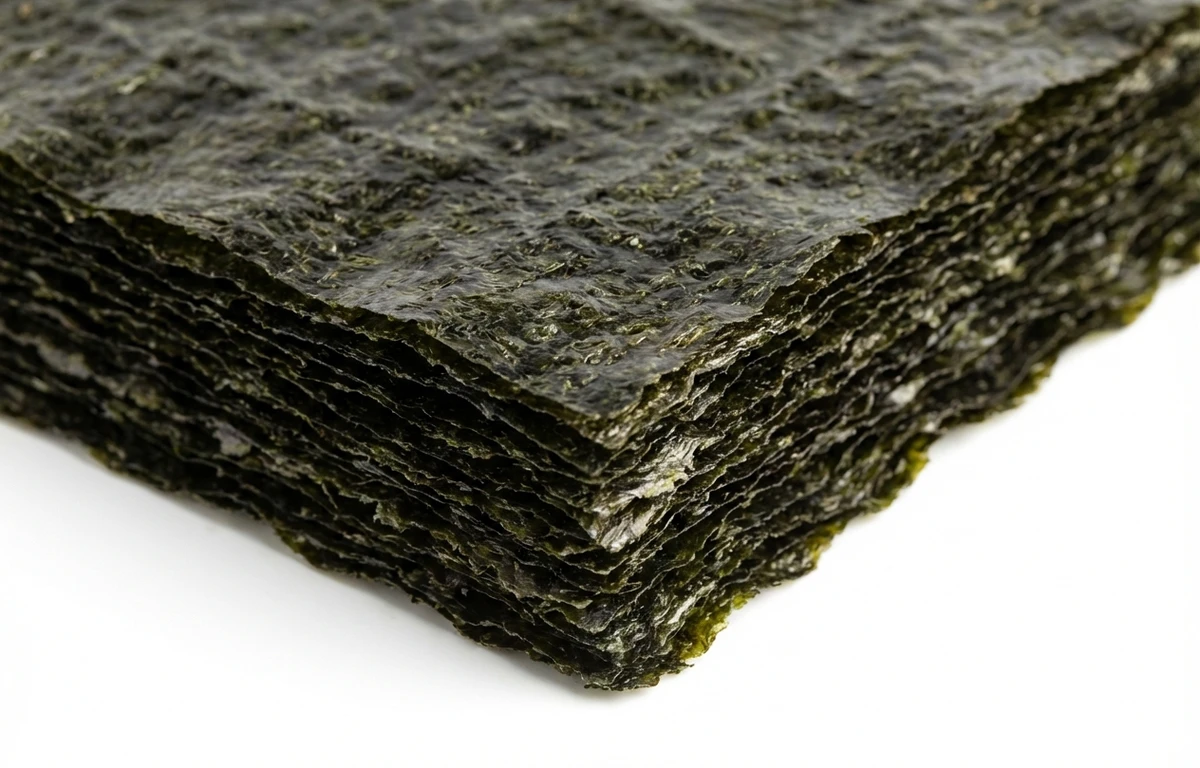
nori sheets.
VegetarianVeganGluten-freeDairy-freeNut-freePeanut-freeSoy-freeEgg-freeShellfish-freeHoney-freeAlcohol-free
ALSO KNOWN AS
laverのり (nori)海苔 (hǎitái)नोरी (Nori)seaweed sheetsdried seaweedroasted seaweed
SERVING
CALORIES
350
PROTEIN
30.6g
CARBS
47.5g
FAT
2.7g
FIBER
31.7g
This ingredient is flagged as naturally gluten-free. Per 100 g, it provides 60 µg of vitamin K.
NUTRITION PROFILE · per 100 g
Everything in this ingredient.
MACRONUTRIENTS
Calories350kcal—
Protein30.6g61%
Carbohydrates47.5g17%
Fiber31.7g113%
Sugar0g0%
Total fat2.7g3%
Saturated fat0.60g3%
Cholesterol0mg0%
Water8.5g—
MINERALS
Sodium1040mg45%
Potassium2680mg57%
Calcium280mg22%
Iron6.7mg37%
Magnesium360mg86%
Phosphorus280mg22%
Zinc2.2mg20%
Copper0.30mg33%
Manganese1.6mg70%
Selenium3.5µg6%
Iodine110µg73%
VITAMINS
Vitamin A390µg43%
Vitamin C11.1mg12%
Vitamin D0µg0%
Vitamin E1.0mg7%
Vitamin K60µg50%
Thiamin (B1)0.30mg25%
Riboflavin (B2)0.40mg31%
Niacin (B3)3.0mg19%
Pantothenic acid (B5)0.80mg16%
Vitamin B60.10mg6%
Folate (B9)180µg45%
Vitamin B1230µg1250%
%DV based on a 2,000 cal diet. Source: USDA FoodData Central. A dash in the %DV column means there’s no established Daily Value for that nutrient.
MEASUREMENT CONVERSIONS
How much is what.
1 piece3g
HEALTH BENEFITS
Why eat it.
- ✓Excellent source of iodine, which is crucial for healthy thyroid function.
- ✓Contains a unique type of soluble fiber that can support gut health and aid in digestion.
- ✓Provides a plant-based source of omega-3 fatty acids (EPA), which are beneficial for heart and brain health.
- ✓Good source of various minerals like iron, calcium, and potassium.
COOKING TIPS
In the kitchen.
- 1For a crispier texture and enhanced nutty flavor, lightly toast the nori sheet by quickly passing it over a gas flame or a hot, dry skillet for a few seconds.
- 2Use kitchen scissors to easily cut nori into thin strips (kizami nori) for garnishing soups, noodles, and rice bowls.
- 3When making sushi rolls (maki), place the rice on the rougher side of the nori sheet, as it helps the rice adhere better. The shiny side should face out.
- 4Crumble or grind toasted nori sheets and mix with sesame seeds and salt to create a simple homemade furikake seasoning.
STORAGE
Keep it fresh.
- Keep nori sheets in their original resealable package with the desiccant packet inside to absorb moisture.
- Store in a cool, dark, and dry place like a pantry. Avoid refrigeration, as condensation can make them soggy.
- Once opened, consume within a few weeks for the best crispy texture, as they can absorb humidity from the air and become chewy.
FAQ
Frequently asked questions.
What are the nutritional benefits of nori, and how many calories does it have?
Nori is packed with nutrients, offering protein, fiber, and essential minerals like iron, calcium, and potassium. Per 100g, it contains approximately 350 calories, 30.6g protein, 47.5g carbs, and 2.7g fat. However, a typical serving (e.g., one sheet) is much smaller, contributing very few calories.
Is nori vegan and gluten-free?
Yes, nori is both vegan and naturally gluten-free. It is made from dried seaweed, a plant-based ingredient, and contains no animal products or gluten-containing grains. This makes it suitable for a wide range of dietary preferences.
How do you use nori sheets in cooking?
Nori sheets are most famously used to wrap sushi and onigiri. They can also be crumbled over salads, soups, or rice bowls as a garnish, or cut into strips for a savory snack. Lightly toasting them can enhance their flavor and crispness.
What does nori taste like?
Nori has a distinct umami flavor, often described as savory, slightly salty, and subtly oceanic. When toasted, it becomes crispier and develops a nuttier, more intense flavor. It complements a variety of dishes, adding depth and a unique aroma.
How should I store nori sheets to keep them fresh?
To maintain freshness and crispness, store nori sheets in an airtight container in a cool, dark, and dry place. Exposure to humidity will make them soft and chewy. Many packages include a desiccant packet, which should be kept with the sheets.
Can you eat nori sheets raw?
Yes, nori sheets are typically consumed 'raw' in the sense that they are not cooked with heat like other vegetables. They are usually dried and lightly toasted during processing, making them ready to eat directly from the package for sushi, snacks, or garnishes.
RECIPES
Cook with nori sheets.
4 recipes · sorted by what’s quick



















