
Nut Seed
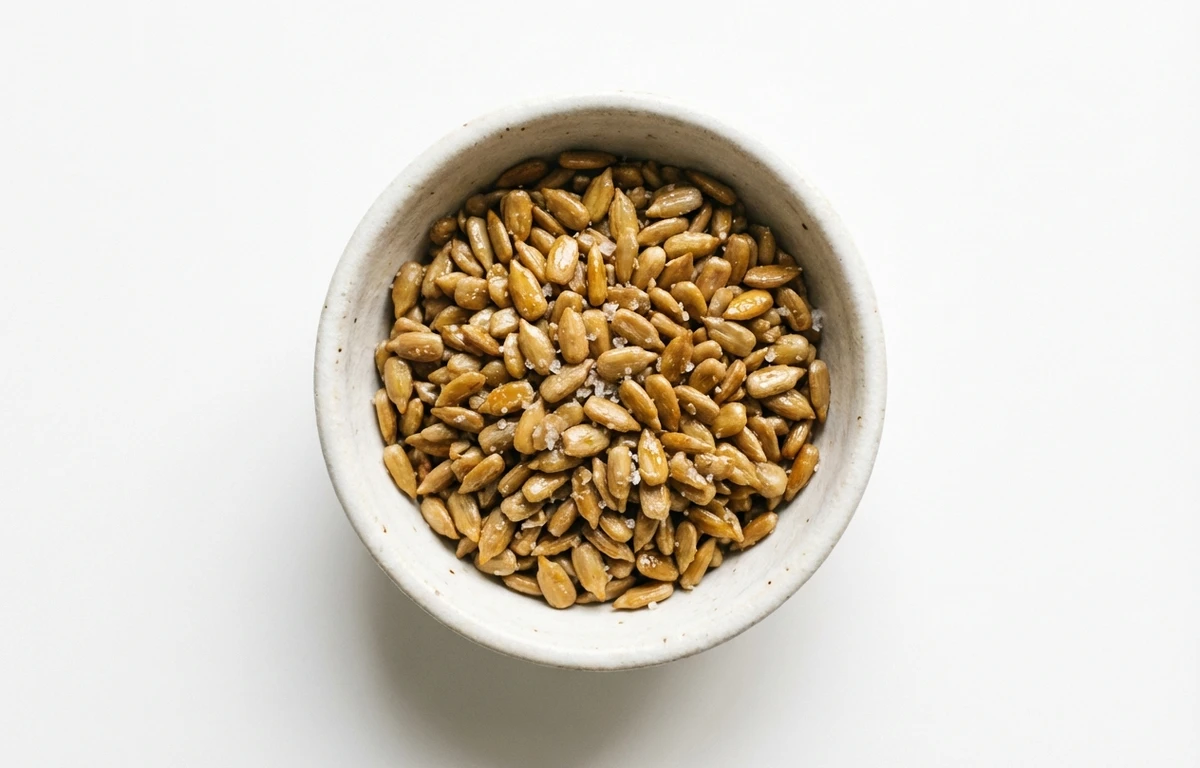
oil roasted salted sunflower seed kernels.
VegetarianVeganGluten-freeDairy-freeNut-freePeanut-freeEgg-freeShellfish-freeHoney-freeAlcohol-free
SERVING
CALORIES
592
PROTEIN
20.1g
CARBS
22.9g
FAT
51.3g
FIBER
10.6g
NUTRITION PROFILE · per 100 g
Everything in this ingredient.
MACRONUTRIENTS
Calories592kcal—
Protein20.1g40%
Carbohydrates22.9g8%
Fiber10.6g38%
Sugar3.1g6%
Total fat51.3g66%
Saturated fat7.1g35%
Trans fat0.16g—
Cholesterol0mg0%
Water1.5g—
MINERALS
Sodium303mg13%
Potassium483mg10%
Calcium87mg7%
Iron4.3mg24%
Magnesium127mg30%
Phosphorus1139mg91%
Zinc5.2mg47%
Copper1.8mg200%
Manganese2.1mg90%
Selenium78.2µg142%
VITAMINS
Vitamin A0µg0%
Vitamin C1.1mg1%
Vitamin D0µg0%
Vitamin E36.3mg242%
Vitamin K3.1µg3%
Thiamin (B1)0.32mg27%
Riboflavin (B2)0.28mg22%
Niacin (B3)4.1mg26%
Pantothenic acid (B5)6.9mg139%
Vitamin B60.79mg46%
Folate (B9)234µg59%
Vitamin B120µg0%
%DV based on a 2,000 cal diet. Source: USDA FoodData Central. A dash in the %DV column means there’s no established Daily Value for that nutrient.
MEASUREMENT CONVERSIONS
How much is what.
1 cup135g
1 tablespoon8.4g
1 teaspoon2.8g
1 ml0.6g
1 liter562.5g
HEALTH BENEFITS
Why eat it.
- ✓Excellent source of Vitamin E, a powerful antioxidant that protects cells from oxidative damage.
- ✓Rich in healthy monounsaturated and polyunsaturated fats, which support heart health.
- ✓High in selenium, a mineral essential for thyroid function and DNA synthesis.
- ✓Good source of magnesium, which plays a role in blood pressure regulation and bone health.
COOKING TIPS
In the kitchen.
- 1Sprinkle over salads, yogurt, oatmeal, or soups for a nutritious crunch.
- 2Incorporate into homemade granola, trail mixes, or baked goods like muffins and breads.
- 3Use as a nut-free alternative to pine nuts when making pesto.
- 4Blend in a food processor to create homemade sunflower seed butter (sunbutter).
STORAGE
Keep it fresh.
- Store in an airtight container in a cool, dark place like a pantry for up to 3 months.
- To extend freshness and prevent the oils from going rancid, refrigerate or freeze for up to one year.
FAQ
Frequently asked questions.
Are oil roasted salted sunflower seed kernels healthy?
Yes, they are packed with nutrients like Vitamin E, healthy fats, selenium, and magnesium, supporting heart health and providing antioxidant benefits. However, due to being oil-roasted and salted, they are high in calories, fat, and sodium, so moderation is key.
What are the main nutritional benefits of sunflower seed kernels?
Sunflower seed kernels are an excellent source of Vitamin E, a powerful antioxidant, and healthy monounsaturated and polyunsaturated fats beneficial for heart health. They also provide essential minerals like selenium for thyroid function and magnesium for blood pressure regulation.
How many calories and how much protein are in 100g of oil roasted salted sunflower seed kernels?
100g of oil roasted salted sunflower seed kernels contains approximately 592 calories and 20.06g of protein. They are also rich in healthy fats, providing a significant energy boost.
Are oil roasted salted sunflower seed kernels gluten-free?
Yes, sunflower seeds are naturally gluten-free. However, if you have a severe gluten allergy, always check the product label to ensure there's no cross-contamination during processing or packaging.
Are oil roasted salted sunflower seed kernels keto-friendly?
With approximately 22.89g of carbohydrates per 100g, they can be consumed in moderation on a keto diet, but portion control is crucial. Their high fat and protein content makes them a good option for adding healthy fats to a low-carb regimen.
Are oil roasted salted sunflower seed kernels vegan?
Yes, sunflower seed kernels are entirely plant-based and suitable for a vegan diet. They are a great source of protein and healthy fats for those following a plant-based lifestyle.
How can I use oil roasted salted sunflower seed kernels in my diet?
They make a great standalone snack, can be sprinkled over salads, yogurt, or oatmeal for added crunch and nutrition. You can also incorporate them into baked goods like muffins or bread, or use them as a topping for stir-fries and soups.
What do oil roasted salted sunflower seed kernels taste like?
They have a distinct nutty, slightly earthy flavor with a satisfying crunch. The oil roasting enhances their richness, and the added salt provides a savory kick, making them a popular snack.
How should I store oil roasted salted sunflower seed kernels to maintain freshness?
Store them in an airtight container in a cool, dark, and dry place, such as a pantry. For extended freshness, especially in warmer climates, you can store them in the refrigerator or freezer to prevent rancidity.
How long do oil roasted salted sunflower seed kernels typically last?
When stored properly in a cool, dry place, they can last for several months, typically 3-6 months. Refrigeration can extend their shelf life even further, up to a year, by slowing down the oxidation of their healthy fats.



















