
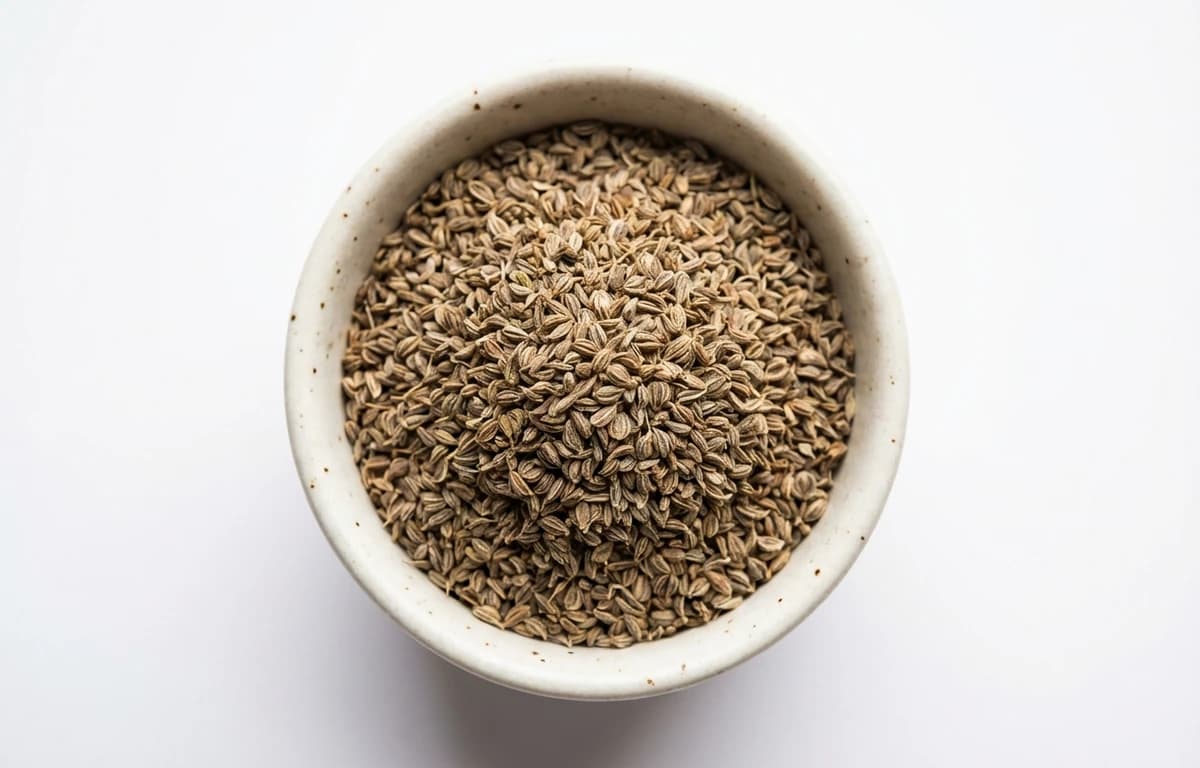
omum
Also known as: ajwain, carom seeds, bishop's weed, thymol seeds, vamu, omam, javane
Loading...
Also known as: ajwain, carom seeds, bishop's weed, thymol seeds, vamu, omam, javane
Per 100g
Nutrition data source: USDA FoodData Central
Common measurement equivalents in grams
When stored in an airtight container in a cool, dry place, whole omum seeds can last for up to 12 months. The flavor and aroma will gradually diminish over time.
Look for seeds that are olive green to light brown in color. They should have a very strong, pungent, thyme-like aroma. Avoid seeds that look dusty or have no scent.
Dried thyme is the closest substitute due to the shared thymol content. Alternatively, you can use dried oregano or caraway seeds, though the flavor profile will slightly change.
It is usually used whole. For better flavor extraction, lightly crush the seeds or dry roast them. It is often added to hot oil or ghee as part of a 'tadka' (tempering).
Omum is believed to improve digestion and metabolism. Drinking 'omum water' (seeds soaked or boiled in water) is a traditional remedy used to support weight management.
Yes, it can be chewed raw, often after meals as a digestive aid, though it has a very strong, sharp, and slightly bitter taste.
It is widely used in Indian snacks like pakoras, samosas, and parathas. It is also a key ingredient in many lentil (dal) preparations and savory crackers.
In culinary amounts, it is generally safe. However, pregnant women should avoid medicinal or excessive amounts as it may stimulate the uterus. Consult a doctor for medicinal use.
omum is a versatile ingredient found in cuisines around the world. With 305 calories per 100g and 16 grams of protein, it's a nutritious addition to many dishes.
Explore more ingredients in the spice category with complete nutrition information.
View all spice →