Vegetable1 recipes
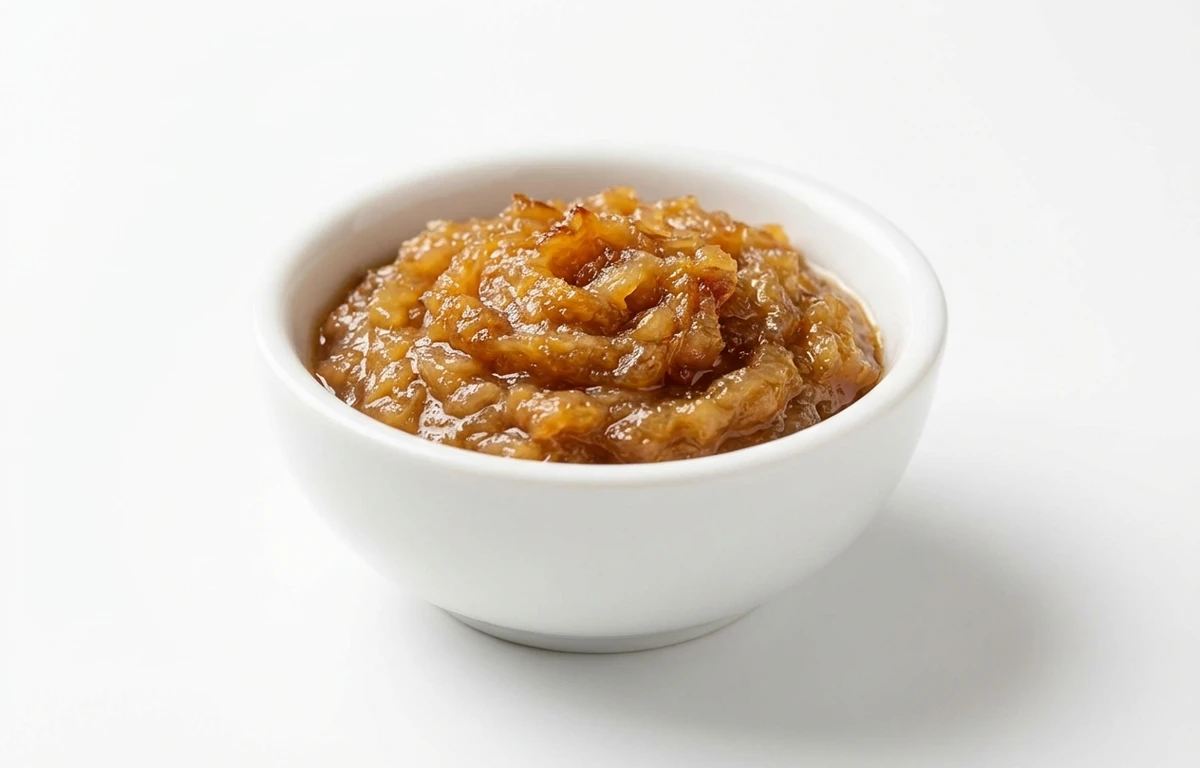
onion paste.
VegetarianVeganGluten-freeDairy-freeNut-freePeanut-freeSoy-freeEgg-freeShellfish-freeHoney-freeAlcohol-free
ALSO KNOWN AS
pyaj ka pastepyaaz pasteblended onionpureed onionground oniononion puree
SERVING
CALORIES
40
PROTEIN
1.1g
CARBS
9.3g
FAT
0.10g
FIBER
1.7g
This ingredient is flagged as naturally gluten-free. Per 100 g, it provides 0.40 µg of vitamin K.
NUTRITION PROFILE · per 100 g
Everything in this ingredient.
MACRONUTRIENTS
Calories40kcal—
Protein1.1g2%
Carbohydrates9.3g3%
Fiber1.7g6%
Sugar4.2g8%
Total fat0.10g0%
Saturated fat0.04g0%
Trans fat0g—
Cholesterol0mg0%
Water89.1g—
MINERALS
Sodium4.0mg0%
Potassium146mg3%
Calcium23mg2%
Iron0.21mg1%
Magnesium10mg2%
Phosphorus29mg2%
Zinc0.17mg2%
Copper0.04mg4%
Manganese0.13mg6%
Selenium0.50µg1%
VITAMINS
Vitamin A0µg0%
Vitamin C7.4mg8%
Vitamin D0µg0%
Vitamin E0.02mg0%
Vitamin K0.40µg0%
Thiamin (B1)0.05mg4%
Riboflavin (B2)0.03mg2%
Niacin (B3)0.12mg1%
Pantothenic acid (B5)0.12mg2%
Vitamin B60.12mg7%
Folate (B9)19µg5%
Vitamin B120µg0%
%DV based on a 2,000 cal diet. Source: USDA FoodData Central. A dash in the %DV column means there’s no established Daily Value for that nutrient.
MEASUREMENT CONVERSIONS
How much is what.
1 cup252g
1 tablespoon15.8g
1 teaspoon5.3g
1 oz28.4g
1 lb453.6g
1 ml1.1g
1 liter1050g
HEALTH BENEFITS
Why eat it.
- ✓Supports heart health by managing blood pressure
COOKING TIPS
In the kitchen.
- 1Sauté on medium-low heat until the raw smell disappears and it turns golden brown
- 2Add a pinch of salt while frying to help release moisture and speed up browning
- 3Use as a base for Indian gravies and curries to achieve a smooth, thick texture
STORAGE
Keep it fresh.
- Store in an airtight container in the refrigerator for up to 3 days
- Freeze in ice cube trays for up to 3 months for easy portioning
- Add a thin layer of oil on top of the paste to prevent oxidation and browning
FAQ
Frequently asked questions.
How long does onion paste last in the fridge?
Fresh onion paste lasts for 2-3 days in the refrigerator when stored in an airtight container.
Can I freeze onion paste?
Yes, onion paste freezes very well. It is best to freeze it in ice cube trays and then transfer the cubes to a freezer bag for up to 3 months.
Why does my onion paste taste bitter?
Bitterness can occur if the onions are over-blended at high speeds, which releases sulfur compounds, or if the onions were old/sprouted.
How do I know when onion paste is cooked?
It is cooked when the raw, pungent smell is gone, the color changes to a light golden brown, and the oil starts to separate from the paste.
What is the best substitute for onion paste?
Finely grated onions or very finely minced onions can be used, though the texture of the final sauce will be slightly less smooth.
Do I need to add water while blending?
Try to blend without water first as onions have high water content. If needed, add only 1-2 teaspoons to help the blades move.
Is onion paste healthier than fried onions?
Yes, raw onion paste contains more of the original nutrients and less fat than onions that have been deep-fried.
Can I use red or white onions for paste?
Yes, both work. Red onions provide a stronger, sharper flavor, while white or yellow onions are slightly sweeter and milder.
Why use paste instead of chopped onions?
Onion paste is used to create smooth, thick restaurant-style gravies and sauces where visible pieces of onion are not desired.
RECIPES
Cook with onion paste.
1 recipes · sorted by what’s quick