
Grain
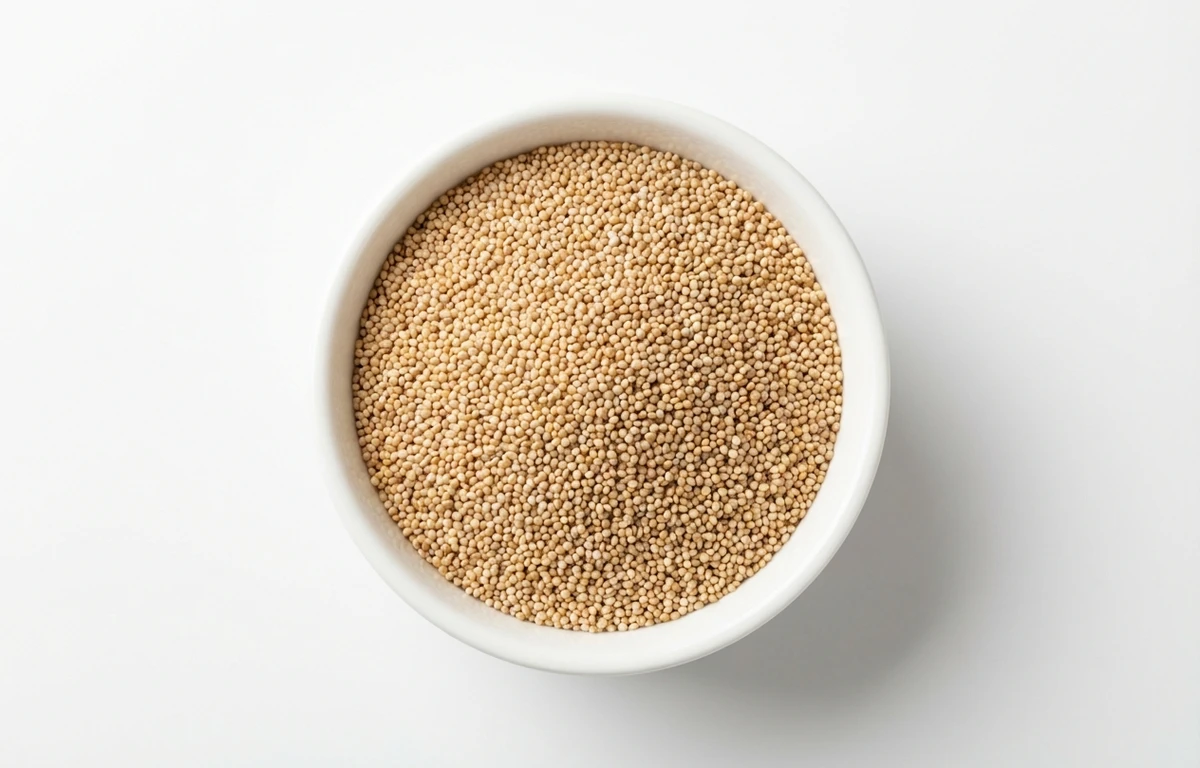
pale brown amaranth seed.
VegetarianVeganGluten-freeDairy-freeNut-freePeanut-freeSoy-freeEgg-freeShellfish-freeHoney-freeAlcohol-freeWhole grain
SERVING
CALORIES
356
PROTEIN
13.3g
CARBS
61.5g
FAT
5.6g
FIBER
7.5g
NUTRITION PROFILE · per 100 g
Everything in this ingredient.
MACRONUTRIENTS
Calories356kcal—
Protein13.3g27%
Carbohydrates61.5g22%
Fiber7.5g27%
Sugar0.80g2%
Total fat5.6g7%
Saturated fat1.1g6%
Trans fat0g—
Cholesterol0mg0%
Water9.2g—
MINERALS
Sodium2.8mg0%
Potassium413mg9%
Calcium162mg12%
Iron8.0mg45%
Magnesium270mg64%
Phosphorus412mg33%
Zinc2.5mg23%
Copper0.56mg62%
Manganese4.4mg193%
Selenium21.4µg39%
VITAMINS
Vitamin A0µg0%
Vitamin C0mg0%
Vitamin D54µg270%
Vitamin E0.15mg1%
Vitamin K2.5µg2%
Thiamin (B1)0.04mg3%
Riboflavin (B2)0.04mg3%
Niacin (B3)0.52mg3%
Pantothenic acid (B5)0.28mg6%
Vitamin B60.33mg19%
Biotin (B7)1.9µg6%
Folate (B9)24.6µg6%
%DV based on a 2,000 cal diet. Source: USDA FoodData Central. A dash in the %DV column means there’s no established Daily Value for that nutrient.
MEASUREMENT CONVERSIONS
How much is what.
1 cup185g
1 tablespoon11.6g
1 teaspoon3.9g
1 oz28.4g
1 lb453.6g
1 ml0.8g
1 liter781g
HEALTH BENEFITS
Why eat it.
- ✓Provides complete protein, containing all nine essential amino acids necessary for muscle repair and growth.
- ✓Naturally gluten-free, making it a safe and nutritious grain alternative for individuals with celiac disease or gluten sensitivity.
- ✓High in dietary fiber, which supports digestive health, promotes feelings of fullness, and helps stabilize blood sugar levels.
- ✓Rich source of essential minerals like manganese, magnesium, phosphorus, and iron, which are vital for bone health, energy metabolism, and oxygen transport.
COOKING TIPS
In the kitchen.
- 1To cook as a porridge, use a ratio of 1 part amaranth to 3 parts liquid (water, broth, or milk). Bring to a boil, then reduce heat and simmer for about 20-25 minutes until creamy.
- 2Amaranth can be popped like popcorn. Heat a dry skillet over medium-high heat, add a tablespoon of seeds, and shake the pan constantly until they pop. Use as a crunchy topping for salads, yogurt, or soups.
- 3Due to its gelatinous texture when cooked, amaranth works well as a natural thickener for stews and soups.
- 4For a fluffier texture, similar to quinoa, use less water (1:2 ratio) and be careful not to over-stir during cooking.
STORAGE
Keep it fresh.
- Store in an airtight container in a cool, dark, and dry place like a pantry for up to 6 months.
- For longer-term storage (up to a year), place the airtight container in the refrigerator or freezer to protect its natural oils from becoming rancid.
FAQ
Frequently asked questions.
Is amaranth seed healthy?
Yes, amaranth seed is highly nutritious. It's a complete protein, rich in dietary fiber, and packed with essential minerals like iron, magnesium, and manganese, supporting overall health and digestion.
How much protein and calories are in amaranth seed?
Per 100g, amaranth seed contains approximately 356 calories and 13.27g of protein. It also provides 61.46g of carbohydrates and 5.56g of fat, making it an energy-dense and protein-rich grain.
Is amaranth seed good for weight loss?
Amaranth seed can be beneficial for weight management due to its high fiber and protein content. Fiber promotes satiety, helping you feel full longer, while protein supports muscle mass, both of which can aid in calorie control.
Is amaranth seed gluten-free?
Yes, amaranth seed is naturally gluten-free. This makes it an excellent and safe grain alternative for individuals with celiac disease, gluten sensitivity, or those following a gluten-free diet.
Is amaranth seed vegan?
Yes, amaranth seed is 100% vegan. It is a plant-based grain, making it suitable for vegetarian and vegan diets, providing a valuable source of plant protein and nutrients.
Can diabetics eat amaranth seed?
Yes, amaranth seed can be a good choice for diabetics due to its high fiber content. Fiber helps slow down sugar absorption, contributing to more stable blood sugar levels. However, portion control is still important.
How do you cook amaranth seed?
To cook amaranth, combine one part amaranth with two to three parts water or broth. Bring to a boil, then reduce heat, cover, and simmer for about 20 minutes until the liquid is absorbed and the seeds are fluffy.
What does amaranth seed taste like?
Amaranth seed has a mild, nutty, and slightly earthy flavor. When cooked, it develops a soft, somewhat sticky texture, similar to polenta or porridge, making it versatile for both sweet and savory dishes.
How do you store amaranth seed?
Store uncooked amaranth seeds in an airtight container in a cool, dark, and dry place, such as a pantry. Properly stored, it can last for up to 6-12 months. Cooked amaranth should be refrigerated and consumed within 3-4 days.
Is amaranth a complete protein?
Yes, amaranth is one of the few plant-based foods considered a complete protein. This means it contains all nine essential amino acids that the human body cannot produce on its own, making it excellent for muscle repair and growth.



















