
Condiment10 recipes
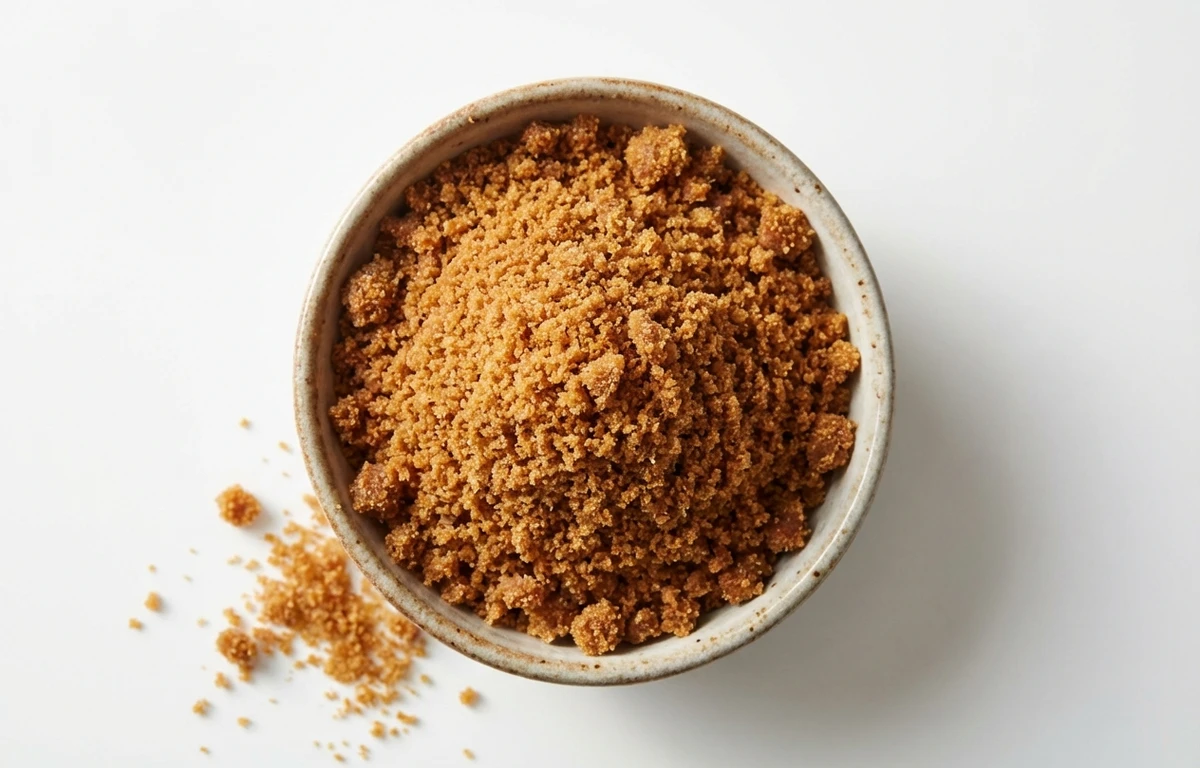
palm sugar.
VegetarianVeganGluten-freeDairy-freeNut-freePeanut-freeSoy-freeEgg-freeShellfish-freeHoney-freeAlcohol-free
ALSO KNOWN AS
gula melakapalm jaggerykarupattiPanai VellamThati BellamTale BellaPalm GurPalmyra JaggeryBlack Jaggery
SERVING
CALORIES
383
PROTEIN
0g
CARBS
98g
FAT
0g
FIBER
0g
NUTRITION PROFILE · per 100 g
Everything in this ingredient.
MACRONUTRIENTS
Calories383kcal—
Protein0g0%
Carbohydrates98g36%
Fiber0g0%
Sugar94g188%
Total fat0g0%
Saturated fat0g0%
Trans fat0g—
Cholesterol0mg0%
Water1.5g—
MINERALS
Sodium30mg1%
Potassium1030mg22%
Calcium8.0mg1%
Iron1.6mg9%
Magnesium29mg7%
Phosphorus5.0mg0%
Zinc0.10mg1%
Copper0.05mg6%
Manganese0.10mg4%
Selenium0.50µg1%
VITAMINS
Vitamin A0µg0%
Vitamin C0mg0%
Vitamin D0µg0%
Vitamin E0mg0%
Vitamin K0µg0%
Thiamin (B1)0.01mg1%
Riboflavin (B2)0.01mg1%
Niacin (B3)0.10mg1%
Pantothenic acid (B5)0.05mg1%
Vitamin B60.03mg2%
Folate (B9)0µg0%
Vitamin B120µg0%
%DV based on a 2,000 cal diet. Source: USDA FoodData Central. A dash in the %DV column means there’s no established Daily Value for that nutrient.
MEASUREMENT CONVERSIONS
How much is what.
1 cup200g
1 tablespoon12g
1 teaspoon4g
1 oz28.4g
1 lb453.6g
HEALTH BENEFITS
Why eat it.
- ✓Lower glycemic index compared to refined white sugar
- ✓Contains trace minerals like potassium, phosphorus, and iron
- ✓Rich in antioxidants compared to highly refined sweeteners
- ✓Contains small amounts of phytonutrients like polyphenols
- ✓Less likely to cause rapid blood sugar spikes
COOKING TIPS
In the kitchen.
- 1Grate or finely chop solid blocks before measuring for accuracy
- 2Dissolve in a small amount of warm water to create a syrup for baking
- 3Use as a 1:1 substitute for brown sugar to add a caramel-like depth
STORAGE
Keep it fresh.
- Store in an airtight container in a cool, dry place
- Keep away from direct sunlight and moisture to prevent melting
- If it hardens, place a damp cloth over the container for a few hours
FAQ
Frequently asked questions.
How long does palm sugar last?
When stored in a cool, dry, airtight container, palm sugar can last for up to 2 years.
Can palm sugar be frozen?
It is not necessary to freeze palm sugar, but it can be frozen if kept in a moisture-proof bag. However, room temperature storage is usually sufficient.
What is the best substitute for palm sugar?
Coconut sugar is the closest substitute. Brown sugar or maple sugar can also be used, though the flavor profile will vary slightly.
Is palm sugar the same as coconut sugar?
They are similar but not identical. Palm sugar comes from the sap of various palm trees (like date or palmyra), while coconut sugar specifically comes from coconut palm blossoms.
How do I soften a hard block of palm sugar?
You can microwave it for 10-20 seconds with a damp paper towel, or grate it using a sturdy box grater.
Is palm sugar healthier than white sugar?
It is less refined and contains more minerals and a lower glycemic index, but it is still a sugar and should be consumed in moderation.
What does palm sugar taste like?
It has a deep, smoky, caramel-like flavor that is less intensely sweet than white sugar.
Is palm sugar gluten-free?
Yes, pure palm sugar is naturally gluten-free.
Why is my palm sugar different colors?
The color can range from light gold to dark brown depending on the type of palm tree used and how long the sap was boiled.
RECIPES
Cook with palm sugar.
10 recipes · sorted by what’s quick
.webp)



















