
Loading...
Per 100g
Nutrition data source: USDA FoodData Central
Common measurement equivalents in grams
Yes, pepperoncinis are a healthy addition to most diets. They are very low in calories (20 per 100g) and provide essential antioxidants like Vitamin C and A, which support immune function and skin health.
Yes, pepperoncinis are excellent for a keto or low-carb diet. They contain only about 4.5g of carbohydrates per 100g, allowing you to add significant tangy flavor to meals without a high carb count.
Pepperoncinis are considered very mild peppers, measuring between 100 and 500 Scoville Heat Units. They are much milder than jalapeños and are known more for their tangy, vinegary zing than for intense heat.
Naturally, pepperoncinis are both vegan and gluten-free. When purchasing pickled varieties in jars, check the label to ensure the brine doesn't contain unusual additives, though most consist simply of vinegar, water, and salt.
Yes, they are a great tool for weight management because they are low in fat and calories. Their bold flavor can make healthy dishes like salads and grilled proteins more satisfying without the need for high-calorie dressings or sauces.
They are commonly used as a topping for Greek salads, pizzas, and Italian sandwiches. You can also chop them into tuna salad, use the brine as a meat marinade, or include them in a slow-cooked pot roast for added acidity.
Fresh pepperoncinis should be stored in the refrigerator crisper drawer for about a week. Pickled pepperoncinis should be refrigerated after opening and will typically stay fresh for 6 to 12 months as long as they remain submerged in the brine.
Pepperoncini is a versatile ingredient found in cuisines around the world. With 20 calories per 100g and 0.8 grams of protein, it's a nutritious addition to many dishes.
Explore more ingredients in the vegetable category with complete nutrition information.
View all vegetable →Discover 1 recipes featuring pepperoncini with step-by-step instructions.
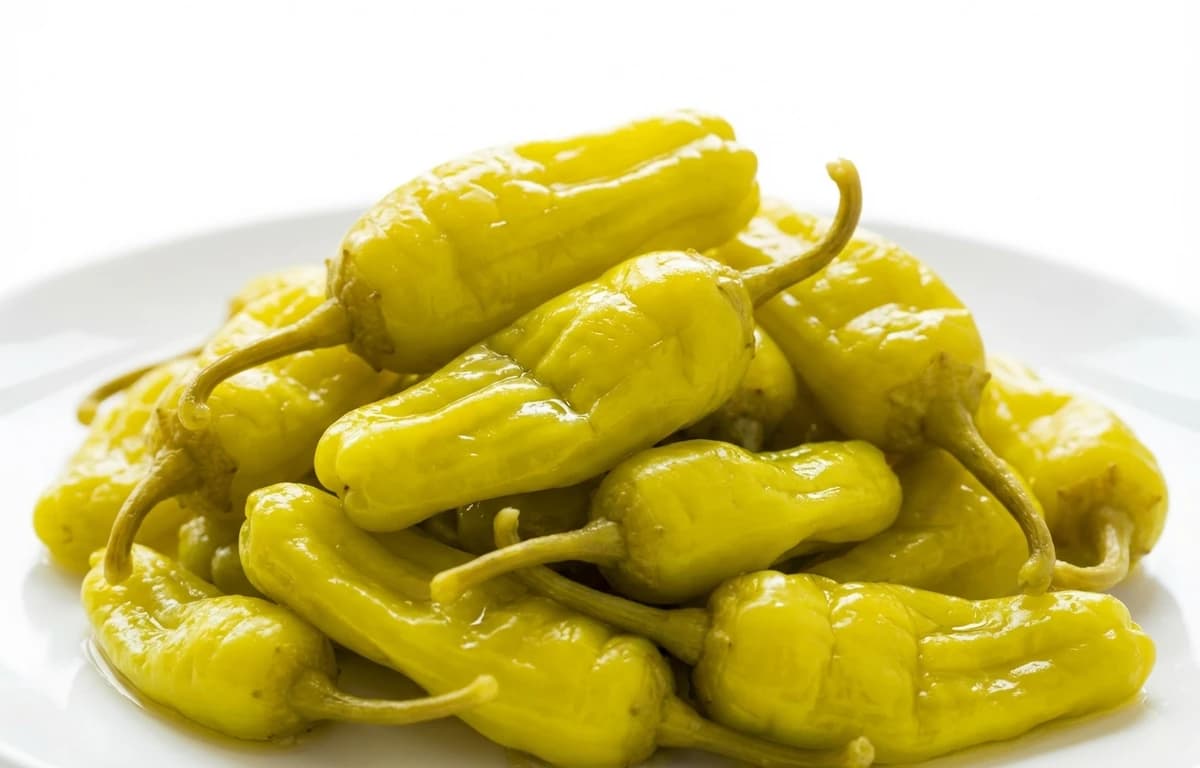
Browse recipes →Pepperoncinis have a mild, slightly sweet, and tangy flavor. Because they are most frequently consumed pickled, they usually have a crisp texture and a sharp, vinegary finish with a very subtle peppery warmth.
The seeds are edible and generally soft enough to consume without notice. However, the green stems are tough and fibrous, so they are typically removed or bitten off and discarded before eating the rest of the pepper.
Signs of spoilage include a foul or unusually sour odor, visible mold growth, or a bulging lid on the jar. If the peppers have become excessively mushy or the brine has turned dark and murky, it is safest to discard them.