
Spice
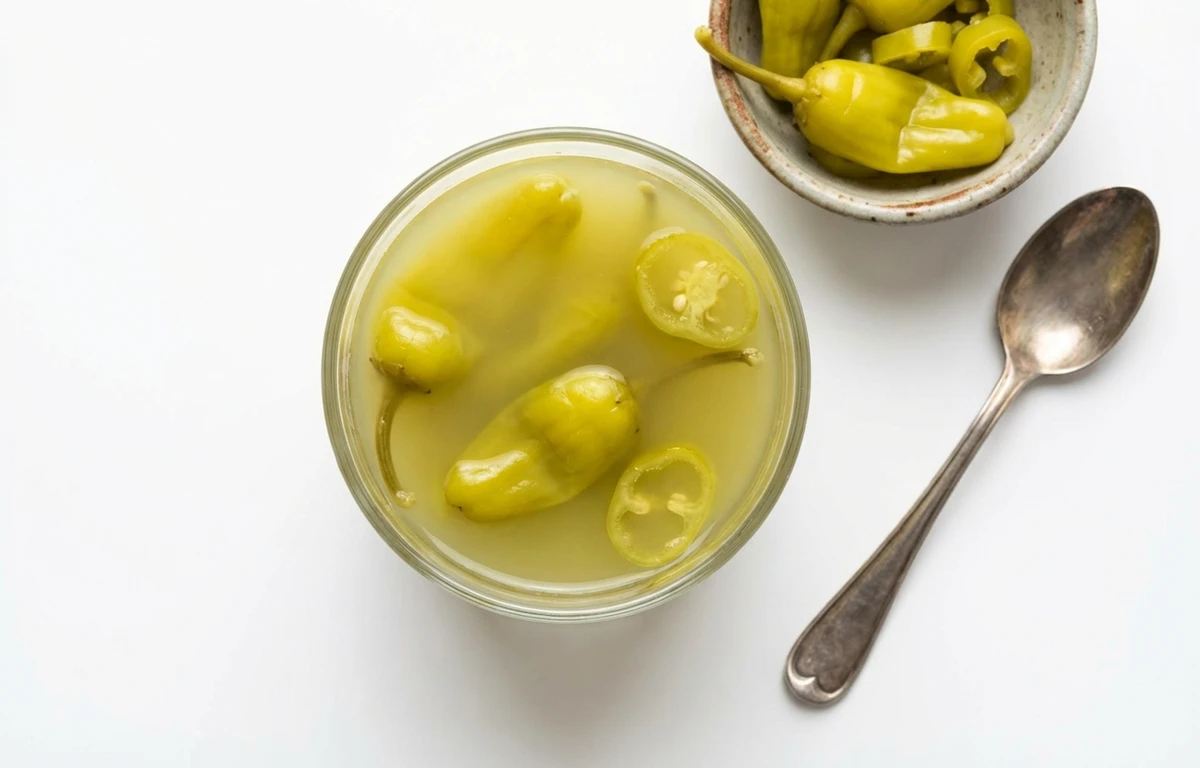
pepperoncini pepper juice.
VegetarianVeganGluten-freeDairy-freeNut-freePeanut-freeSoy-freeEgg-freeShellfish-freeHoney-freeAlcohol-freeFermented
ALSO KNOWN AS
pepperoncini brinepickled pepper juicepepperoncini liquidtuscan pepper juicepepperoncini pickling liquid
SERVING
CALORIES
15
PROTEIN
0.20g
CARBS
3.5g
FAT
0.10g
FIBER
0.20g
NUTRITION PROFILE · per 100 g
Everything in this ingredient.
MACRONUTRIENTS
Calories15kcal—
Protein0.20g0%
Carbohydrates3.5g1%
Fiber0.20g1%
Sugar1.8g4%
Total fat0.10g0%
Saturated fat0g0%
Trans fat0g—
Cholesterol0mg0%
Water92g—
MINERALS
Sodium1850mg80%
Potassium45mg1%
Calcium12mg1%
Iron0.30mg2%
Magnesium5.0mg1%
Phosphorus8.0mg1%
Zinc0.05mg0%
Copper0.02mg2%
Manganese0.04mg2%
Selenium0.10µg0%
VITAMINS
Vitamin A5.0µg1%
Vitamin C8.0mg9%
Vitamin D0µg0%
Vitamin E0.10mg1%
Vitamin K1.2µg1%
Thiamin (B1)0.01mg1%
Riboflavin (B2)0.01mg1%
Niacin (B3)0.10mg1%
Pantothenic acid (B5)0.05mg1%
Vitamin B60.02mg1%
Folate (B9)2.0µg1%
Vitamin B120µg0%
%DV based on a 2,000 cal diet. Source: USDA FoodData Central. A dash in the %DV column means there’s no established Daily Value for that nutrient.
MEASUREMENT CONVERSIONS
How much is what.
1 cup245g
1 tablespoon15.3g
1 teaspoon5.1g
1 oz28.4g
1 lb453.6g
1 ml1g
1 liter1020g
HEALTH BENEFITS
Why eat it.
- ✓Contains electrolytes like sodium and potassium
- ✓Low in calories and fat
- ✓Vinegar content may aid in digestion
- ✓Contains trace amounts of Vitamin C from the peppers
- ✓Capsaicin traces may provide a slight metabolic boost
COOKING TIPS
In the kitchen.
- 1Use as a tangy marinade for chicken or pork
- 2Add a splash to salad dressings for a zesty kick
- 3Use as a substitute for vinegar in potato or pasta salads
STORAGE
Keep it fresh.
- Store in the refrigerator after opening the jar
- Keep in a sealed glass container to maintain flavor
- Discard if the liquid becomes excessively cloudy or develops an off-smell
FAQ
Frequently asked questions.
How long does pepperoncini juice last in the fridge?
When kept refrigerated in a sealed container, it can last for 6 to 12 months, though the flavor is best within the first few months.
Can I freeze pepperoncini juice?
Yes, you can freeze it in ice cube trays for easy portioning. It will last up to 6 months in the freezer.
What is a good substitute for pepperoncini juice?
Pickle brine, banana pepper juice, or a mixture of white vinegar with a pinch of salt and red pepper flakes are excellent alternatives.
Is pepperoncini juice high in sodium?
Yes, it is very high in sodium due to the pickling process, so it should be used sparingly by those on low-sodium diets.
How can I use pepperoncini juice in cocktails?
It is a popular addition to 'Dirty Martinis' or 'Bloody Marys' to add a spicy, tangy depth of flavor.
Does pepperoncini juice contain probiotics?
Most commercial pepperoncini juice is pasteurized, which kills live probiotics. Only raw, naturally fermented versions contain active cultures.
Can I use it to tenderize meat?
Yes, the acidity from the vinegar in the juice helps break down muscle fibers, making it an effective meat tenderizer.
Is pepperoncini juice spicy?
It has a mild to medium heat level, significantly less spicy than jalapeño juice but tangier due to the vinegar.
What should I look for when selecting pepperoncini juice?
Look for a clear, yellowish-green liquid. Avoid jars where the liquid is dark brown or has visible mold on the surface.
Is it safe to drink pepperoncini juice straight?
While safe in small amounts, its high acidity and sodium content can cause stomach upset or dehydration if consumed in large quantities.



















