
Spice
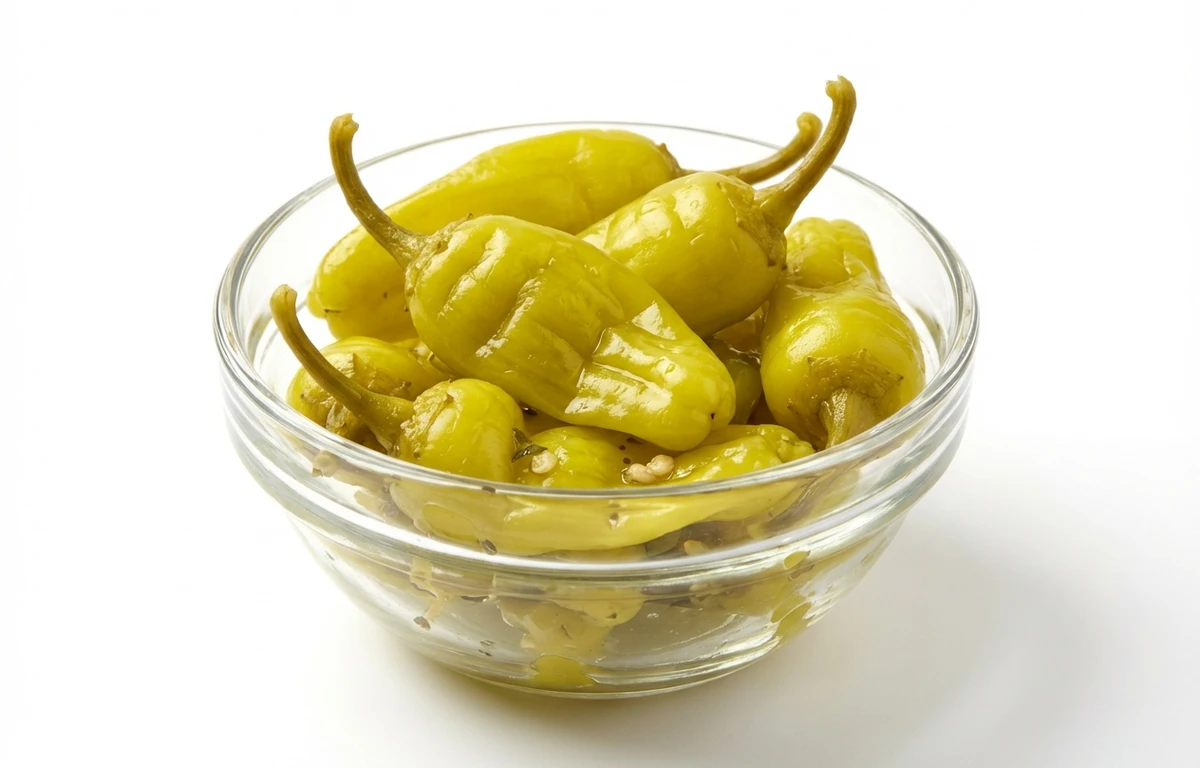
pepperoncini peppers.
VegetarianVeganGluten-freeDairy-freeNut-freePeanut-freeSoy-freeEgg-freeShellfish-freeHoney-freeAlcohol-free
ALSO KNOWN AS
tuscan pepperssweet italian peppersgolden greek peppersfriggitellopeperoncini
SERVING
CALORIES
27
PROTEIN
1.0g
CARBS
6.3g
FAT
0.20g
FIBER
1.5g
NUTRITION PROFILE · per 100 g
Everything in this ingredient.
MACRONUTRIENTS
Calories27kcal—
Protein1.0g2%
Carbohydrates6.3g2%
Fiber1.5g5%
Sugar3.5g7%
Total fat0.20g0%
Saturated fat0.04g0%
Trans fat0g—
Cholesterol0mg0%
Water91.5g—
MINERALS
Sodium7.0mg0%
Potassium175mg4%
Calcium12mg1%
Iron0.50mg3%
Magnesium10mg2%
Phosphorus20mg2%
Zinc0.15mg1%
Copper0.06mg7%
Manganese0.10mg4%
Selenium0.30µg1%
VITAMINS
Vitamin A25µg3%
Vitamin C90mg100%
Vitamin D0µg0%
Vitamin E0.70mg5%
Vitamin K10µg8%
Thiamin (B1)0.05mg4%
Riboflavin (B2)0.03mg2%
Niacin (B3)0.50mg3%
Pantothenic acid (B5)0.15mg3%
Vitamin B60.20mg12%
Folate (B9)15µg4%
Vitamin B120µg0%
%DV based on a 2,000 cal diet. Source: USDA FoodData Central. A dash in the %DV column means there’s no established Daily Value for that nutrient.
MEASUREMENT CONVERSIONS
How much is what.
1 cup135g
1 tablespoon9g
1 teaspoon3g
1 oz28.4g
1 lb453.6g
1 piece15g
HEALTH BENEFITS
Why eat it.
- ✓Excellent source of Vitamin C for immune support
- ✓Contains capsaicin which may boost metabolism
- ✓Low in calories and fat-free
- ✓Provides antioxidants that help fight oxidative stress
- ✓Good source of dietary fiber for digestive health
COOKING TIPS
In the kitchen.
- 1Remove the stem and seeds if you want to reduce the mild heat further
- 2Sauté briefly to maintain their characteristic crunch and bright color
- 3Slice thinly to use as a zesty topping for pizzas, salads, or sandwiches
STORAGE
Keep it fresh.
- Store fresh peppers in a breathable plastic bag in the refrigerator crisper drawer
- Keep peppers dry before storing to prevent mold growth
- Can be pickled in vinegar and salt to extend shelf life for months
FAQ
Frequently asked questions.
How long do fresh pepperoncini peppers last?
Fresh pepperoncini peppers typically last 1 to 2 weeks when stored properly in the refrigerator crisper drawer.
Are pepperoncini peppers spicy?
They are very mild, ranging from 100 to 500 Scoville Heat Units, which is much milder than a jalapeño.
What is a good substitute for pepperoncini?
Banana peppers are the closest substitute in terms of flavor and heat. Anaheim peppers can also work if sliced thin.
Can you freeze pepperoncini peppers?
Yes, they can be frozen, but their texture will become soft. They are best used in cooked dishes after freezing.
How do I pick the best pepperoncini?
Look for peppers that are firm, shiny, and have a bright yellowish-green color without soft spots or wrinkles.
Are pepperoncini and banana peppers the same?
No, they are different varieties. Pepperoncini usually have more wrinkles and a slightly more complex, bitter-sweet flavor than banana peppers.
How should I prepare them for a salad?
Wash them, cut off the stem, and slice them into rings. You can leave the seeds in as they are quite soft and mild.
Are they keto-friendly?
Yes, they are very low in carbohydrates and can be included in a ketogenic diet in moderation.
What are common dishes using pepperoncini?
They are famously used in Greek salads, Italian antipasto platters, Mississippi Pot Roast, and as a pizza topping.



















