
Vegetable
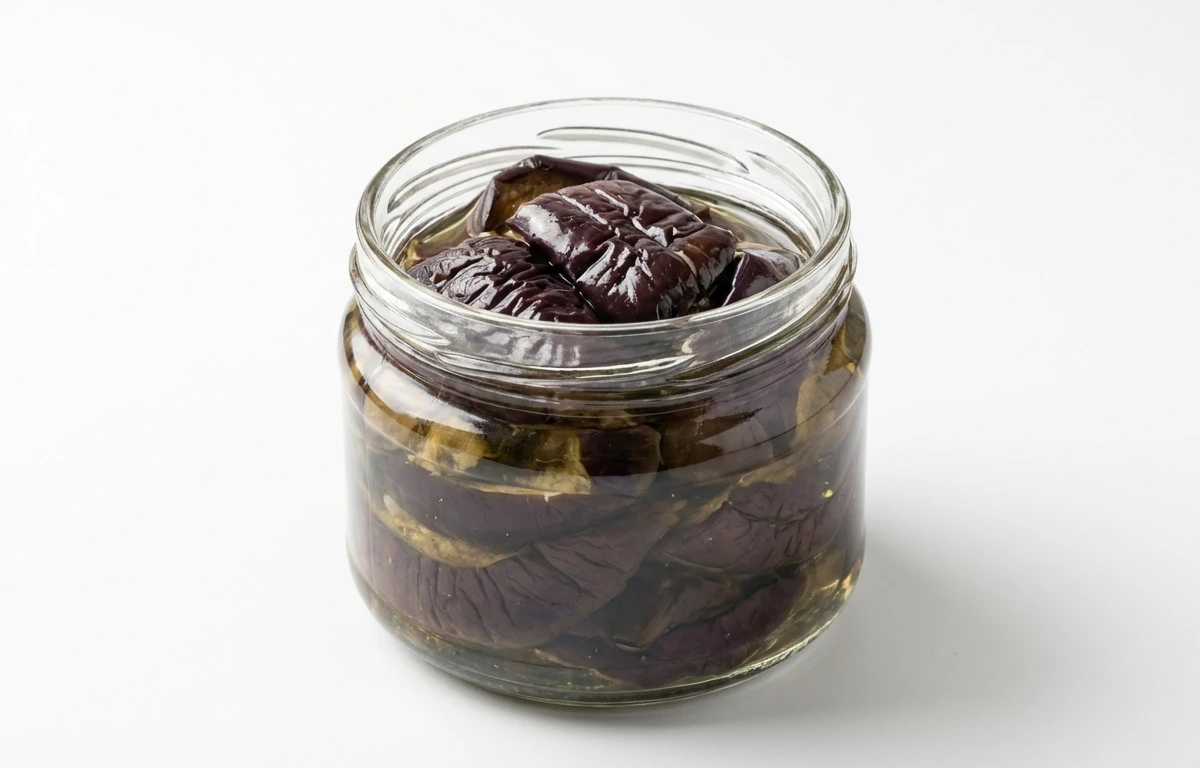
pickled eggplant.
VegetarianVeganGluten-freeDairy-freeNut-freePeanut-freeSoy-freeEgg-freeShellfish-freeHoney-freeAlcohol-free
SERVING
CALORIES
49
PROTEIN
0.90g
CARBS
9.8g
FAT
0.70g
FIBER
2.5g
This ingredient is flagged as naturally gluten-free. Per 100 g, it provides 3.7 µg of vitamin K.
NUTRITION PROFILE · per 100 g
Everything in this ingredient.
MACRONUTRIENTS
Calories49kcal—
Protein0.90g2%
Carbohydrates9.8g4%
Fiber2.5g9%
Sugar4.8g10%
Total fat0.70g1%
Saturated fat0.14g1%
Trans fat0g—
Cholesterol0mg0%
Water86.9g—
MINERALS
Sodium1674mg73%
Potassium12mg0%
Calcium25mg2%
Iron0.77mg4%
Magnesium6.0mg1%
Phosphorus9.0mg1%
Zinc0.23mg2%
Copper0.17mg19%
Selenium0.60µg1%
VITAMINS
Vitamin A3.0µg0%
Vitamin C0mg0%
Vitamin D0µg0%
Vitamin E0.03mg0%
Vitamin K3.7µg3%
Thiamin (B1)0.05mg4%
Riboflavin (B2)0.07mg5%
Niacin (B3)0.66mg4%
Vitamin B60.14mg8%
Folate (B9)20µg5%
Vitamin B120µg0%
%DV based on a 2,000 cal diet. Source: USDA FoodData Central. A dash in the %DV column means there’s no established Daily Value for that nutrient.
MEASUREMENT CONVERSIONS
How much is what.
1 cup136g
1 tablespoon8.5g
1 teaspoon2.8g
1 ml0.6g
1 liter566.7g
HEALTH BENEFITS
Why eat it.
- ✓Low in calories and fat, making it a flavorful addition to meals without significantly increasing caloric intake.
- ✓If lacto-fermented (rather than just vinegar-pickled), it can be a source of probiotics, which promote a healthy gut microbiome.
COOKING TIPS
In the kitchen.
- 1Serve directly from the jar as part of an antipasto platter, alongside cheeses, olives, and cured meats.
- 2Chop and add to sandwiches, paninis, or wraps for a tangy and savory flavor boost.
- 3Incorporate into pasta dishes, grain bowls, or salads to add acidity and a tender texture.
- 4Use the flavorful oil or brine from the jar as a component in homemade vinaigrettes or marinades.
STORAGE
Keep it fresh.
- Store unopened jars in a cool, dark place like a pantry for up to one year, always checking the 'best by' date.
- After opening, refrigerate the jar with the lid tightly sealed. Ensure the eggplant remains submerged in the brine and consume within 4-6 weeks for optimal quality.
FAQ
Frequently asked questions.
How many calories and carbs are in pickled eggplant?
A 100g serving of pickled eggplant contains approximately 49 calories and 9.77g of carbohydrates. It is also very low in fat (0.7g) and protein (0.9g), making it a light condiment or side dish.
Is pickled eggplant keto-friendly?
Pickled eggplant can be included in a keto diet in moderation. While it contains about 9.77g of carbs per 100g, a typical serving size is much smaller, allowing it to fit within daily carb limits while providing significant flavor.
Is pickled eggplant vegan and gluten-free?
In most cases, pickled eggplant is both vegan and gluten-free as it is primarily made from vegetables, vinegar, salt, and spices. Always check commercial labels to ensure no wheat-based thickeners or animal-derived flavorings were added.
What does pickled eggplant taste like?
Pickled eggplant has a tangy, acidic, and savory flavor profile, often infused with garlic, oregano, or chili flakes. Its texture is unique—typically soft, tender, and slightly silky, especially when preserved in oil.
How do you use pickled eggplant in cooking?
It is commonly used as part of an antipasto platter, tucked into sandwiches or paninis, or chopped into grain salads. It also makes an excellent topping for bruschetta or a flavorful side for grilled meats.
How can I tell if pickled eggplant has gone bad?
Discard the eggplant if you notice any fuzzy mold, a foul or 'yeasty' odor, or if the brine becomes excessively slimy. A bulging lid on a store-bought jar is also a sign of bacterial contamination and should not be consumed.



















