
Vegetable
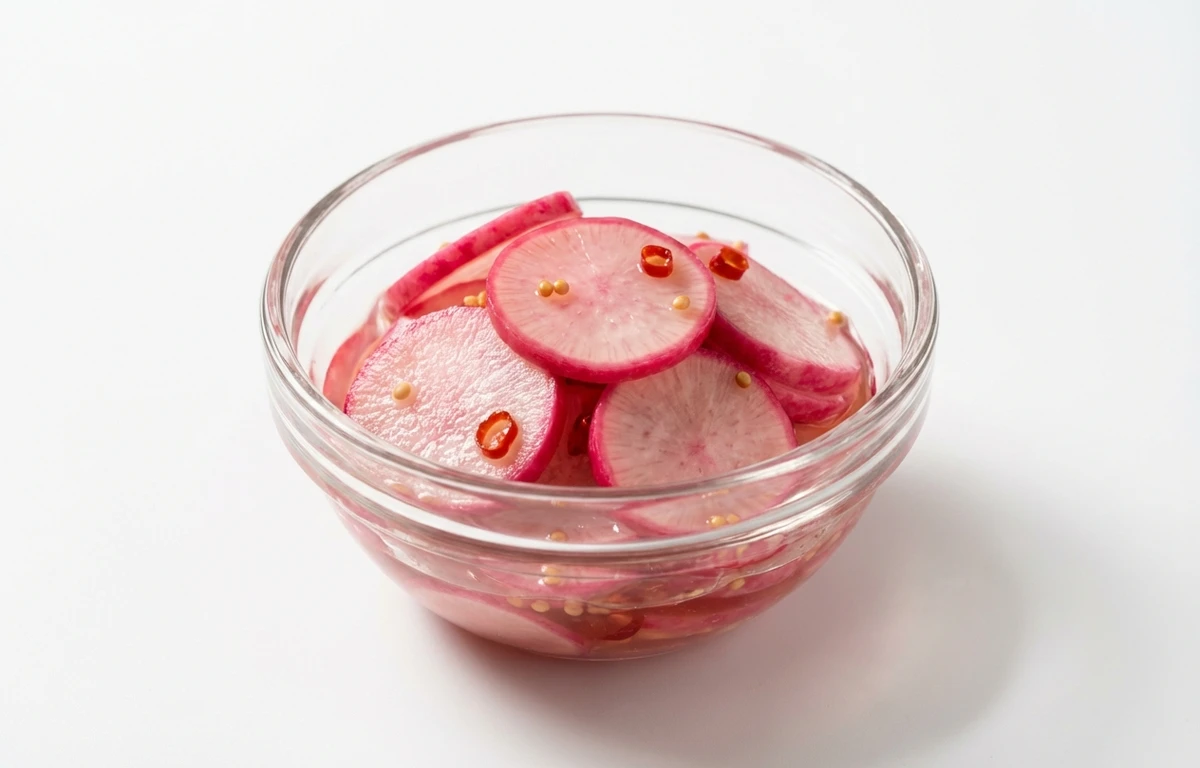
pickled hawaiian style radish.
VegetarianVeganGluten-freeDairy-freeNut-freePeanut-freeSoy-freeEgg-freeShellfish-freeHoney-freeAlcohol-free
ALSO KNOWN AS
pickled radish
SERVING
CALORIES
28
PROTEIN
1.1g
CARBS
5.2g
FAT
0.30g
FIBER
2.2g
This ingredient is flagged as naturally gluten-free. Per 100 g, it provides 0.50 µg of vitamin K.
NUTRITION PROFILE · per 100 g
Everything in this ingredient.
MACRONUTRIENTS
Calories28kcal—
Protein1.1g2%
Carbohydrates5.2g2%
Fiber2.2g8%
Sugar2.0g4%
Total fat0.30g0%
Saturated fat0.09g0%
Trans fat0g—
Cholesterol0mg0%
Water91.5g—
MINERALS
Sodium789mg34%
Potassium333mg7%
Calcium28mg2%
Iron0.23mg1%
Magnesium8.0mg2%
Phosphorus31mg2%
Zinc0.22mg2%
Copper0.17mg19%
Manganese0.06mg3%
Selenium0.70µg1%
VITAMINS
Vitamin A0µg0%
Vitamin C0mg0%
Vitamin D0µg0%
Vitamin E0mg0%
Vitamin K0.50µg0%
Thiamin (B1)0.02mg2%
Riboflavin (B2)0.03mg2%
Niacin (B3)0.31mg2%
Pantothenic acid (B5)0.20mg4%
Vitamin B60.10mg6%
Folate (B9)9.0µg2%
Vitamin B120µg0%
%DV based on a 2,000 cal diet. Source: USDA FoodData Central. A dash in the %DV column means there’s no established Daily Value for that nutrient.
MEASUREMENT CONVERSIONS
How much is what.
1 cup150g
1 tablespoon9.4g
1 teaspoon3.1g
1 ml0.6g
1 liter625g
HEALTH BENEFITS
Why eat it.
- ✓Low in Calories: Pickled radish can add flavor and crunch to meals with very few calories, though it is often high in sodium and sugar.
- ✓Aids Digestion: The fiber from the radish can support digestive health.
COOKING TIPS
In the kitchen.
- 1Serve as a side dish or condiment (tsukemono) to cut through the richness of grilled meats, fried foods, or Hawaiian plate lunches.
- 2Dice and mix into macaroni salad, potato salad, or poke bowls for a sweet, tangy crunch and vibrant color.
- 3Use as a topping for sandwiches, tacos, or hot dogs to add a crisp, acidic element.
- 4The flavorful pickling liquid can be repurposed as a base for vinaigrettes or marinades.
STORAGE
Keep it fresh.
- Always store in the refrigerator in a sealed, non-reactive container (like a glass jar), fully submerged in its brine.
- Once opened, it should be consumed within 1 to 2 months for the best texture and flavor.
FAQ
Frequently asked questions.
How many calories and carbohydrates are in pickled Hawaiian style radish?
Per 100 grams, pickled Hawaiian style radish contains approximately 28 calories and 5.2 grams of carbohydrates. It also provides about 1.1 grams of protein and 0.3 grams of fat, making it a low-calorie and low-fat addition to meals.
Is pickled Hawaiian style radish vegan and gluten-free?
Generally, pickled Hawaiian style radish is vegan as it's made from vegetables and a brine. It can also be gluten-free, but it's crucial to check the ingredient list for the specific brand, as some soy sauces used in the brine may contain wheat. Always look for 'gluten-free tamari' or a certified gluten-free label if you have sensitivities.
What does pickled Hawaiian style radish taste like and how is it typically used?
Pickled Hawaiian style radish has a distinct tangy, sweet, and slightly savory flavor with a satisfying crunch. It's commonly served as a refreshing side dish, a garnish for poke bowls, or as an accompaniment to grilled meats and other Hawaiian-inspired meals. Its vibrant flavor adds a zesty contrast to richer dishes.
How long does pickled Hawaiian style radish last?
When properly stored in an airtight container in the refrigerator, pickled Hawaiian style radish can last for several weeks, typically 2-4 weeks, and sometimes even longer. Always check for any signs of spoilage like off-smells, mold, or changes in texture before consuming.
What makes it 'Hawaiian style' compared to other pickled radishes?
Hawaiian style pickled radish typically features a brine that includes soy sauce (shoyu), sugar, and vinegar, often with additions like ginger or garlic. This combination creates a unique balance of sweet, salty, and tangy flavors that distinguishes it from more traditional or simply brined pickled radishes.
Is pickled Hawaiian style radish high in sodium?
Yes, pickled Hawaiian style radish is typically high in sodium due to the pickling process and the use of soy sauce in the brine. The sodium content contributes to its savory flavor but should be considered, especially for individuals monitoring their sodium intake.



















