
Condiment1 recipes
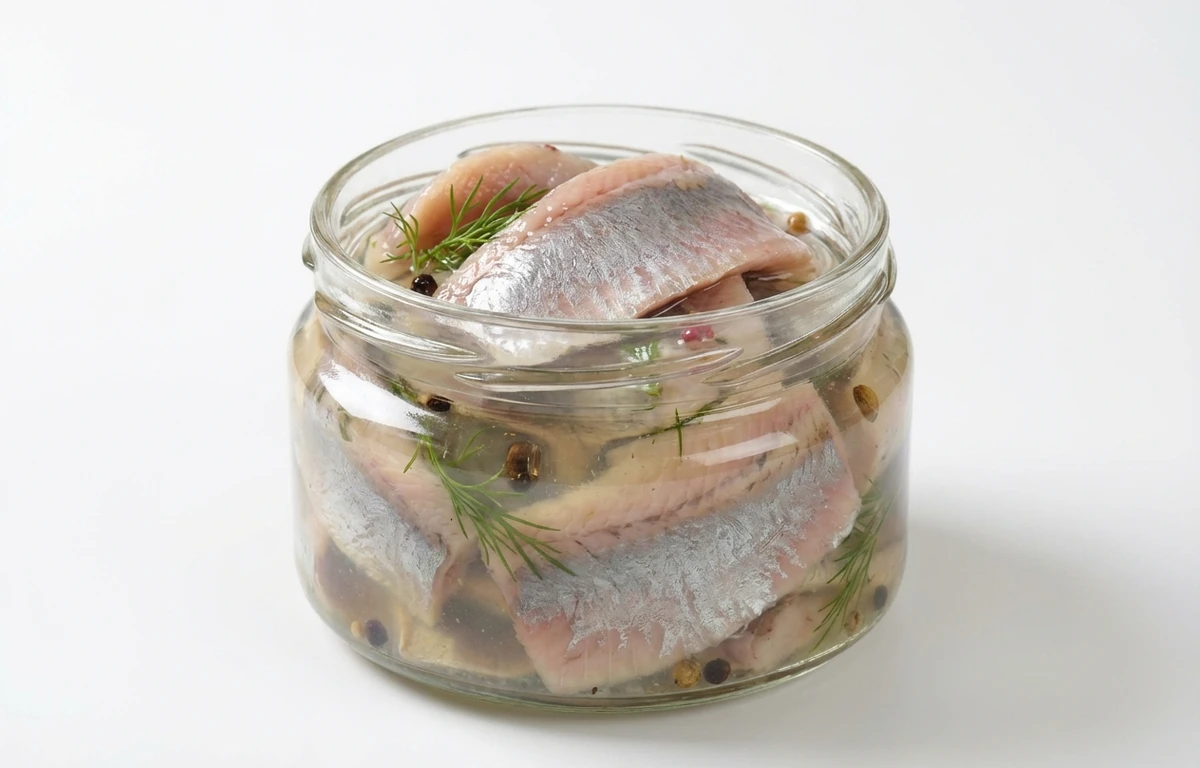
pickled herring in wine sauce.
VegetarianVeganGluten-freeDairy-freeNut-freePeanut-freeSoy-freeEgg-freeShellfish-freeHoney-freeAlcohol-freeHalalKosherFermented
ALSO KNOWN AS
marinated herring in wine sauceherring in wine marinadepickled herring fillets in wine saucewine-marinated herring
SERVING
CALORIES
190
PROTEIN
13.5g
CARBS
12g
FAT
10g
FIBER
0g
NUTRITION PROFILE · per 100 g
Everything in this ingredient.
MACRONUTRIENTS
Calories190kcal—
Protein13.5g27%
Carbohydrates12g4%
Fiber0g0%
Sugar11g22%
Total fat10g13%
Saturated fat2.2g11%
Trans fat0g—
Cholesterol45mg15%
Water60g—
MINERALS
Sodium850mg37%
Potassium180mg4%
Calcium60mg5%
Iron1.1mg6%
Magnesium25mg6%
Phosphorus190mg15%
Zinc0.80mg7%
Copper0.08mg9%
Manganese0.03mg1%
Selenium32µg58%
VITAMINS
Vitamin A25µg3%
Vitamin C1.0mg1%
Vitamin D4.2µg21%
Vitamin E1.1mg7%
Vitamin K0.10µg0%
Thiamin (B1)0.05mg4%
Riboflavin (B2)0.18mg14%
Niacin (B3)2.8mg18%
Pantothenic acid (B5)0.40mg8%
Vitamin B60.20mg12%
Folate (B9)5.0µg1%
Vitamin B1212µg500%
%DV based on a 2,000 cal diet. Source: USDA FoodData Central. A dash in the %DV column means there’s no established Daily Value for that nutrient.
MEASUREMENT CONVERSIONS
How much is what.
1 cup264g
1 tablespoon16.5g
1 teaspoon5.5g
1 oz28.4g
1 lb453.6g
1 ml1.1g
1 liter1100g
1 piece25g
HEALTH BENEFITS
Why eat it.
- ✓Excellent source of Omega-3 fatty acids for heart health
- ✓Very high in Vitamin B12 for nerve function
- ✓Good source of Vitamin D for bone health
- ✓High quality lean protein source
- ✓Contains selenium which acts as a powerful antioxidant
COOKING TIPS
In the kitchen.
- 1Serve chilled directly from the refrigerator for the best texture
- 2Do not cook or heat the herring as it will become tough and lose its pickled flavor
- 3Pair with sour cream, fresh dill, and dark rye bread for a traditional presentation
STORAGE
Keep it fresh.
- Always keep refrigerated between 1°C and 4°C
- Ensure the herring pieces remain fully submerged in the wine sauce to prevent drying
- Once opened, consume within 14 to 21 days for best quality
FAQ
Frequently asked questions.
How long does pickled herring in wine sauce last after opening?
It typically lasts 2 to 3 weeks in the refrigerator if kept in its original brine/sauce and tightly sealed.
Can I freeze pickled herring?
Freezing is not recommended as it significantly alters the delicate texture of the fish and the consistency of the wine sauce.
Is pickled herring in wine sauce high in mercury?
No, herring is a small fish and is generally very low in mercury compared to larger predatory fish.
What is a good substitute for pickled herring?
Pickled sardines or pickled mackerel are the closest substitutes in terms of texture and flavor profile.
Does the wine sauce contain alcohol?
Yes, it contains a small amount of wine, though the alcohol content is usually very low (trace amounts) due to the pickling process.
How can I tell if the herring has gone bad?
Discard if you notice a slimy texture, an excessively 'fishy' or sour odor beyond the vinegar smell, or any mold growth.
Is it safe to eat the onions in the jar?
Yes, the onions are pickled along with the fish and are intended to be eaten as a garnish.
Is pickled herring high in salt?
Yes, it is quite high in sodium due to the curing and pickling process, so it should be consumed in moderation by those watching salt intake.
What are the best food pairings for this ingredient?
It pairs excellently with boiled potatoes, rye bread, hard-boiled eggs, and crisp white wines or aquavit.
Is the fish raw or cooked?
The fish is technically 'cured' by salt and acid (vinegar/wine), which 'cooks' the protein without heat, making it safe to eat.
RECIPES
Cook with pickled herring in wine sauce.
1 recipes · sorted by what’s quick



















