
Vegetable
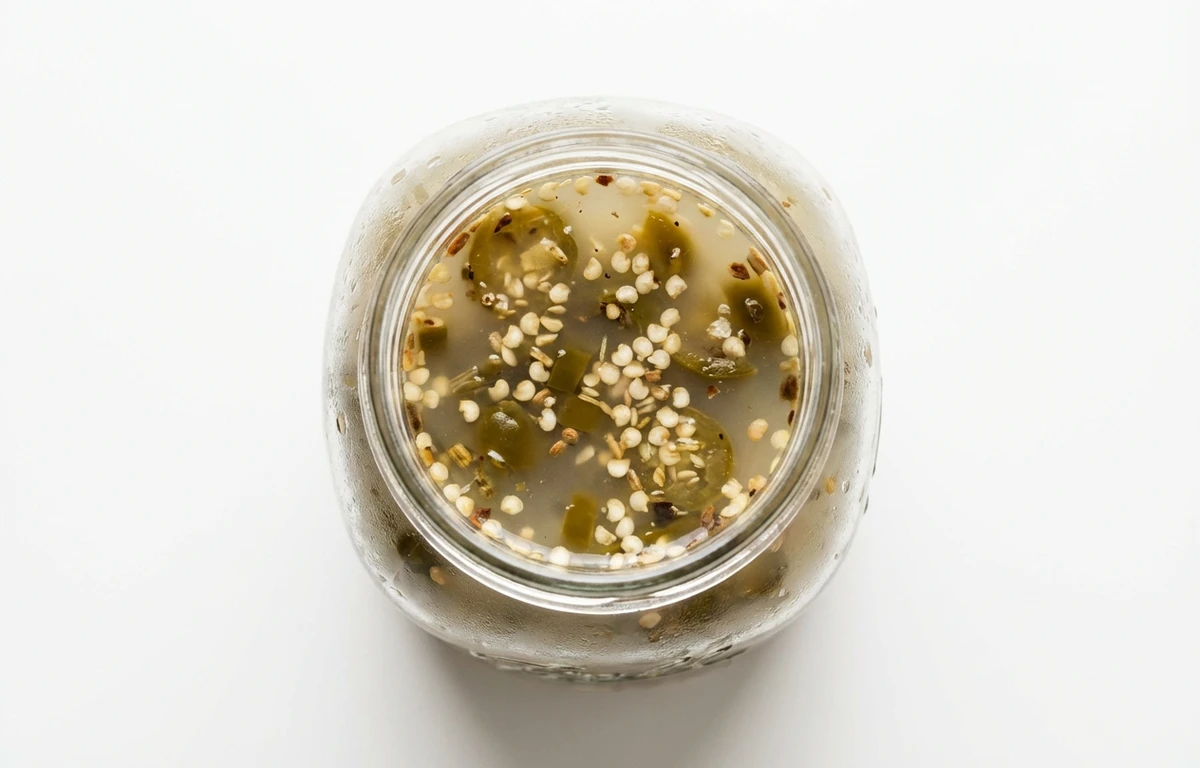
pickled jalapeño brine.
VegetarianVeganGluten-freeDairy-freeNut-freePeanut-freeSoy-freeEgg-freeShellfish-freeHoney-freeAlcohol-freeFermented
ALSO KNOWN AS
jalapeño juicepickled jalapeño liquidjalapeño pickling liquidjalapeño vinegarpickled jalapeño water
SERVING
CALORIES
15
PROTEIN
0.10g
CARBS
3.5g
FAT
0.10g
FIBER
0.20g
This ingredient is flagged as naturally gluten-free. Per 100 g, it provides 1.2 µg of vitamin K.
NUTRITION PROFILE · per 100 g
Everything in this ingredient.
MACRONUTRIENTS
Calories15kcal—
Protein0.10g0%
Carbohydrates3.5g1%
Fiber0.20g1%
Sugar1.5g3%
Total fat0.10g0%
Saturated fat0g0%
Trans fat0g—
Cholesterol0mg0%
Water92g—
MINERALS
Sodium1850mg80%
Potassium45mg1%
Calcium12mg1%
Iron0.20mg1%
Magnesium5.0mg1%
Phosphorus8.0mg1%
Zinc0.05mg0%
Copper0.02mg2%
Manganese0.04mg2%
Selenium0.10µg0%
VITAMINS
Vitamin A15µg2%
Vitamin C2.5mg3%
Vitamin D0µg0%
Vitamin E0.10mg1%
Vitamin K1.2µg1%
Thiamin (B1)0.01mg1%
Riboflavin (B2)0.01mg1%
Niacin (B3)0.10mg1%
Pantothenic acid (B5)0.05mg1%
Vitamin B60.02mg1%
Folate (B9)2.0µg1%
Vitamin B120µg0%
%DV based on a 2,000 cal diet. Source: USDA FoodData Central. A dash in the %DV column means there’s no established Daily Value for that nutrient.
MEASUREMENT CONVERSIONS
How much is what.
1 cup245g
1 tablespoon15.3g
1 teaspoon5.1g
1 oz28.4g
1 lb453.6g
1 liter1020g
HEALTH BENEFITS
Why eat it.
- ✓Contains electrolytes like sodium and potassium which can help with hydration
- ✓Traces of capsaicin can provide a temporary metabolism boost
- ✓May help relieve muscle cramps due to high electrolyte content
- ✓Vinegar content can aid in digestion for some individuals
COOKING TIPS
In the kitchen.
- 1Use as a spicy, acidic marinade for chicken, pork, or tofu
- 2Add a splash to potato salad or coleslaw for a tangy kick
- 3Use it as a 'dirty' mixer in cocktails like margaritas or martinis
STORAGE
Keep it fresh.
- Store in an airtight glass jar in the refrigerator to maintain flavor
- Keep the liquid away from direct sunlight to prevent degradation of the vinegar
- Can be frozen in ice cube trays for easy portioning in future recipes
FAQ
Frequently asked questions.
How long does pickled jalapeño brine last?
When kept refrigerated in a sealed container, it can last for up to 6 months.
Can I use jalapeño brine as a substitute for vinegar?
Yes, it works well as a spicy substitute for white or apple cider vinegar in savory recipes.
Is jalapeño brine high in sodium?
Yes, it is very high in sodium due to the salt used in the pickling process; use it sparingly if monitoring salt intake.
Can I freeze jalapeño brine?
Yes, freezing it in ice cube trays is an excellent way to preserve it for adding to soups or drinks later.
What can I use instead of jalapeño brine?
A mixture of white vinegar, a pinch of salt, and a dash of cayenne pepper or hot sauce is a good alternative.
How do I pick a good jalapeño brine?
Look for brine that is clear or slightly tinted green; avoid any that appears excessively cloudy or has an off-smell.
Is jalapeño brine vegan?
Generally yes, as it consists of vinegar, water, salt, and spices, but always check the label for honey or additives.
Can I use it to pickle other vegetables?
Yes, you can reuse the brine to 'quick pickle' sliced onions or cucumbers in the fridge for a few days.



















