
Meat
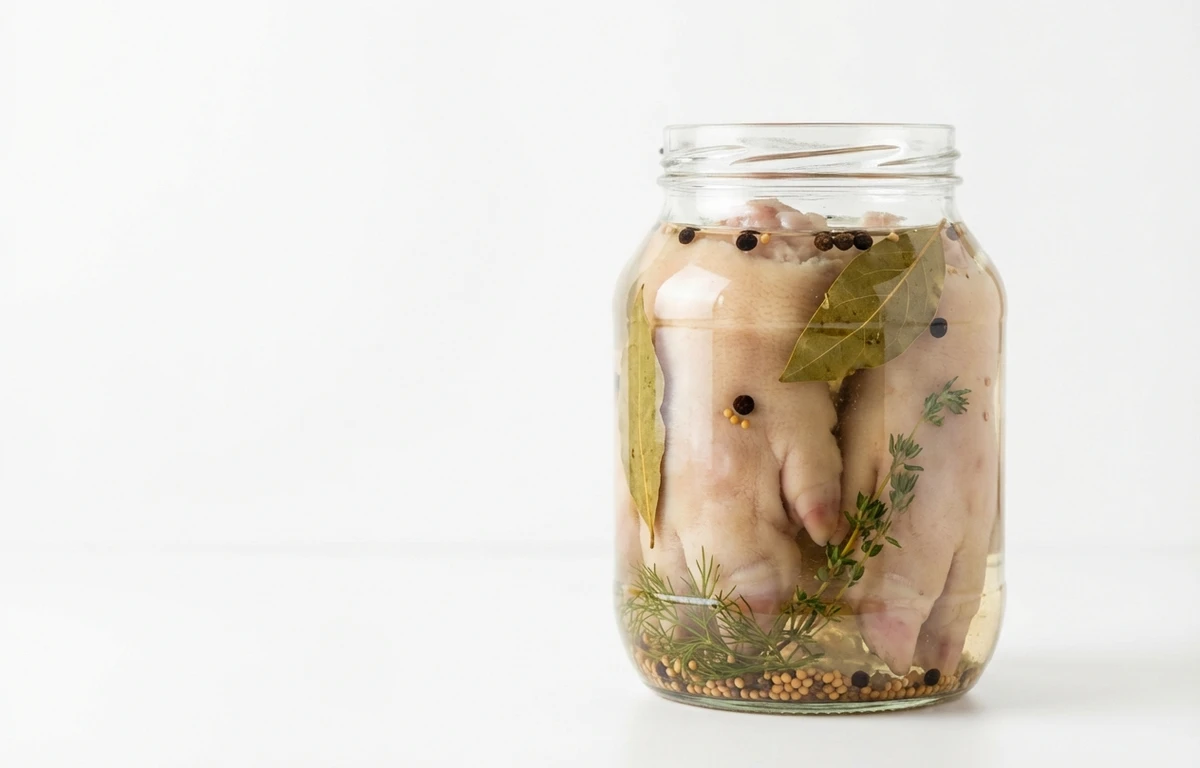
pickled pork feet.
VegetarianVeganGluten-freeDairy-freeNut-freePeanut-freeSoy-freeEgg-freeShellfish-freeHoney-freeAlcohol-freeHalalKosher
ALSO KNOWN AS
pickled feet
SERVING
CALORIES
140
PROTEIN
11.6g
CARBS
0.01g
FAT
10g
FIBER
0g
NUTRITION PROFILE · per 100 g
Everything in this ingredient.
MACRONUTRIENTS
Calories140kcal—
Protein11.6g23%
Carbohydrates0.01g0%
Fiber0g0%
Sugar0g0%
Total fat10g13%
Saturated fat3.0g15%
Trans fat0.07g—
Cholesterol83mg28%
Water75g—
MINERALS
Sodium946mg41%
Potassium13mg0%
Calcium32mg2%
Iron0.31mg2%
Magnesium11mg3%
Phosphorus87mg7%
Zinc0.20mg2%
Copper0.04mg4%
Manganese0.02mg1%
Selenium15.8µg29%
VITAMINS
Vitamin A11µg1%
Vitamin C0mg0%
Vitamin D0.40µg2%
Vitamin E0.21mg1%
Vitamin K0µg0%
Thiamin (B1)0.01mg1%
Riboflavin (B2)0.02mg2%
Niacin (B3)0.22mg1%
Pantothenic acid (B5)0.26mg5%
Vitamin B60.01mg1%
Folate (B9)1.0µg0%
Vitamin B120.21µg9%
%DV based on a 2,000 cal diet. Source: USDA FoodData Central. A dash in the %DV column means there’s no established Daily Value for that nutrient.
MEASUREMENT CONVERSIONS
How much is what.
1 oz28.4g
1 lb453.6g
1 piece500g
HEALTH BENEFITS
Why eat it.
- ✓Excellent source of collagen and gelatin, which support joint health, skin elasticity, and gut lining integrity.
- ✓Rich in the amino acid glycine, which plays a role in building proteins, synthesizing creatine, and may improve sleep quality.
- ✓Provides minerals such as phosphorus and calcium, which are essential for strong bones and teeth.
- ✓A source of complete protein containing all essential amino acids necessary for muscle repair and body functions.
COOKING TIPS
In the kitchen.
- 1Typically served cold or at room temperature directly from the jar as a snack or appetizer.
- 2Pair with saltine crackers, hot sauce, mustard, or sliced onions to complement the tangy flavor and rich texture.
- 3The meat can be deboned and chopped to be added to bean dishes, stews, or collard greens for extra flavor and richness.
- 4Balance the acidity by serving alongside starchy or creamy side dishes like potato salad, coleslaw, or cornbread.
STORAGE
Keep it fresh.
- Store unopened jars in a cool, dark place like a pantry at room temperature for up to one year, or as indicated by the expiration date.
- After opening, keep the pork feet refrigerated in their original brine in a tightly sealed container and consume within 1 to 2 weeks for optimal quality and safety.
FAQ
Frequently asked questions.
Are pickled pork feet healthy?
Pickled pork feet offer unique health benefits, primarily from their high collagen and gelatin content, which support joint health, skin elasticity, and gut integrity. They are also a good source of complete protein and minerals like phosphorus and calcium. However, they can be high in sodium due to the pickling process and contain a notable amount of fat, so moderation is key.
What are the nutritional values of pickled pork feet?
Per 100g, pickled pork feet contain approximately 140 calories, 11.63g of protein, 0.01g of carbohydrates, and 10.02g of fat. They are very low in carbs, making them suitable for certain diets, but provide a significant amount of protein and fat.
Are pickled pork feet good for joint health or skin?
Yes, pickled pork feet are an excellent source of collagen and gelatin, which are crucial for maintaining healthy joints, cartilage, and connective tissues. The collagen also contributes to skin elasticity and hydration, potentially supporting a more youthful appearance.
Are pickled pork feet keto-friendly?
Yes, pickled pork feet are generally considered keto-friendly. They are very low in carbohydrates (0.01g per 100g) and provide a good balance of protein and fat, aligning well with the macronutrient ratios of a ketogenic diet.
Are pickled pork feet gluten-free?
Typically, pickled pork feet are gluten-free. The primary ingredients are pork feet, water, vinegar, salt, and spices, none of which usually contain gluten. However, always check the ingredient label for any added thickeners or flavorings that might contain gluten.
Can diabetics eat pickled pork feet?
Given their very low carbohydrate content, pickled pork feet generally won't significantly impact blood sugar levels, making them potentially suitable for diabetics. However, their high sodium content can be a concern for blood pressure, which is often a co-morbidity for diabetics. Consult a healthcare professional for personalized dietary advice.
How are pickled pork feet typically eaten or prepared?
Pickled pork feet are usually sold ready-to-eat and are often consumed cold, directly from the jar. They can be enjoyed as a snack, an appetizer, or as part of a larger meal, sometimes served with hot sauce or other condiments. Some people may warm them slightly, but they are primarily a cold dish.
What do pickled pork feet taste like?
Pickled pork feet have a distinctive tangy, savory, and slightly salty flavor from the pickling brine. The texture is tender and gelatinous, with some chewiness from the skin and connective tissues. The meat itself is mild, absorbing the flavors of the pickling liquid.
How should pickled pork feet be stored and how long do they last?
Unopened jars of pickled pork feet can be stored in a cool, dark pantry for an extended period, often several months to a year, due to the pickling process. Once opened, they must be refrigerated and are best consumed within 1-2 weeks to maintain quality and safety.
Are pickled pork feet high in sodium?
Yes, due to the pickling process, pickled pork feet are typically high in sodium. The salt is a crucial component of the brine for preservation and flavor. Individuals monitoring their sodium intake, especially those with high blood pressure, should consume them in moderation.



















