
Vegetable
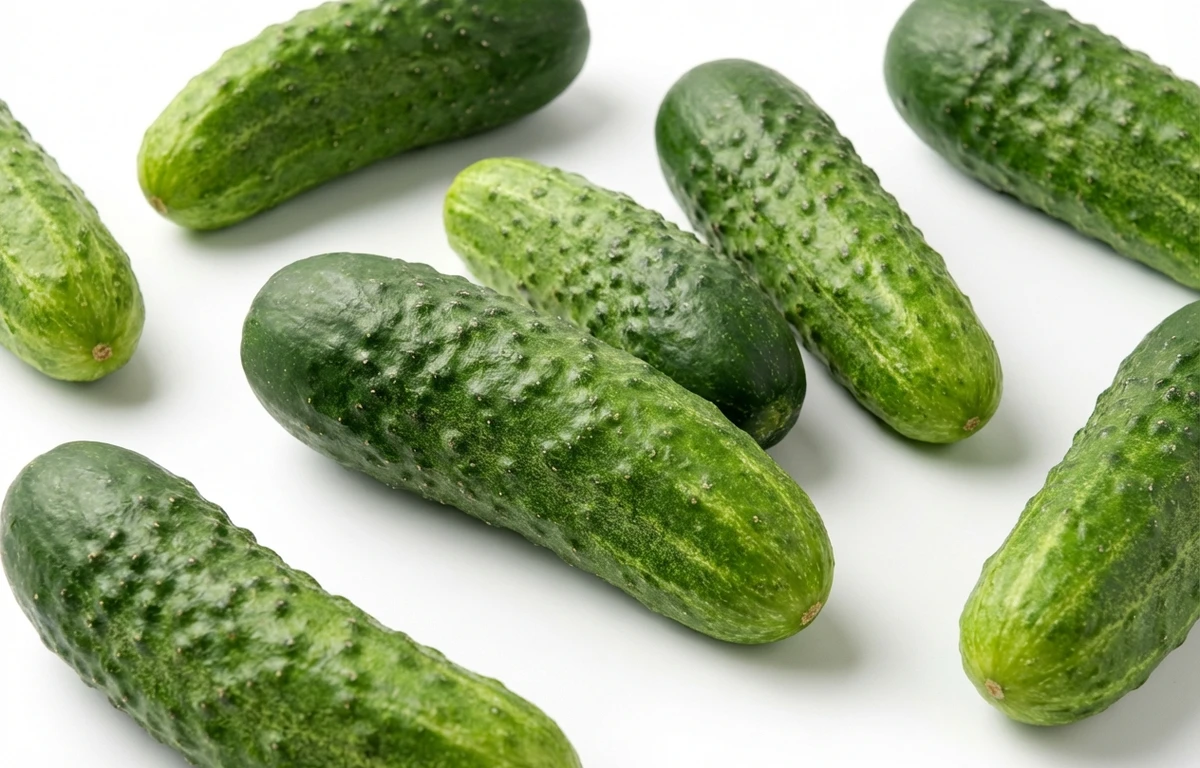
pickling cucumbers.
VegetarianVeganGluten-freeDairy-freeNut-freePeanut-freeSoy-freeEgg-freeShellfish-freeHoney-freeAlcohol-free
ALSO KNOWN AS
Kakdicucumber for picklingKirby cucumberspickling cucumberspicklerssmall cucumbersgherkinsbumpy cucumbers
SERVING
CALORIES
15
PROTEIN
0.65g
CARBS
3.6g
FAT
0.11g
FIBER
1.5g
This ingredient is flagged as naturally gluten-free. Per 100 g, it provides 47 µg of vitamin K.
NUTRITION PROFILE · per 100 g
Everything in this ingredient.
MACRONUTRIENTS
Calories15kcal—
Protein0.65g1%
Carbohydrates3.6g1%
Fiber1.5g5%
Sugar1.7g3%
Total fat0.11g0%
Saturated fat0.04g0%
Trans fat0g—
Cholesterol0mg0%
Water95.2g—
MINERALS
Sodium2.0mg0%
Potassium147mg3%
Calcium16mg1%
Iron0.28mg2%
Magnesium4.0mg1%
Phosphorus14mg1%
Zinc0.02mg0%
Copper0.09mg10%
Manganese0.01mg0%
Selenium0µg0%
VITAMINS
Vitamin A5.0µg1%
Vitamin C2.8mg3%
Vitamin D0µg0%
Vitamin E0.09mg1%
Vitamin K47µg39%
Thiamin (B1)0mg0%
Riboflavin (B2)0.01mg1%
Niacin (B3)0mg0%
Pantothenic acid (B5)0.04mg1%
Vitamin B60.01mg1%
Folate (B9)1.0µg0%
Vitamin B120µg0%
%DV based on a 2,000 cal diet. Source: USDA FoodData Central. A dash in the %DV column means there’s no established Daily Value for that nutrient.
MEASUREMENT CONVERSIONS
How much is what.
1 cup155g
1 tablespoon9.7g
1 teaspoon3.2g
1 oz28.4g
1 lb453.6g
1 ml0.6g
1 liter645.8g
HEALTH BENEFITS
Why eat it.
- ✓Promotes hydration due to their high water content (about 95%).
COOKING TIPS
In the kitchen.
- 1For the crunchiest pickles, use the freshest cucumbers possible and soak them in an ice water bath for a few hours before pickling.
- 2Trim off the blossom end of the cucumber before pickling, as it contains enzymes that can lead to soft pickles.
- 3Their firm texture and thin skin make them ideal for absorbing brine, but they can also be eaten raw in salads or as a crunchy snack.
- 4When preparing a pickling brine, use non-reactive cookware such as stainless steel, glass, or enamel to prevent the acid from reacting with the pot.
STORAGE
Keep it fresh.
- Store unwashed pickling cucumbers in the crisper drawer of your refrigerator for up to one week for maximum freshness.
- Keep them away from ethylene-producing fruits like apples, bananas, and tomatoes, as the gas can cause them to yellow and soften prematurely.
FAQ
Frequently asked questions.
How many calories and carbs are in pickling cucumbers?
Per 100g, pickling cucumbers contain approximately 15 calories and 3.63g of carbohydrates. They are very low in fat (0.11g) and offer a small amount of protein (0.65g), making them a light and refreshing vegetable.
Are pickling cucumbers vegan and gluten-free?
Yes, pickling cucumbers are naturally vegan and gluten-free. As a fresh vegetable, they contain no animal products or gluten-containing grains, making them suitable for these dietary restrictions.
What's the best way to use pickling cucumbers?
As their name suggests, pickling cucumbers are primarily used for making pickles due to their firm texture and smaller size, which holds up well during the pickling process. They are ideal for both quick pickles and fermented varieties.
Can pickling cucumbers be eaten raw?
Yes, pickling cucumbers can absolutely be eaten raw. They have a crisp texture and a mild, refreshing flavor, making them suitable for salads, crudités, or as a crunchy snack.
How do I choose fresh pickling cucumbers?
Look for pickling cucumbers that are firm to the touch, bright green, and free of soft spots, blemishes, or yellowing. Smaller cucumbers are generally preferred for pickling as they tend to be crisper and have fewer seeds.
What's the difference between pickling cucumbers and regular cucumbers?
Pickling cucumbers are typically shorter, thicker, and have bumpier skin compared to longer, smoother slicing cucumbers. Their firmer flesh and smaller seed cavity make them ideal for absorbing pickling brines and maintaining a crisp texture.



















