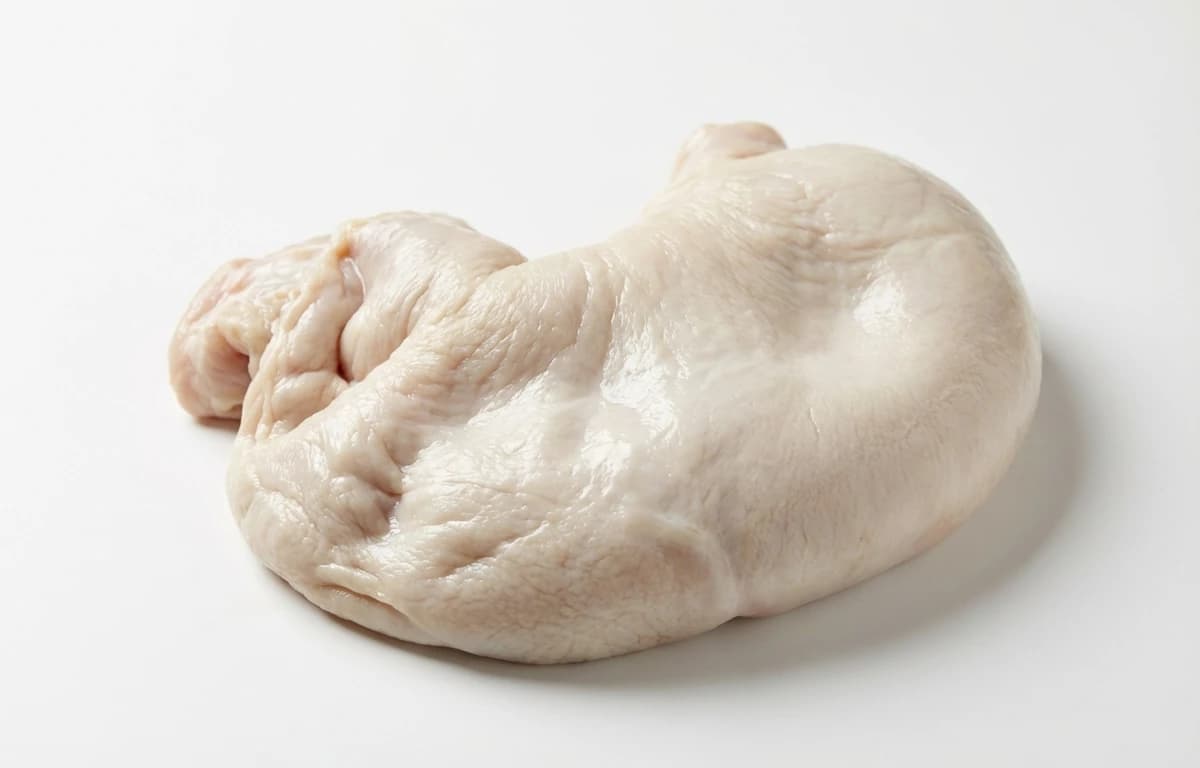
pig's stomach
Also known as:
Loading...
Also known as:
Per 100g
Nutrition data source: USDA FoodData Central
Common measurement equivalents in grams
Yes, pig's stomach is a healthy source of nutrients. It's an excellent source of high-quality protein, essential B vitamins (like B12 and Niacin), and minerals such as iron, zinc, and selenium. These nutrients support energy metabolism, red blood cell formation, and immune function.
Per 100g, pig's stomach contains approximately 110 calories, 17.5g of protein, 0g of carbohydrates, and 4.5g of fat. It offers a good balance of protein and relatively low fat, making it a nutrient-dense option.
Yes, pig's stomach can be beneficial for weight loss due to its high protein content and relatively low calories and fat. Protein helps promote satiety, which can reduce overall calorie intake. Its zero carbohydrate content also makes it suitable for low-carb diets.
Yes, pig's stomach itself is naturally gluten-free as it is simply an organ meat. However, always check the ingredients of any prepared dishes or marinades to ensure no gluten-containing additives are used.
Yes, pig's stomach is very keto-friendly. It contains 0g of carbohydrates, 17.5g of protein, and 4.5g of fat per 100g, fitting well within the macronutrient ratios required for a ketogenic diet. It provides essential nutrients without adding carbs.
Yes, pig's stomach is a suitable food for diabetics. It has no carbohydrates, meaning it won't impact blood sugar levels. Its high protein content can also help with satiety and blood sugar management.
Pig's stomach requires thorough cleaning, often involving scrubbing with salt and vinegar to remove impurities and odors. It then needs to be boiled or simmered for an extended period (2-3 hours) until tender before being sliced and incorporated into dishes like soups, stews, or stir-fries.
pig's stomach is a versatile ingredient found in cuisines around the world. With 110 calories per 100g and 17.5 grams of protein, it's a nutritious addition to many dishes.
Explore more ingredients in the meat category with complete nutrition information.
View all meat →Discover 1 recipes featuring pig's stomach with step-by-step instructions.
Browse recipes →Pig's stomach has a mild, slightly gamey, and savory flavor, often described as similar to other offal but less intense. When properly cooked, its texture is tender yet chewy, with a satisfying bite, often compared to tender calamari or tripe.
Fresh pig's stomach should be stored in the coldest part of the refrigerator and used within 1-2 days. For longer storage, it can be thoroughly cleaned, blanched, and then frozen for up to 3-6 months. Cooked pig's stomach should be refrigerated and consumed within 3-4 days.
Fresh pig's stomach should have a clean, pale pinkish-white color and a mild, slightly meaty smell. Avoid any stomach that appears discolored, slimy, or has a strong, off-putting odor, as these are signs of spoilage.