
Spice5 recipes
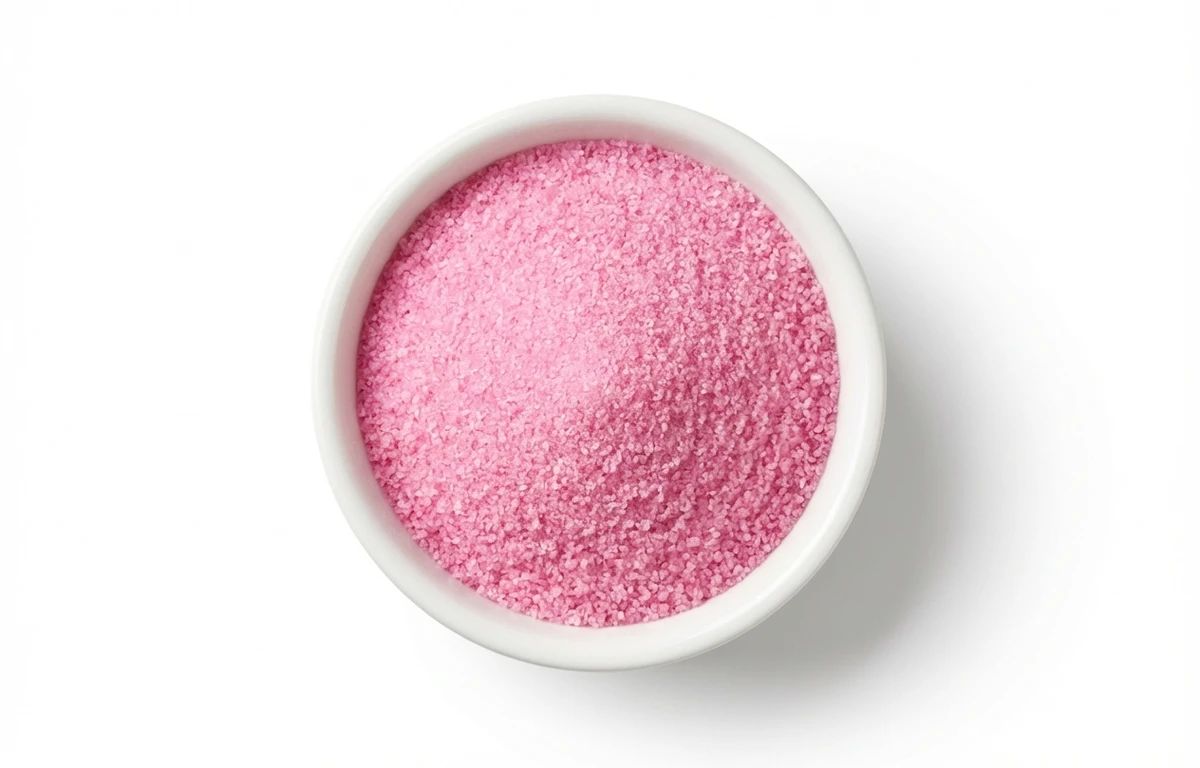
pink curing salt.
VegetarianVeganGluten-freeDairy-freeNut-freePeanut-freeSoy-freeEgg-freeShellfish-freeHoney-freeAlcohol-free
ALSO KNOWN AS
prague powder #1insta cure #1tinted curecuring saltsodium nitrite salt
SERVING
CALORIES
0
PROTEIN
0g
CARBS
0g
FAT
0g
FIBER
0g
NUTRITION PROFILE · per 100 g
Everything in this ingredient.
MACRONUTRIENTS
Calories0kcal—
Protein0g0%
Carbohydrates0g0%
Fiber0g0%
Sugar0g0%
Total fat0g0%
Saturated fat0g0%
Trans fat0g—
Cholesterol0mg0%
Water0.20g—
MINERALS
Sodium38000mg1652%
Calcium24mg2%
Iron0.30mg2%
Magnesium1.0mg0%
Zinc0.10mg1%
Selenium0.10µg0%
VITAMINS
Vitamin A0µg0%
Vitamin C0mg0%
Vitamin D0µg0%
Vitamin E0mg0%
Vitamin K0µg0%
Thiamin (B1)0mg0%
Riboflavin (B2)0mg0%
Niacin (B3)0mg0%
Pantothenic acid (B5)0mg0%
Vitamin B60mg0%
Folate (B9)0µg0%
Vitamin B120µg0%
%DV based on a 2,000 cal diet. Source: USDA FoodData Central. A dash in the %DV column means there’s no established Daily Value for that nutrient.
MEASUREMENT CONVERSIONS
How much is what.
1 cup288g
1 tablespoon18g
1 teaspoon6g
1 oz28.4g
1 lb453.6g
1 ml1.2g
1 liter1200g
HEALTH BENEFITS
Why eat it.
- ✓Prevents growth of Clostridium botulinum
- ✓Acts as a powerful antimicrobial agent
- ✓Preserves meat color and texture
- ✓Extends shelf life of cured products
- ✓Inhibits lipid oxidation in meats
COOKING TIPS
In the kitchen.
- 1Never use as a table salt; it is toxic in high concentrations
- 2Follow exact measurements (usually 1 tsp per 5 lbs of meat)
- 3Dissolve in water or brine for even distribution
STORAGE
Keep it fresh.
- Store in an airtight container in a cool, dry place
- Keep clearly labeled and out of reach of children
- Protect from moisture to prevent clumping
FAQ
Frequently asked questions.
Is pink curing salt the same as Himalayan pink salt?
No. Himalayan pink salt is a natural mineral salt for seasoning. Pink curing salt is a mixture of table salt and sodium nitrite, dyed pink for safety to prevent accidental ingestion.
Why is curing salt dyed pink?
It is dyed pink so it is not mistaken for regular table salt or sugar, as consuming it in large quantities can be toxic.
What is the difference between Prague Powder #1 and #2?
Prague Powder #1 is for short-term cures (bacon, jerky, ham). Prague Powder #2 contains sodium nitrate and is for long-term dry-cured meats like salami.
Can I substitute regular salt for pink curing salt?
No. Regular salt will season the meat but will not provide the same protection against botulism or the characteristic pink color of cured meat.
How long does pink curing salt last?
It has an indefinite shelf life if kept completely dry and stored in a cool environment.
Is pink curing salt safe to eat?
It is safe only when used in the very small, specific quantities recommended for curing meat. It should never be eaten directly or used as a seasoning.
What can I use as a natural alternative to pink curing salt?
Celery powder or celery juice concentrate are often used as 'natural' alternatives because they are naturally high in nitrates.
How do I calculate how much curing salt to use?
The standard ratio is 0.25% of the weight of the meat, or roughly 1 level teaspoon for every 5 pounds (2.3kg) of meat.
RECIPES
Cook with pink curing salt.
5 recipes · sorted by what’s quick



















