
Loading...
Per 100g
Nutrition data source: USDA FoodData Central
Common measurement equivalents in grams
When stored in an airtight container in a cool, dry place, it typically lasts for 6 to 12 months. Its potency and aroma will gradually fade over time.
Yes, you can freeze it in a moisture-proof bag to extend its shelf life, but ensure it is completely sealed to prevent it from absorbing freezer odors.
Amchur (dry mango powder) is the best substitute for its sourness. Alternatively, you can use lemon juice or tamarind paste, though the flavor profile will differ slightly.
No. Pomegranate seed powder (Anardana) is made from the dried seeds and is tangy and slightly crunchy. Pomegranate fruit powder is usually made from dehydrated juice and is sweeter and more soluble.
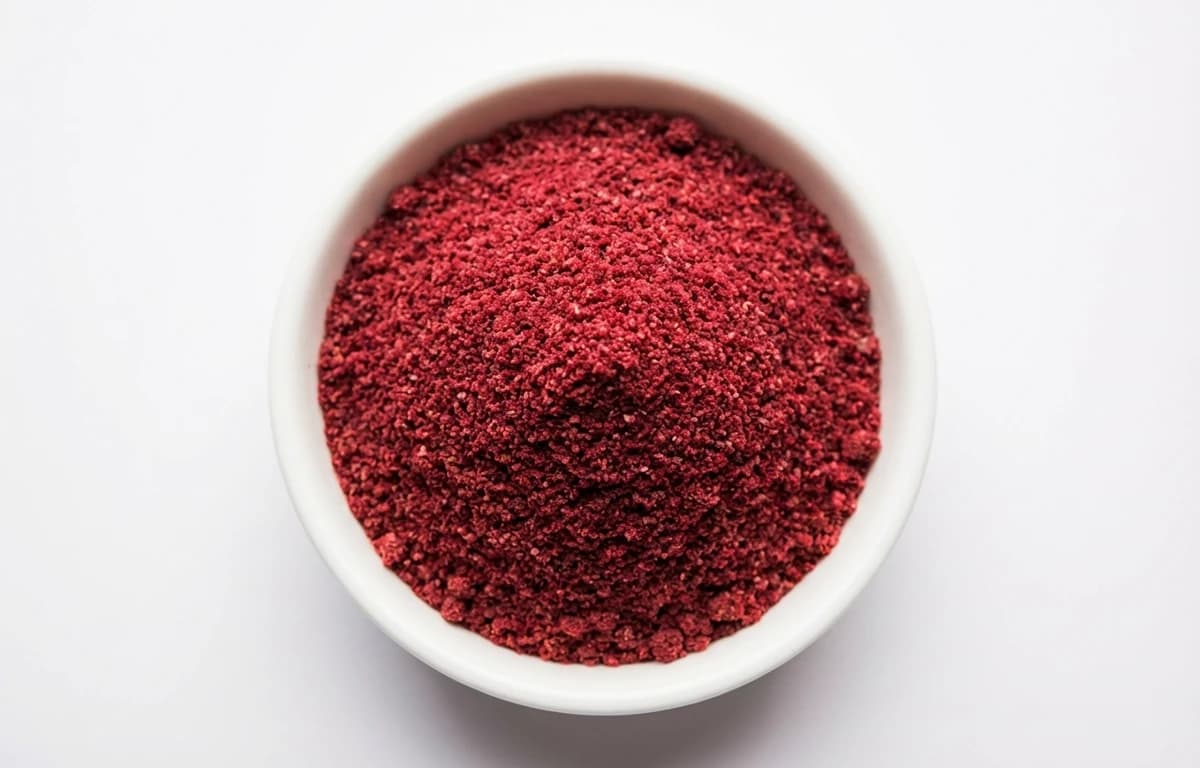
Look for a dark reddish-brown color and a distinct tangy aroma. Avoid powders that look excessively pale or have large clumps, which may indicate moisture exposure.
Pure pomegranate seed powder contains only natural sugars from the fruit. However, always check the label of commercial brands to ensure no fillers or sweeteners are added.
Yes, pomegranate seed powder is perfectly acceptable in a Jain diet as it is a fruit-based spice and not a root vegetable.
It is a staple in dishes like Pindi Chole (chickpea curry) and various chutneys to provide a deep, tangy flavor without adding moisture.
pomegranate seed powder is a versatile ingredient found in cuisines around the world. With 372 calories per 100g and 4.8 grams of protein, it's a nutritious addition to many dishes.
Explore more ingredients in the other category with complete nutrition information.
View all other →Discover 0 recipes featuring pomegranate seed powder with step-by-step instructions.
Browse recipes →