
Vegetable10 recipes
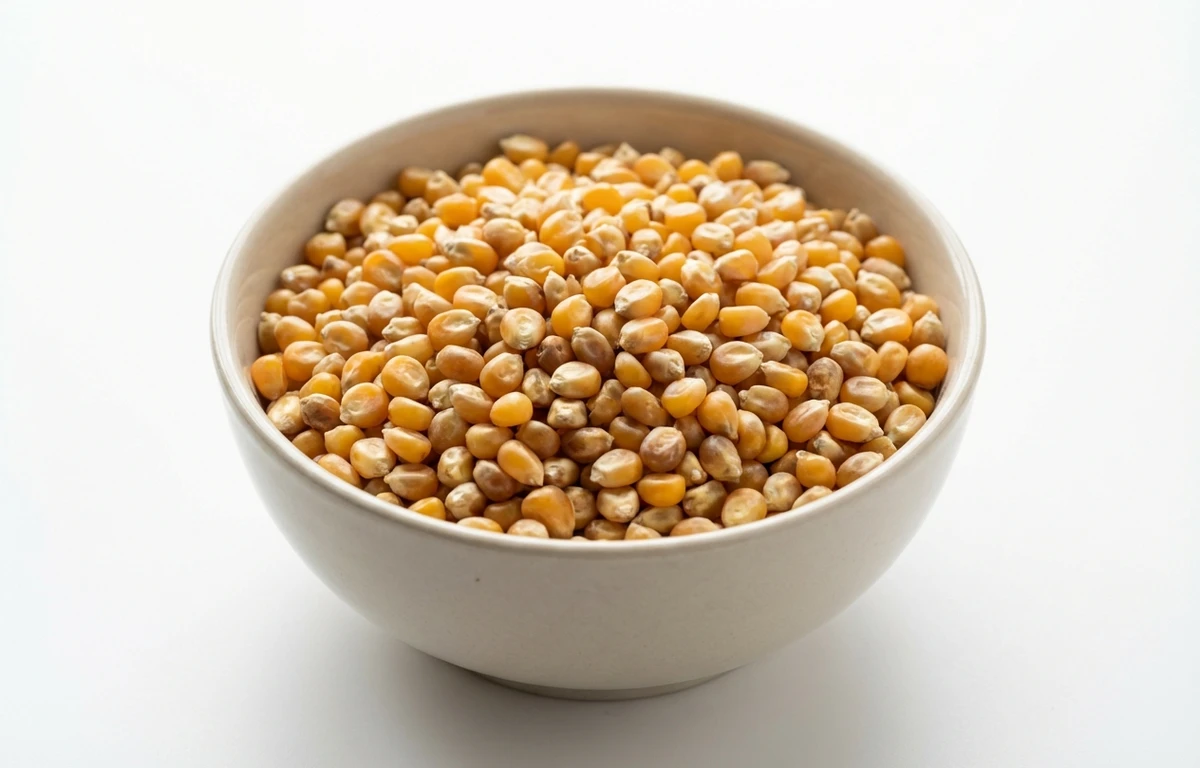
popcorn kernels.
VegetarianVeganGluten-freeDairy-freeNut-freePeanut-freeSoy-freeEgg-freeShellfish-freeHoney-freeAlcohol-freeWhole grain
ALSO KNOWN AS
unpopped popcornpopping cornmaize kernelsmakai ke danedried corn kernels
SERVING
CALORIES
365
PROTEIN
9.4g
CARBS
74.3g
FAT
4.7g
FIBER
14.5g
This ingredient is flagged as naturally gluten-free. Per 100 g, it provides 0.30 µg of vitamin K.
NUTRITION PROFILE · per 100 g
Everything in this ingredient.
MACRONUTRIENTS
Calories365kcal—
Protein9.4g19%
Carbohydrates74.3g27%
Fiber14.5g52%
Sugar0.60g1%
Total fat4.7g6%
Saturated fat0.70g3%
Trans fat0g—
Cholesterol0mg0%
Water10.3g—
MINERALS
Sodium35mg2%
Potassium301mg6%
Calcium7.0mg1%
Iron2.7mg15%
Magnesium127mg30%
Phosphorus301mg24%
Zinc2.2mg20%
Copper0.26mg29%
Manganese1.1mg48%
Selenium10.3µg19%
VITAMINS
Vitamin A11µg1%
Vitamin C0mg0%
Vitamin D0µg0%
Vitamin E0.49mg3%
Vitamin K0.30µg0%
Thiamin (B1)0.38mg32%
Riboflavin (B2)0.08mg6%
Niacin (B3)2.3mg14%
Pantothenic acid (B5)0.50mg10%
Vitamin B60.16mg9%
Folate (B9)31µg8%
Vitamin B120µg0%
%DV based on a 2,000 cal diet. Source: USDA FoodData Central. A dash in the %DV column means there’s no established Daily Value for that nutrient.
MEASUREMENT CONVERSIONS
How much is what.
1 cup190g
1 tablespoon12g
1 teaspoon4g
1 oz28.4g
1 lb453.6g
1 ml0.8g
1 liter800g
1 piece0.2g
HEALTH BENEFITS
Why eat it.
- ✓A 100% unprocessed whole grain food
- ✓Low glycemic index when air-popped without added fats
COOKING TIPS
In the kitchen.
- 1Use a high-smoke point oil like coconut, avocado, or grapeseed oil for stovetop popping
- 2Test the oil temperature by dropping 2-3 kernels; when they pop, the oil is ready for the rest
- 3Shake the pot continuously while popping to prevent kernels from burning and ensure even heat
STORAGE
Keep it fresh.
- Store in an airtight glass or plastic container to maintain internal moisture
- Keep in a cool, dark, and dry pantry away from direct sunlight
- Avoid storing in the refrigerator as the dry air can cause kernels to lose the moisture needed to pop
FAQ
Frequently asked questions.
How long do popcorn kernels last?
If stored in an airtight container in a cool, dry place, they can last indefinitely, but they are best used within 1 to 2 years for maximum popping yield.
Why won't my popcorn kernels pop?
The most common reason is loss of moisture. Each kernel needs a tiny drop of water inside to turn into steam and explode; if the kernel dries out, it won't pop.
Can I freeze popcorn kernels to keep them fresh?
No, freezing is not recommended. The cold, dry environment of a freezer can dry out the moisture inside the kernels, leading to 'old maids' or unpopped kernels.
Are popcorn kernels gluten-free?
Yes, corn is naturally gluten-free. However, always check packaging for potential cross-contamination if you have a severe sensitivity.
What is the best way to pick high-quality kernels?
Look for kernels that are uniform in color, shiny, and free of cracks or visible mold. Premium brands often have a higher 'expansion ratio'.
Can I grind popcorn kernels into flour?
Yes, you can grind them in a high-speed blender or grain mill to create a coarse cornmeal or fine corn flour for baking.
How much popped popcorn does 1/2 cup of kernels make?
Generally, 1/2 cup of raw kernels will yield approximately 12 to 15 cups of popped popcorn.
Can you pop kernels without oil?
Yes, you can use an air-popper, a brown paper bag in the microwave, or a specialized silicone microwave bowl to pop kernels without any oil.
What are the best substitutes for popcorn kernels?
While nothing is exactly like popcorn, you can pop other grains like sorghum, amaranth, or even quinoa, though the 'pops' will be much smaller.
RECIPES
Cook with popcorn kernels.
10 recipes · sorted by what’s quick



















