
Protein1 recipes
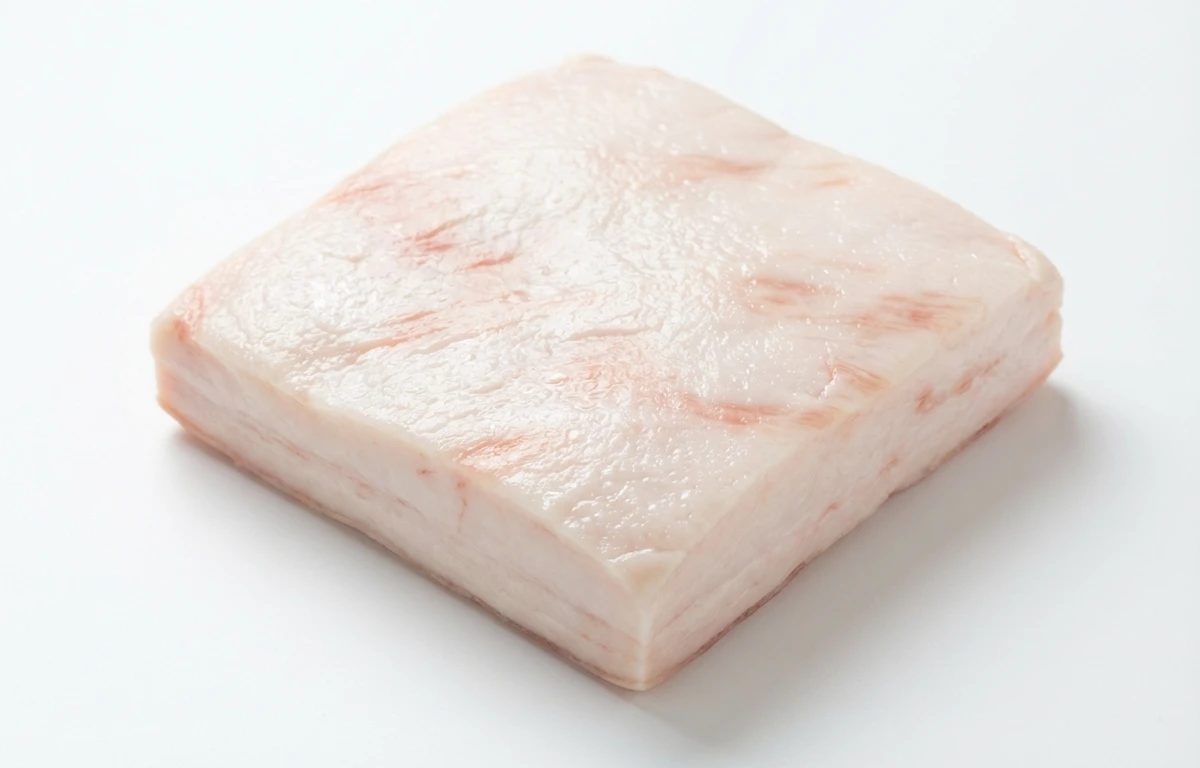
pork back fat.
VegetarianVeganGluten-freeDairy-freeNut-freePeanut-freeSoy-freeEgg-freeShellfish-freeHoney-freeAlcohol-freeHalalKosher
ALSO KNOWN AS
back fatfatback
SERVING
CALORIES
896
PROTEIN
1.0g
CARBS
0g
FAT
99g
FIBER
0g
NUTRITION PROFILE · per 100 g
Everything in this ingredient.
MACRONUTRIENTS
Calories896kcal—
Protein1.0g2%
Carbohydrates0g0%
Fiber0g0%
Sugar0g0%
Total fat99g127%
Saturated fat35.4g177%
Trans fat0g—
Cholesterol99mg33%
Water0.04g—
MINERALS
Sodium10mg0%
Potassium1.0mg0%
Calcium1.0mg0%
Iron0.04mg0%
Magnesium2.0mg0%
Phosphorus11mg1%
Zinc0.09mg1%
Copper0.01mg1%
Manganese0mg0%
Selenium0.40µg1%
VITAMINS
Vitamin A0µg0%
Vitamin C0mg0%
Vitamin D0.60µg3%
Vitamin E0.02mg0%
Vitamin K0µg0%
Thiamin (B1)0.01mg1%
Riboflavin (B2)0.01mg1%
Niacin (B3)0.05mg0%
Pantothenic acid (B5)0.03mg1%
Vitamin B60.01mg1%
Folate (B9)0µg0%
Vitamin B120µg0%
%DV based on a 2,000 cal diet. Source: USDA FoodData Central. A dash in the %DV column means there’s no established Daily Value for that nutrient.
MEASUREMENT CONVERSIONS
How much is what.
1 cup216g
1 tablespoon13.5g
1 teaspoon4.5g
1 oz28.4g
1 lb453.6g
1 ml0.9g
1 liter900g
HEALTH BENEFITS
Why eat it.
- ✓Rich source of monounsaturated fats, particularly oleic acid, which supports heart health.
- ✓Provides fat-soluble vitamins, including Vitamin D, which is essential for bone health and immune function.
- ✓A concentrated source of energy due to its high caloric density.
- ✓Contains choline, an important nutrient for brain health, liver function, and metabolism.
COOKING TIPS
In the kitchen.
- 1Render slowly over low heat to create high-quality lard, ideal for flaky pastries, frying, and confit.
- 2Cut into small cubes (lardons) and fry until crisp to add rich flavor and texture to salads, stews, and vegetable dishes.
- 3Grind and mix into lean ground meats like venison or turkey to make sausages or burgers, adding essential moisture and flavor.
- 4Use as a barding fat by wrapping thin sheets around lean roasts to prevent them from drying out during cooking.
STORAGE
Keep it fresh.
- Store fresh, raw back fat tightly wrapped in the refrigerator at or below 40°F (4°C) for up to 5 days.
- For long-term storage, freeze in airtight, vacuum-sealed bags for up to 6 months.
- Rendered lard can be stored in an airtight container in the refrigerator for up to a year or at room temperature for several months.
FAQ
Frequently asked questions.
Is pork back fat healthy?
While pork back fat is very high in calories and saturated fat, it also contains a significant amount of monounsaturated fats, particularly oleic acid, which can support heart health. It provides fat-soluble vitamins like Vitamin D and choline, important for bone health and brain function. Due to its high caloric density, it should be consumed in moderation as part of a balanced diet.
What are the nutritional facts for 100g of pork back fat?
Per 100g, pork back fat contains approximately 896 calories, 1.02g of protein, 0g of carbohydrates, and 99g of fat. It is almost entirely composed of fat, making it a concentrated energy source.
Is pork back fat good for weight loss?
Due to its extremely high caloric density, pork back fat is generally not recommended for weight loss in large quantities. However, small amounts can add flavor and satiety to meals, potentially helping with portion control if used judiciously within a calorie-controlled diet.
Is pork back fat keto-friendly?
Yes, pork back fat is highly keto-friendly. It contains virtually no carbohydrates and is almost entirely fat, making it an excellent ingredient for those following a ketogenic diet to meet their fat macros.
Is pork back fat gluten-free?
Yes, pork back fat is naturally gluten-free. It is a pure animal product and does not contain any wheat, barley, rye, or cross-contaminants unless processed with other ingredients.
Is pork back fat vegan or vegetarian?
No, pork back fat is neither vegan nor vegetarian. It is an animal product derived from pigs, making it unsuitable for those following plant-based or vegetarian diets.
What is pork back fat commonly used for in cooking?
Pork back fat is primarily used for rendering into lard, which is then used for frying, baking, and pastry making. It's also incorporated into sausages, pâtés, and ground meats to add moisture, flavor, and richness, or used for larding lean cuts of meat to prevent them from drying out during cooking.
How do you render pork back fat into lard?
To render pork back fat, cut it into small pieces and slowly cook it over low heat in a heavy-bottomed pot. The fat will melt, separating from the solid cracklings. Strain the liquid fat through a fine-mesh sieve or cheesecloth into a clean jar, then cool and store.
How do you store raw pork back fat?
Raw pork back fat should be stored in the refrigerator for up to 3-5 days. For longer storage, it can be tightly wrapped and frozen for several months, typically up to 6-9 months, without significant loss of quality.
How long does rendered lard last?
Properly rendered and strained lard can last for several months at room temperature in a cool, dark place, or up to a year in the refrigerator. If stored in the freezer, it can last even longer, often for over a year.
RECIPES
Cook with pork back fat.
1 recipes · sorted by what’s quick



















