
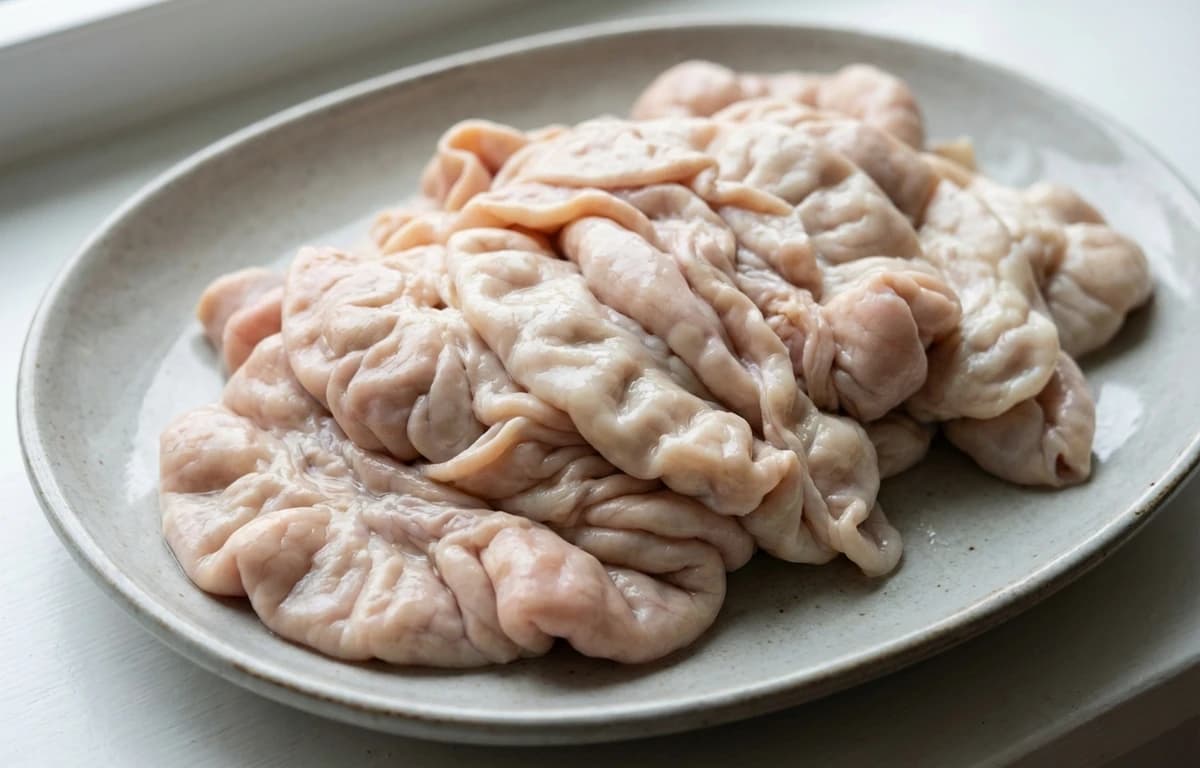
Pork Chitlins
Also known as: cooked chitterlings, boiled pork intestines, stewed chitlins
Loading...
Also known as: cooked chitterlings, boiled pork intestines, stewed chitlins
Per 100g
Nutrition data source: USDA FoodData Central
Common measurement equivalents in grams
Cooked chitlins should be consumed within 2 days when stored in an airtight container in the refrigerator.
They must be rinsed multiple times in cold water, removing any debris or excess fat, and then boiled for at least 5 minutes before the main cooking process to ensure safety.
Yes, they freeze well. Place them in a heavy-duty freezer bag with some of the cooking liquid to prevent drying out, and use within 3 months.
Pork tripe or hog casings are the closest substitutes in terms of texture and flavor profile.
Yes, like most organ meats, chitlins are high in cholesterol and saturated fat, so they should be consumed in moderation.
They are done when they are fork-tender and no longer rubbery. This usually takes 3 to 4 hours of simmering.
Common seasonings include salt, black pepper, red pepper flakes, vinegar, onions, and garlic.
The smell is natural to the digestive tract of the pig. Thorough cleaning and slow cooking with aromatics like vinegar and onion help reduce the odor.
Pork Chitlins is a versatile ingredient found in cuisines around the world. With 232 calories per 100g and 10.1 grams of protein, it's a nutritious addition to many dishes.
Explore more ingredients in the meat category with complete nutrition information.
View all meat →Discover 1 recipes featuring pork chitlins with step-by-step instructions.
Browse recipes →