
Protein
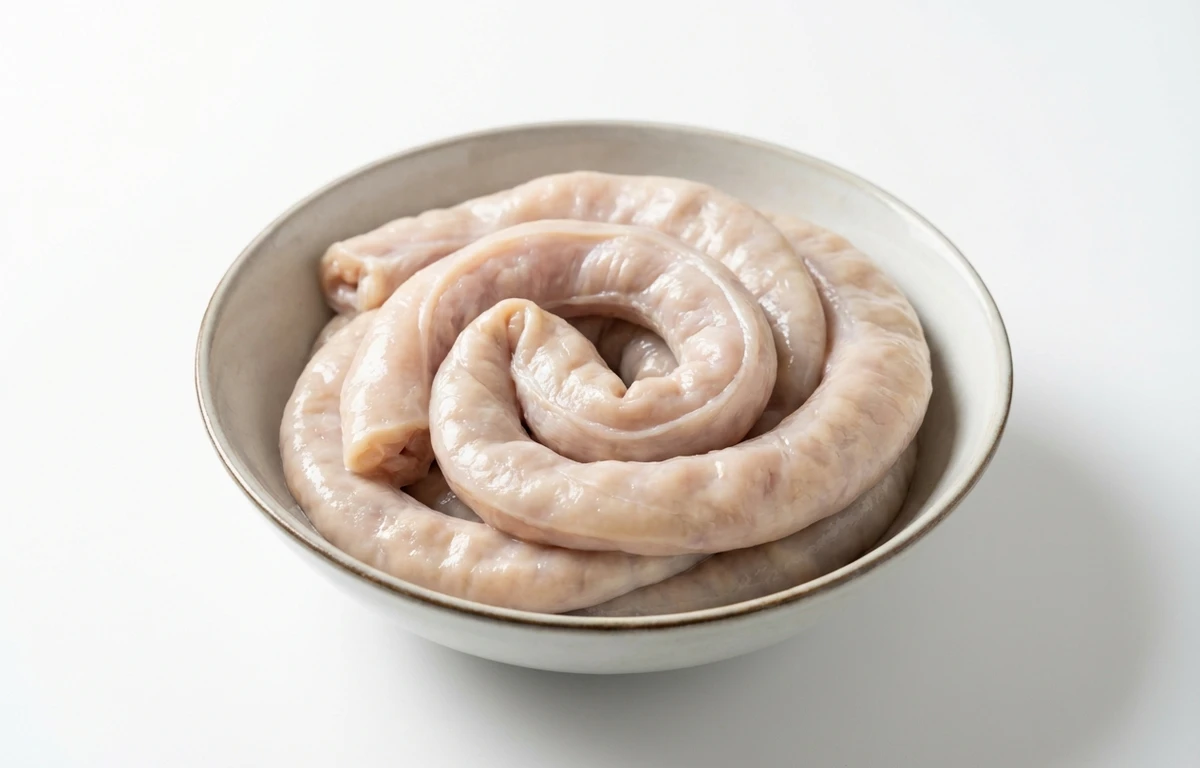
pork chitterlings.
VegetarianVeganGluten-freeDairy-freeNut-freePeanut-freeSoy-freeEgg-freeShellfish-freeHoney-freeAlcohol-freeHalalKosher
ALSO KNOWN AS
chitlinschitterlingspork small intestinespork chitterlingssimmered cooked pork chitterlingsraw pork chitterlings
SERVING
CALORIES
195
PROTEIN
15.6g
CARBS
0g
FAT
14.7g
FIBER
0g
This ingredient is flagged as naturally gluten-free. Per 100 g, it provides 1.0 µg of vitamin K.
NUTRITION PROFILE · per 100 g
Everything in this ingredient.
MACRONUTRIENTS
Calories195kcal—
Protein15.6g31%
Carbohydrates0g0%
Fiber0g0%
Sugar0g0%
Total fat14.7g19%
Saturated fat5.1g26%
Trans fat0g—
Cholesterol174mg58%
Water68.9g—
MINERALS
Sodium49mg2%
Potassium100mg2%
Calcium18mg1%
Iron1.2mg7%
Magnesium6.8mg2%
Phosphorus54.2mg4%
Zinc1.1mg10%
Copper0.09mg10%
Manganese0.06mg3%
Selenium17.1µg31%
VITAMINS
Vitamin A0µg0%
Vitamin C0mg0%
Vitamin D0µg0%
Vitamin E0.20mg1%
Vitamin K1.0µg1%
Thiamin (B1)0.02mg2%
Riboflavin (B2)0.10mg8%
Niacin (B3)0.24mg2%
Pantothenic acid (B5)0.26mg5%
Vitamin B60.02mg1%
Folate (B9)3.4µg1%
Vitamin B120.93µg39%
%DV based on a 2,000 cal diet. Source: USDA FoodData Central. A dash in the %DV column means there’s no established Daily Value for that nutrient.
MEASUREMENT CONVERSIONS
How much is what.
1 cup150g
1 tablespoon9g
1 teaspoon3g
1 oz28.4g
1 lb453.6g
HEALTH BENEFITS
Why eat it.
- ✓Rich source of complete protein, essential for muscle building and tissue repair.
- ✓Excellent source of Vitamin B12, which is crucial for nerve function and the formation of red blood cells.
- ✓Contains collagen, which may contribute to joint health and skin elasticity.
COOKING TIPS
In the kitchen.
- 1Thorough cleaning is non-negotiable. Repeatedly rinse under cold running water, removing any debris and the outer membrane until the water runs clear.
- 2Boil chitterlings for an extended period (at least 1-2 hours) with aromatics like onion, garlic, bay leaves, and a splash of vinegar to tenderize them and reduce their strong odor.
- 3After boiling, they can be chopped and fried until crispy, added to savory stews, or battered and deep-fried for a different texture.
- 4Due to the risk of cross-contamination with bacteria like Yersinia, use separate cutting boards and utensils, and thoroughly wash hands and surfaces with hot, soapy water after handling raw chitterlings.
STORAGE
Keep it fresh.
- Store raw, cleaned chitterlings in the coldest part of the refrigerator (below 40°F or 4°C) and cook within 1-2 days.
- For long-term storage, freeze raw chitterlings in an airtight container or heavy-duty freezer bag for up to 3 months.
- Cooked chitterlings can be refrigerated in a sealed container for up to 4 days.
FAQ
Frequently asked questions.
What is the typical nutritional content of 100g of pork chitterlings?
Per 100g, pork chitterlings typically contain approximately 195 calories, 15.6g of protein, 0g of carbohydrates, and 14.7g of fat. They offer a substantial protein boost with no carbs, but are relatively high in fat.
Are pork chitterlings gluten-free?
Yes, pork chitterlings are naturally gluten-free as they are simply pork intestine. However, always check ingredients if purchasing pre-seasoned or processed chitterlings to ensure no gluten-containing additives have been used.
Are pork chitterlings suitable for a keto diet?
Yes, pork chitterlings are very suitable for a ketogenic diet. They contain 0g of carbohydrates and are high in fat and protein, aligning well with the macronutrient requirements of a keto lifestyle.
Are pork chitterlings considered halal or kosher?
No, pork chitterlings are not considered halal or kosher. Both Islamic (halal) and Jewish (kosher) dietary laws prohibit the consumption of pork and pork products.
How should pork chitterlings be prepared and cooked?
Pork chitterlings require thorough cleaning, often involving multiple rinses and scraping, to remove impurities. They are typically slow-cooked by boiling or simmering for several hours until tender, often with seasonings like onions, vinegar, and hot sauce, to achieve a soft texture and rich flavor.
What is the taste and texture of pork chitterlings?
Cooked pork chitterlings have a distinct, savory, and somewhat earthy flavor, often described as rich and porky. Their texture is famously soft, chewy, and gelatinous, which is a key characteristic for those who enjoy them.
How should raw and cooked pork chitterlings be stored?
Raw pork chitterlings should be stored in the coldest part of your refrigerator and cooked within 1-2 days, or frozen for up to 3-4 months. Cooked chitterlings can be refrigerated in an airtight container for 3-4 days or frozen for up to 2-3 months.
How can you tell if pork chitterlings are fresh or spoiled?
Fresh raw chitterlings should have a mild, slightly gamey smell and a pinkish-gray color. If they have a strong, foul, or sour odor, or appear slimy, discolored, or excessively green, they are likely spoiled and should be discarded.
Do pork chitterlings contain collagen, and what are its benefits?
Yes, as an organ meat, pork chitterlings contain collagen, which is released during slow cooking. Collagen is beneficial for joint health, skin elasticity, and gut health, contributing to the overall nutritional value of this ingredient.



















