
Protein4 recipes
pork fatback.
VegetarianVeganGluten-freeDairy-freeNut-freePeanut-freeSoy-freeEgg-freeShellfish-freeHoney-freeAlcohol-freeHalalKosher
ALSO KNOWN AS
fatbackpork fat
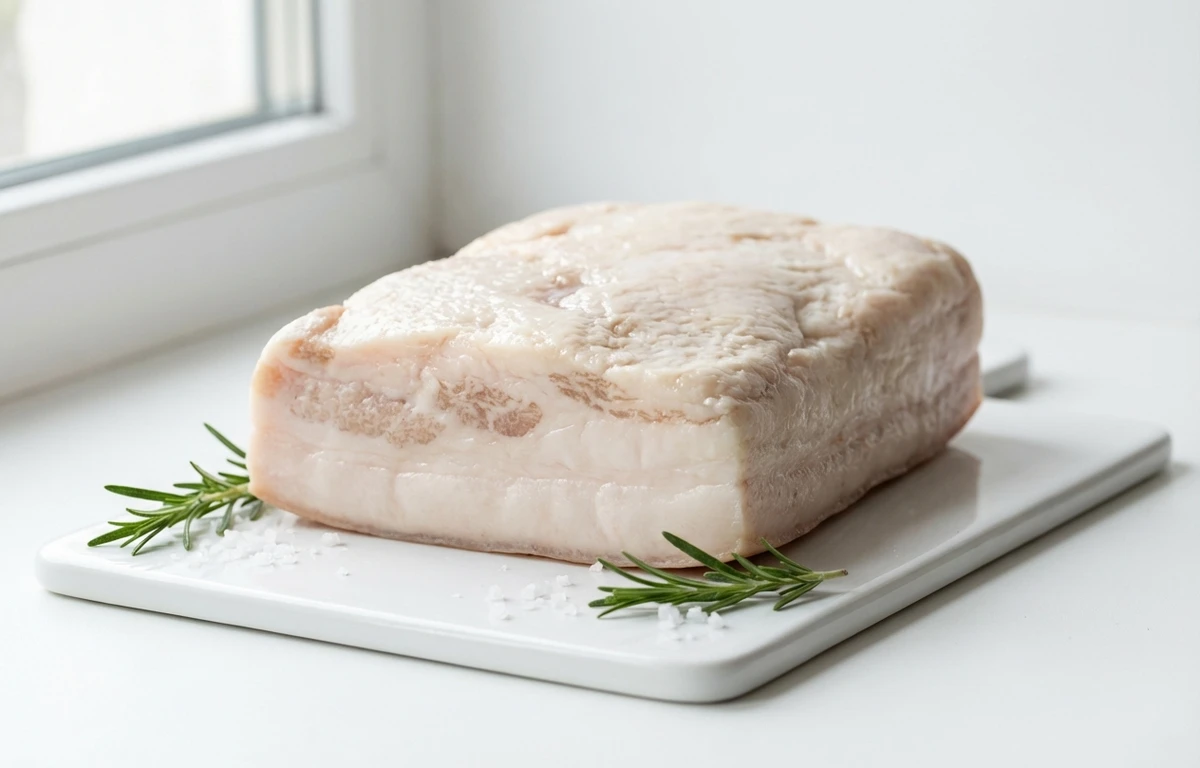
SERVING
CALORIES
896
PROTEIN
1.5g
CARBS
0g
FAT
99.5g
FIBER
0g
This ingredient is flagged as naturally gluten-free. Per 100 g, it provides 1.0 µg of vitamin K.
NUTRITION PROFILE · per 100 g
Everything in this ingredient.
MACRONUTRIENTS
Calories896kcal—
Protein1.5g3%
Carbohydrates0g0%
Fiber0g0%
Sugar0g0%
Total fat99.5g128%
Saturated fat35.4g177%
Trans fat0g—
Cholesterol65mg22%
Water0.50g—
MINERALS
Sodium10mg0%
Potassium15mg0%
Calcium1.0mg0%
Iron0.10mg1%
Magnesium1.0mg0%
Phosphorus11mg1%
Zinc0.11mg1%
VITAMINS
Vitamin A0µg0%
Vitamin C0mg0%
Vitamin D0.10µg1%
Vitamin K1.0µg1%
Thiamin (B1)2.0mg167%
Riboflavin (B2)0.01mg1%
Niacin (B3)0.11mg1%
Vitamin B60.01mg1%
%DV based on a 2,000 cal diet. Source: USDA FoodData Central. A dash in the %DV column means there’s no established Daily Value for that nutrient.
MEASUREMENT CONVERSIONS
How much is what.
1 cup130g
1 tablespoon9g
1 oz28.4g
1 lb453.6g
1 piece40g
HEALTH BENEFITS
Why eat it.
- ✓Provides a concentrated source of energy due to its high calorie and fat content.
- ✓Contains oleic acid, a monounsaturated fat also found in olive oil, which can be part of a balanced diet.
COOKING TIPS
In the kitchen.
- 1Render it slowly over low heat to produce lard for frying or baking, and crispy cracklings as a byproduct.
- 2Use thin strips for 'larding' lean meats to add moisture and flavor from within during roasting.
- 3Drape thin sheets over roasts ('barding') to baste the meat as it cooks, preventing it from drying out.
- 4Add diced fatback to beans, greens, stews, or the base of a sauce (sautéed with aromatics) to build a deep, savory flavor foundation.
STORAGE
Keep it fresh.
- Store fresh fatback tightly wrapped in the refrigerator at or below 40°F (4°C) and use within 3-5 days.
- For long-term storage, wrap securely in plastic wrap and freezer paper or a vacuum-sealed bag and freeze at 0°F (-18°C) for up to 6 months.
- Rendered fat (lard) can be stored in an airtight container in the refrigerator for several months or at room temperature for a shorter period.
FAQ
Frequently asked questions.
What is the nutritional content of pork fatback?
Per 100g, pork fatback is extremely calorie-dense, providing approximately 896 calories. It contains about 99.5g of fat, 1.5g of protein, and 0g of carbohydrates. Its primary nutritional contribution is its high fat content.
Is pork fatback keto-friendly or low-carb?
Yes, pork fatback is highly keto-friendly and low-carb. It contains virtually no carbohydrates (0g per 100g), making it an excellent fat source for those following ketogenic or very low-carb diets to meet their fat macros.
How is pork fatback typically used in cooking?
Pork fatback is primarily used for rendering into lard, which is then used for frying, baking, or making confit. It can also be cut into strips for larding lean meats to add moisture and flavor, or finely diced and added to sausages, pâtés, and terrines for richness and texture.
What does pork fatback taste like?
When rendered or cooked, pork fatback offers a rich, savory, and distinctly porky flavor. It contributes a deep umami note and a luxurious mouthfeel to dishes. The taste is clean and mild, allowing it to enhance other flavors without overpowering them.
How do you render pork fatback into lard?
To render fatback, cut it into small, uniform pieces and place them in a heavy-bottomed pot over low heat. Cook slowly, stirring occasionally, until the fat melts and the solid bits (cracklings) turn golden brown and crispy. Strain the liquid lard through a fine-mesh sieve into clean jars, then cool and store.
How should I store pork fatback?
Fresh pork fatback should be stored in the coldest part of your refrigerator, tightly wrapped, and used within a few days. For longer storage, it can be frozen for several months. Once rendered into lard, it can be stored at room temperature in an airtight container for a few weeks, or refrigerated for several months.
How long does pork fatback last and how do I know if it's spoiled?
Fresh pork fatback lasts about 3-5 days in the refrigerator and up to 6 months in the freezer. Signs of spoilage include a sour or rancid odor, a slimy texture, or discoloration (greenish or grayish spots). Always discard if any of these signs are present.
RECIPES
Cook with pork fatback.
4 recipes · sorted by what’s quick



















