
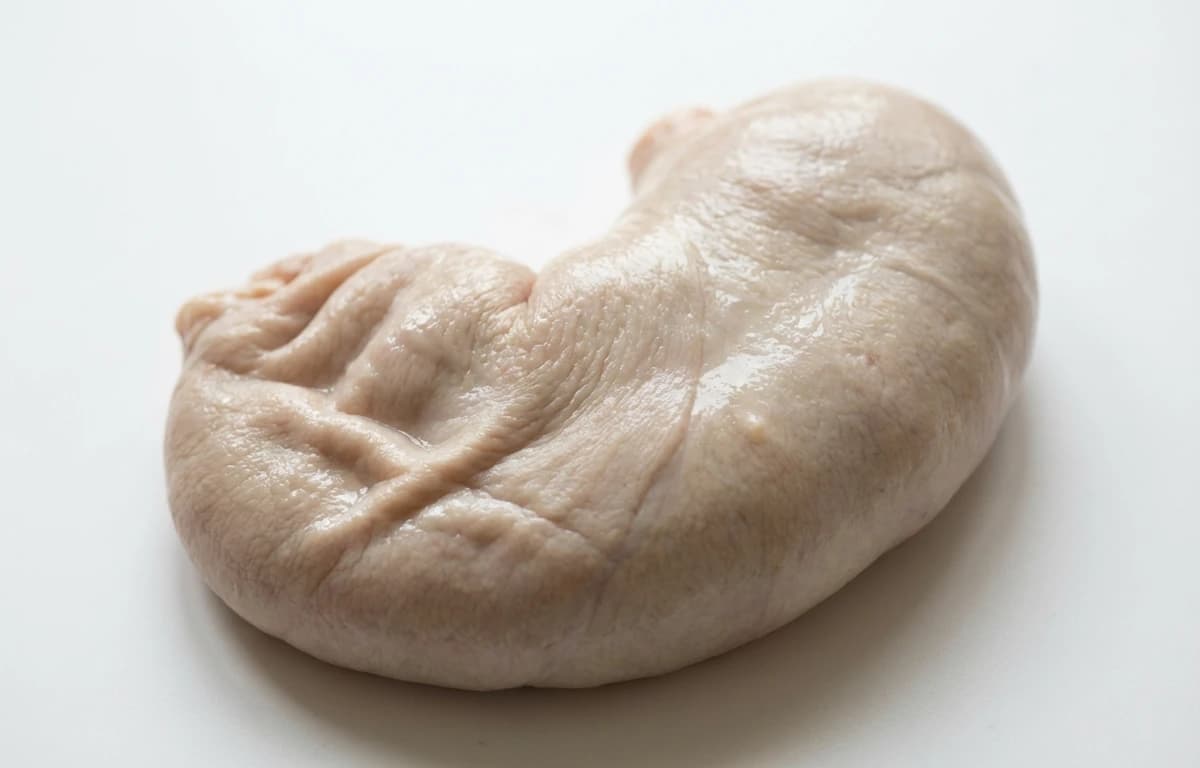
pork stomach
Also known as:
Loading...
Also known as:
Per 100g
Nutrition data source: USDA FoodData Central
Common measurement equivalents in grams
Pork stomach is a good source of high-quality protein, essential for muscle building and repair. It's also rich in B vitamins, particularly B12, and provides essential minerals like selenium, zinc, and iron. Additionally, it's a natural source of collagen, which may support joint health and skin elasticity.
Per 100g, pork stomach contains approximately 131.45 calories, 15.36g of protein, 0g of carbohydrates, and 7.81g of fat. It offers a significant amount of protein with a moderate fat content, making it a nutrient-dense option.
Due to its high protein content, pork stomach can contribute to satiety, which may help with weight management by reducing overall calorie intake. However, it also contains a moderate amount of fat, so portion control is important to fit into a calorie-controlled diet.
Yes, pork stomach is very keto-friendly. It is high in protein and fat, with zero carbohydrates, making it an excellent choice for those following a ketogenic diet to meet their macronutrient goals.
Yes, pork stomach itself is naturally gluten-free. As a whole, unprocessed meat product, it does not contain any gluten. However, always check ingredients if consuming processed dishes or sauces that include pork stomach.
Pork stomach requires thorough cleaning, often involving scrubbing with salt or vinegar to remove impurities and odors. It's typically boiled or blanched first to tenderize it, then braised, stewed, or stir-fried in various cuisines, such as in menudo or tripe dishes.
Pork stomach has a mild, slightly gamey flavor that readily absorbs the seasonings and spices it's cooked with. When properly prepared, its texture is tender and chewy, often described as having a pleasant, firm bite rather than being rubbery.
pork stomach is a versatile ingredient found in cuisines around the world. With 131.45 calories per 100g and 15.36 grams of protein, it's a nutritious addition to many dishes.
Explore more ingredients in the other category with complete nutrition information.
View all other →Discover 0 recipes featuring pork stomach with step-by-step instructions.
Browse recipes →Fresh pork stomach should be stored in the coldest part of your refrigerator and cooked within 1-2 days. For longer storage, it can be frozen in an airtight container or freezer bag for up to 3-6 months. Thaw in the refrigerator before cooking.
No, individuals following Halal or Kosher dietary laws cannot consume pork stomach. Both Halal and Kosher guidelines prohibit the consumption of pork and any products derived from pigs.
Yes, pork stomach is a natural source of collagen, a protein vital for connective tissues. Consuming collagen-rich foods may contribute to the health of joints, skin elasticity, and gut lining, making it a beneficial addition to the diet for these purposes.