
Sweetener
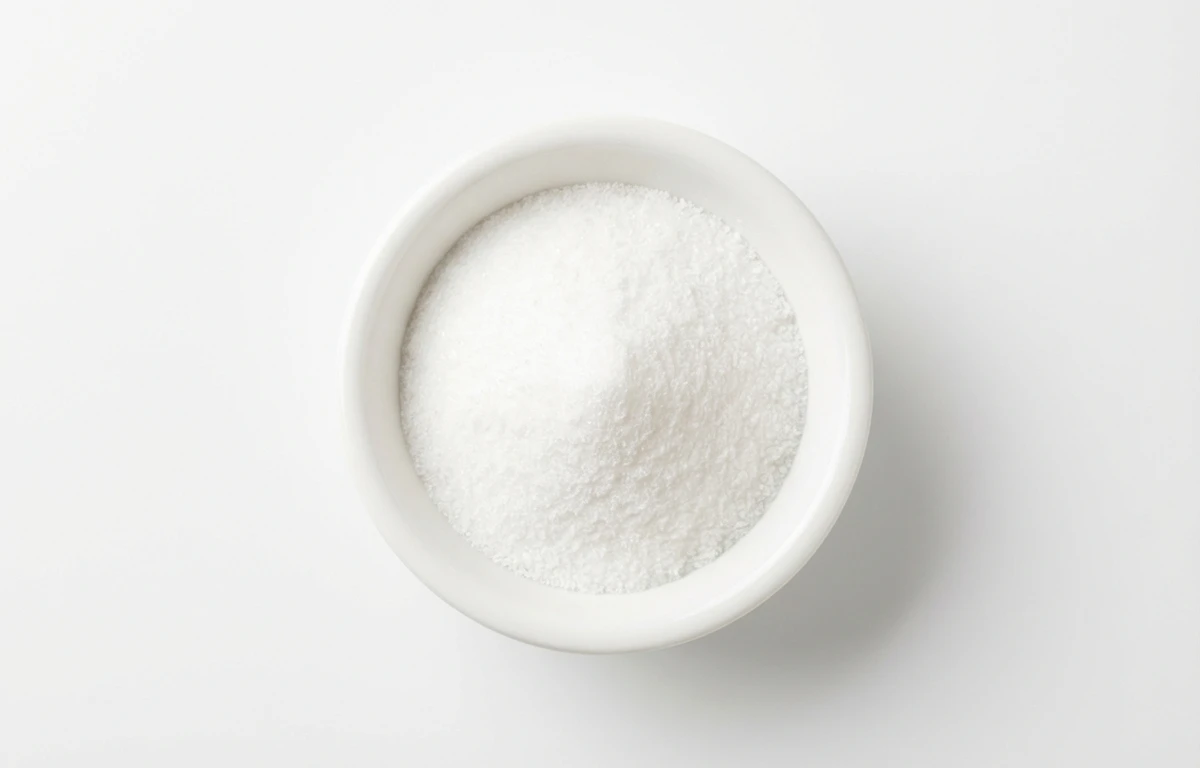
powdered fructose.
VegetarianVeganGluten-freeDairy-freeNut-freePeanut-freeSoy-freeEgg-freeShellfish-freeHoney-freeAlcohol-free
SERVING
CALORIES
368
PROTEIN
0g
CARBS
100g
FAT
0g
FIBER
0g
NUTRITION PROFILE · per 100 g
Everything in this ingredient.
MACRONUTRIENTS
Calories368kcal—
Protein0g0%
Carbohydrates100g36%
Fiber0g0%
Sugar92.7g185%
Total fat0g0%
Saturated fat0g0%
Cholesterol0mg0%
Water0g—
MINERALS
Sodium12mg1%
Potassium0mg0%
Calcium0mg0%
Iron0.10mg1%
Magnesium0mg0%
Phosphorus0mg0%
Zinc0mg0%
Copper0.22mg24%
Selenium0.60µg1%
VITAMINS
Vitamin A0µg0%
Vitamin C0mg0%
Vitamin D0µg0%
Vitamin E0mg0%
Vitamin K0µg0%
Thiamin (B1)0mg0%
Riboflavin (B2)0mg0%
Niacin (B3)0mg0%
Vitamin B60mg0%
Folate (B9)0µg0%
Vitamin B120µg0%
%DV based on a 2,000 cal diet. Source: USDA FoodData Central. A dash in the %DV column means there’s no established Daily Value for that nutrient.
MEASUREMENT CONVERSIONS
How much is what.
1 cup196g
1 tablespoon12.6g
1 teaspoon4.2g
1 ml0.8g
1 liter840g
HEALTH BENEFITS
Why eat it.
- ✓Has a lower glycemic index than sucrose or glucose, causing a slower rise in blood sugar levels.
- ✓Is significantly sweeter than table sugar, allowing for smaller quantities to be used to achieve the same level of sweetness.
- ✓Acts as a humectant, improving moisture retention in baked goods, which results in a softer texture and longer shelf life.
- ✓Enhances fruit flavors and aromas in food preparations like jams, jellies, and beverages.
COOKING TIPS
In the kitchen.
- 1When substituting for table sugar in recipes, use about 2/3 the amount of fructose due to its higher sweetness.
- 2Reduce baking temperatures by about 25°F (15°C) as fructose browns more quickly and at lower temperatures than sucrose.
- 3Utilize its high solubility to easily sweeten cold beverages like iced tea or lemonade without leaving a gritty texture.
- 4Ideal for creating moist and soft baked goods like cakes and cookies, but may not produce the same crispness as sucrose in certain recipes.
STORAGE
Keep it fresh.
- Store in a cool, dry place, away from direct sunlight and heat.
- Keep in a tightly sealed, airtight container to prevent it from absorbing moisture from the air, which can cause clumping.
FAQ
Frequently asked questions.
Is powdered fructose healthy?
Powdered fructose has a lower glycemic index than sucrose or glucose, meaning it causes a slower rise in blood sugar. However, it is still a simple sugar, providing 368 calories per 100g, and excessive intake can contribute to health issues like weight gain and liver fat accumulation. Moderation is crucial.
How many calories and carbohydrates are in powdered fructose?
Per 100g, powdered fructose contains approximately 368 calories and 100g of carbohydrates. It contains no protein or fat. Due to its higher sweetness, smaller amounts are often needed compared to table sugar to achieve the same sweetness level.
Can diabetics eat powdered fructose?
While powdered fructose has a lower glycemic index than other common sugars, it still impacts blood sugar levels and contributes to overall carbohydrate intake. Diabetics should consume it in moderation and under the guidance of a healthcare professional, considering their individual dietary needs and blood sugar management plan.
Is powdered fructose keto-friendly?
No, powdered fructose is not keto-friendly. It is 100% carbohydrates, with 100g containing 100g of carbs, which is far too high for a ketogenic diet that strictly limits carbohydrate intake.
How is powdered fructose used in cooking and baking?
Powdered fructose is used as a sweetener, often in smaller quantities due to its higher sweetness compared to table sugar. It also acts as a humectant, helping baked goods retain moisture for a softer texture and longer shelf life. Additionally, it can enhance fruit flavors in jams, jellies, and beverages.
What does powdered fructose taste like?
Powdered fructose provides a clean, pure sweetness that is often perceived as more intense and sometimes 'fruitier' than the sweetness of table sugar (sucrose). It lacks any distinct aftertaste, making it a popular choice for enhancing natural fruit flavors.
Can I substitute powdered fructose for regular sugar in recipes?
Yes, you can substitute powdered fructose for regular sugar, but you'll need to use less due to its higher sweetness. Typically, you might use 50-75% of the amount of table sugar called for in a recipe. Be aware that it may also affect the texture and browning of baked goods differently.
How should powdered fructose be stored?
Powdered fructose should be stored in an airtight container in a cool, dry place, away from direct sunlight and moisture. This prevents it from absorbing humidity, which can lead to clumping and hardening. Proper storage ensures a long shelf life.
What are the main advantages of using powdered fructose in food preparation?
Key advantages include its lower glycemic index compared to sucrose, allowing for a slower blood sugar rise. It is also significantly sweeter, meaning less is needed. Furthermore, it acts as a humectant to improve moisture retention in baked goods and enhances fruit flavors and aromas.
Is powdered fructose vegan and gluten-free?
Yes, powdered fructose is generally considered both vegan and gluten-free. It is a simple sugar derived from plant sources, typically corn or sugar cane, and does not contain animal products or gluten-containing grains.



















