
Other1 recipes
prickly pears.
VegetarianVeganGluten-freeDairy-freeNut-freePeanut-freeSoy-freeEgg-freeShellfish-freeHoney-freeAlcohol-freeHalalKosher
ALSO KNOWN AS
prickly pearraw prickly pear
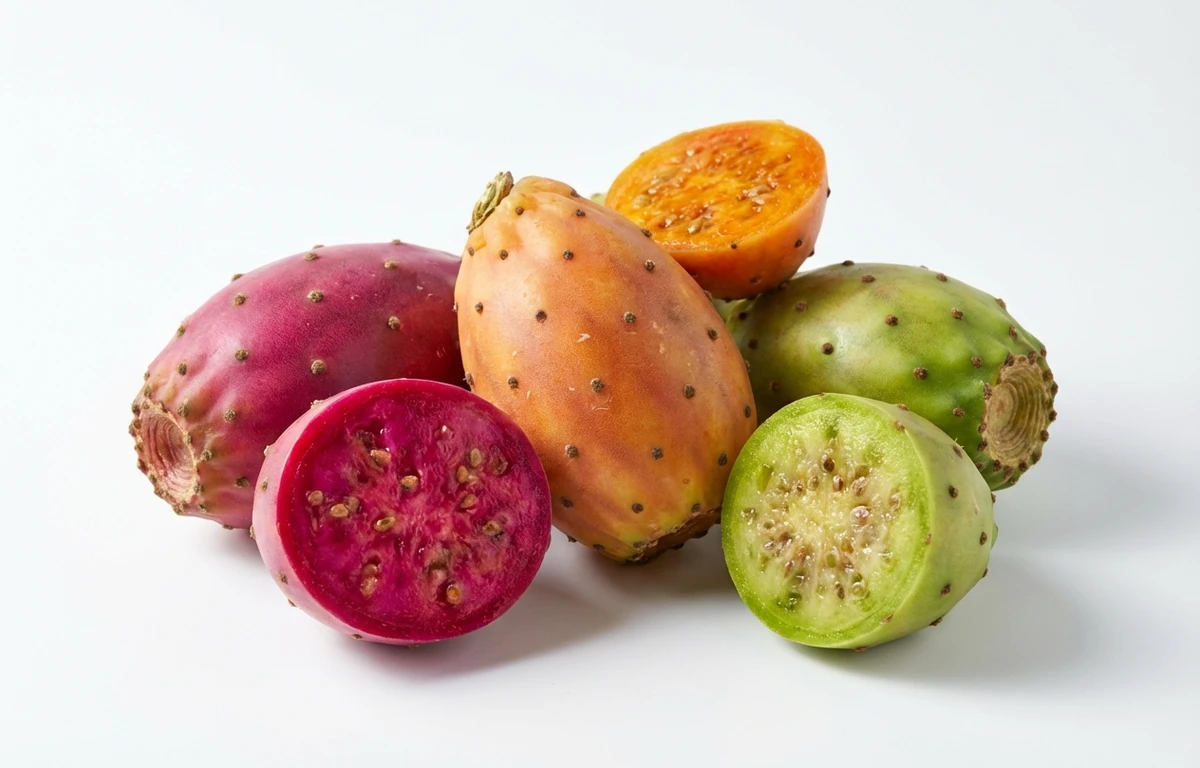
SERVING
CALORIES
41
PROTEIN
0.73g
CARBS
9.6g
FAT
0.51g
FIBER
3.6g
This ingredient is flagged as naturally gluten-free. Per 100 g, it provides 0 µg of vitamin K.
NUTRITION PROFILE · per 100 g
Everything in this ingredient.
MACRONUTRIENTS
Calories41kcal—
Protein0.73g1%
Carbohydrates9.6g3%
Fiber3.6g13%
Sugar6.0g12%
Total fat0.51g1%
Saturated fat0.07g0%
Trans fat0g—
Cholesterol0mg0%
Water87.5g—
MINERALS
Sodium5.0mg0%
Potassium220mg5%
Calcium56mg4%
Iron0.30mg2%
Magnesium85mg20%
Phosphorus24mg2%
Zinc0.12mg1%
Copper0.08mg9%
Manganese0mg0%
Selenium0.60µg1%
VITAMINS
Vitamin A2.0µg0%
Vitamin C14mg16%
Vitamin D0µg0%
Vitamin E0mg0%
Vitamin K0µg0%
Thiamin (B1)0.01mg1%
Riboflavin (B2)0.06mg5%
Niacin (B3)0.46mg3%
Pantothenic acid (B5)0mg0%
Vitamin B60.06mg4%
Folate (B9)6.0µg2%
Vitamin B120µg0%
%DV based on a 2,000 cal diet. Source: USDA FoodData Central. A dash in the %DV column means there’s no established Daily Value for that nutrient.
MEASUREMENT CONVERSIONS
How much is what.
1 cup149g
1 tablespoon9.3g
1 teaspoon3.1g
1 ml0.6g
1 liter620.8g
1 piece140g
COOKING TIPS
In the kitchen.
- 1To prepare, use tongs to hold the fruit. Slice off both ends, make a shallow vertical cut through the skin, and then peel the thick skin away from the flesh.
- 2The flesh can be eaten raw, added to fruit salads, or blended into smoothies, juices (aguas frescas), and cocktails.
- 3The small, hard seeds are edible but can be strained out after blending to create a smoother purée for syrups, sorbets, or jams.
- 4Prickly pear purée can be cooked down to create a vibrant, flavorful syrup or jelly that pairs well with both sweet and savory dishes.
STORAGE
Keep it fresh.
- Store unpeeled prickly pears in the refrigerator in a paper or plastic bag for up to one week.
- Handle with thick gloves or tongs to avoid the fine, hair-like spines called glochids, even if they appear to be removed.
- Once peeled and cut, store the fruit in an airtight container in the refrigerator for 2-3 days.
FAQ
Frequently asked questions.
Are prickly pears keto-friendly?
No, prickly pears are generally not considered keto-friendly. With approximately 9.57g of carbohydrates per 100g, they can quickly exceed daily carb limits for a ketogenic diet, despite their fiber content.
How do you prepare and eat prickly pears?
To prepare, wear gloves to protect from glochids (tiny spines). Cut off both ends, then slice lengthwise through the skin and peel it away. The inner flesh can be eaten raw, added to salads, smoothies, or made into jams and juices.
What do prickly pears taste like?
Prickly pears have a unique, sweet, and slightly tart flavor. Many describe it as a cross between watermelon, pear, and bubblegum, with a juicy, somewhat gritty texture due to the small, edible seeds.
How do you choose a ripe prickly pear?
Look for fruits with a vibrant, uniform color (red, orange, or green depending on variety) that are slightly soft to the touch but not mushy. Avoid any with significant blemishes or shriveling.
Can you eat the seeds of prickly pears?
Yes, the small, hard seeds inside prickly pears are generally edible, though some people prefer to spit them out due to their texture. They are a good source of fiber but can be difficult to chew.
RECIPES
Cook with prickly pears.
1 recipes · sorted by what’s quick



















