
Fruit
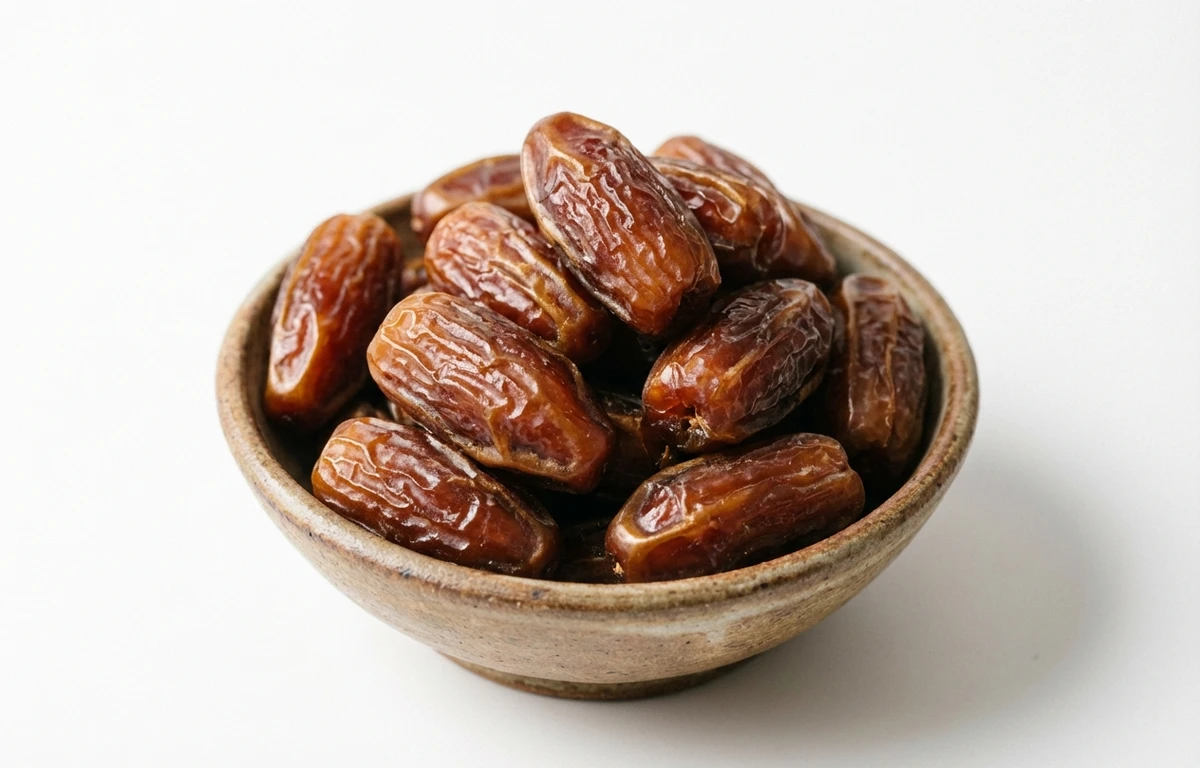
processed dates.
VegetarianVeganGluten-freeDairy-freeNut-freePeanut-freeSoy-freeEgg-freeShellfish-freeHoney-freeAlcohol-free
SERVING
CALORIES
286
PROTEIN
1.2g
CARBS
68g
FAT
0.41g
FIBER
6.5g
NUTRITION PROFILE · per 100 g
Everything in this ingredient.
MACRONUTRIENTS
Calories286kcal—
Protein1.2g2%
Carbohydrates68g25%
Fiber6.5g23%
Sugar57g114%
Total fat0.41g1%
Saturated fat0.15g1%
Trans fat0g—
Cholesterol0mg0%
Water22g—
MINERALS
Sodium1.6mg0%
Potassium289mg6%
Calcium15.7mg1%
Iron0.89mg5%
Magnesium14.3mg3%
Phosphorus33.9mg3%
Zinc0.42mg4%
Copper0.33mg37%
Manganese0.44mg19%
Selenium0.46µg1%
VITAMINS
Vitamin A2781µg309%
Vitamin C15.5mg17%
Vitamin D0.83µg4%
Vitamin E0.03mg0%
Vitamin K4.9µg4%
Thiamin (B1)0.05mg4%
Riboflavin (B2)0.02mg2%
Niacin (B3)0.51mg3%
Pantothenic acid (B5)0.52mg10%
Vitamin B60.06mg4%
Biotin (B7)2.5µg8%
Folate (B9)24.5µg6%
%DV based on a 2,000 cal diet. Source: USDA FoodData Central. A dash in the %DV column means there’s no established Daily Value for that nutrient.
MEASUREMENT CONVERSIONS
How much is what.
1 cup170g
1 tablespoon10.6g
1 teaspoon3.5g
1 oz28.4g
1 lb453.6g
1 ml0.7g
1 liter718.5g
1 piece20g
HEALTH BENEFITS
Why eat it.
- ✓High in dietary fiber, which aids digestion and promotes bowel regularity.
- ✓Provides a quick source of energy due to high natural sugar content (glucose and fructose).
- ✓Rich in essential minerals like potassium, magnesium, and copper, supporting heart and bone health.
- ✓Contains antioxidants, including flavonoids and carotenoids, which help combat oxidative stress.
COOKING TIPS
In the kitchen.
- 1Soak in hot water for 10-15 minutes to soften before blending into smoothies or making date paste.
- 2Use as a natural sweetener in baking by pureeing into a paste; it can replace sugar in many recipes.
- 3Chop and add to salads, oatmeal, or grain dishes for a touch of sweetness and chewy texture.
- 4Stuff pitted dates with nuts, seeds, or soft cheese for a simple and nutritious snack or appetizer.
STORAGE
Keep it fresh.
- Store in an airtight container in the refrigerator for 6-12 months to maintain moisture and freshness.
- For longer-term storage, freeze in a sealed container or freezer bag for over a year.
FAQ
Frequently asked questions.
Are processed dates healthy?
Processed dates, while high in natural sugars and calories (286.09 calories per 100g), offer significant health benefits. They are an excellent source of dietary fiber, aiding digestion, and provide essential minerals like potassium, magnesium, and copper. Dates also contain antioxidants, contributing to overall well-being.
How much sugar and calories are in processed dates?
Per 100g, processed dates contain approximately 286.09 calories and a high amount of carbohydrates, with about 67.95g, primarily from natural sugars (glucose and fructose). They offer a quick energy boost but should be consumed in moderation due to their caloric density.
Are processed dates good for weight loss?
While dates are nutrient-dense and high in fiber, which can promote satiety, their high calorie and sugar content means they should be consumed in moderation for weight loss. Overconsumption can contribute to excess calorie intake. They are best enjoyed as a small, energy-boosting snack.
Are processed dates vegan?
Yes, processed dates are naturally vegan. They are a fruit and do not contain any animal products or by-products, making them suitable for a plant-based diet.
Are processed dates gluten-free?
Yes, dates are naturally gluten-free. They are a whole fruit and do not contain wheat, barley, or rye, making them safe for individuals with celiac disease or gluten sensitivity.
Can diabetics eat processed dates?
Diabetics can eat processed dates, but only in very small, controlled portions due to their high natural sugar content and moderate glycemic index. It's crucial to monitor blood sugar levels and consult with a healthcare professional or dietitian to determine appropriate serving sizes within a balanced diet.
What are processed dates commonly used for?
Processed dates are incredibly versatile and widely used as a natural sweetener in baking, smoothies, and energy bars. They can also be chopped and added to cereals, yogurts, salads, or enjoyed on their own as a healthy snack. Their sticky texture makes them an excellent binder in raw desserts.
How do processed dates differ from fresh dates in terms of usage?
Processed dates typically have a lower moisture content, making them stickier and denser than fresh dates. This makes them ideal for blending into pastes, binding ingredients in recipes, or as a chewy snack. Fresh dates are often softer and juicier, preferred for eating whole or in dishes where a softer texture is desired.
How should I store processed dates?
Processed dates should be stored in an airtight container in a cool, dry place away from direct sunlight. For longer shelf life, especially in warmer climates, refrigeration is recommended. This helps maintain their texture and prevents them from drying out or becoming too hard.
How long do processed dates last?
When stored properly in an airtight container at room temperature, processed dates can last for several months, typically 6-12 months. If refrigerated, their shelf life can extend to over a year. Discard dates if they develop an off smell, mold, or become excessively hard and dry.



















