
Other1 recipes
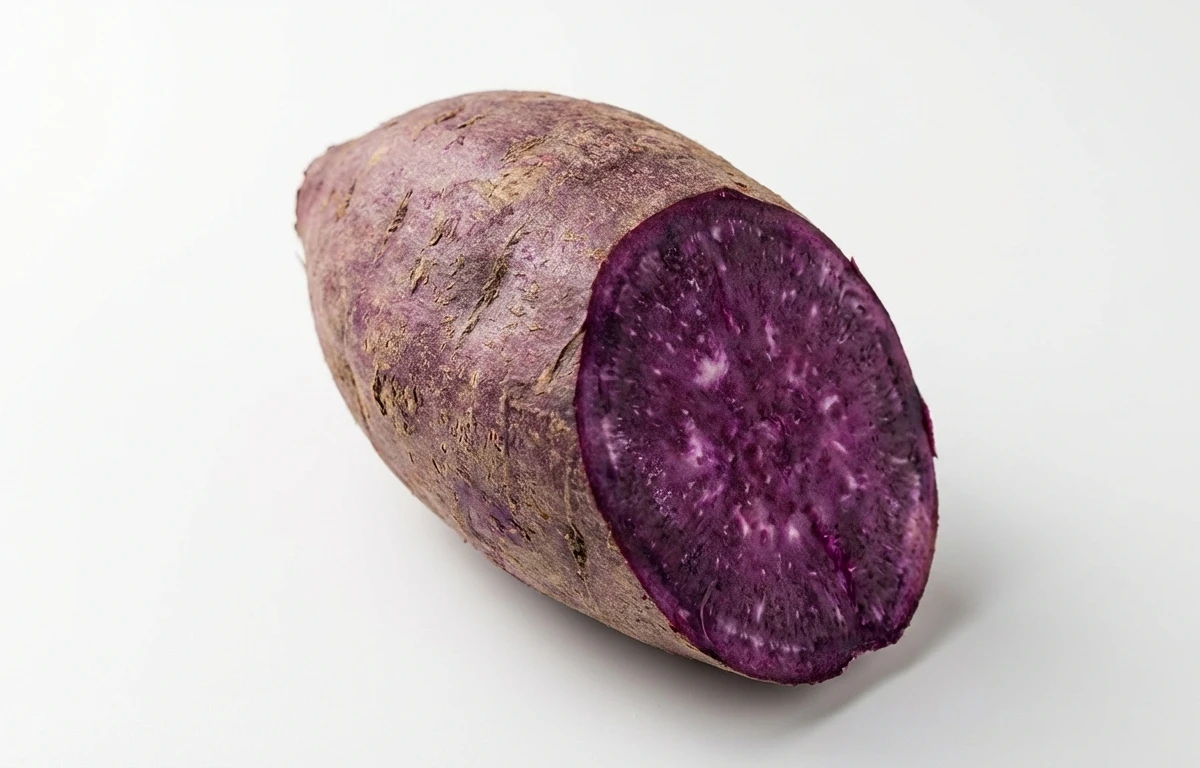
purple yam.
VegetarianVeganGluten-freeDairy-freeNut-freePeanut-freeSoy-freeEgg-freeShellfish-freeHoney-freeAlcohol-freeHalalKosher
ALSO KNOWN AS
uberatalukandviolet yamwater yamdioscorea alatagreater yam
SERVING
CALORIES
118
PROTEIN
1.5g
CARBS
27g
FAT
0.10g
FIBER
4.1g
This ingredient is flagged as naturally gluten-free. Per 100 g, it provides 2.3 µg of vitamin K.
NUTRITION PROFILE · per 100 g
Everything in this ingredient.
MACRONUTRIENTS
Calories118kcal—
Protein1.5g3%
Carbohydrates27g10%
Fiber4.1g15%
Sugar0.50g1%
Total fat0.10g0%
Saturated fat0.03g0%
Trans fat0g—
Cholesterol0mg0%
Water70g—
MINERALS
Sodium9.0mg0%
Potassium485mg10%
Calcium20mg2%
Iron0.70mg4%
Magnesium21mg5%
Phosphorus55mg4%
Zinc0.24mg2%
Copper0.18mg20%
Manganese0.40mg17%
Selenium0.70µg1%
VITAMINS
Vitamin A5.0µg1%
Vitamin C12mg13%
Vitamin D0µg0%
Vitamin E0.35mg2%
Vitamin K2.3µg2%
Thiamin (B1)0.11mg9%
Riboflavin (B2)0.03mg2%
Niacin (B3)0.55mg3%
Pantothenic acid (B5)0.31mg6%
Vitamin B60.29mg17%
Folate (B9)23µg6%
Vitamin B120µg0%
%DV based on a 2,000 cal diet. Source: USDA FoodData Central. A dash in the %DV column means there’s no established Daily Value for that nutrient.
MEASUREMENT CONVERSIONS
How much is what.
1 cup260g
1 tablespoon16.5g
1 teaspoon5.5g
1 oz28.4g
1 lb453.6g
1 ml1.1g
1 liter1100g
1 piece250g
HEALTH BENEFITS
Why eat it.
- ✓High fiber content supports digestive health and regular bowel movements
- ✓Good source of complex carbohydrates for sustained energy release
- ✓Contains potassium which helps regulate blood pressure levels
COOKING TIPS
In the kitchen.
- 1Boil or steam with the skin on to preserve the vibrant purple color and nutrients
- 2Always cook thoroughly before consuming to neutralize naturally occurring plant compounds
- 3Mash with coconut milk or condensed milk to create the traditional Filipino dessert, Ube Halaya
STORAGE
Keep it fresh.
- Store in a cool, dark, and well-ventilated place away from direct sunlight
- Do not refrigerate raw purple yams as it can change their texture and flavor
- Keep away from onions as they release gases that cause yams to spoil faster
FAQ
Frequently asked questions.
How long do purple yams last?
When stored in a cool, dry place, they typically last 1 to 2 weeks. Once cooked, they should be refrigerated and consumed within 3-5 days.
Can you freeze purple yam?
Yes, but it is best to peel, boil, and mash them before freezing. Raw yams do not freeze well due to their high water content.
How do I pick a good purple yam?
Look for yams that are firm to the touch with smooth skin. Avoid those with soft spots, cracks, or signs of sprouting.
What is the difference between purple yam and purple sweet potato?
Purple yams (Ube) have a rough, bark-like skin and a more nutty, vanilla-like flavor, whereas purple sweet potatoes have smoother skin and a drier, starchier texture.
What can I use as a substitute for purple yam?
Purple sweet potatoes are the best substitute for texture, though the flavor is slightly different. Taro can also work in some savory dishes.
Do I need to peel purple yam before cooking?
It is easier to peel them after boiling or steaming. If cooking raw, scrub the skin thoroughly to remove dirt before peeling.
Why is my purple yam turning grey after cooking?
This is a natural reaction to pH levels. Adding a small amount of acid, like lemon juice, can help maintain the vibrant purple color.
What are common dishes made with purple yam?
Common dishes include Ube Halaya (jam), Ube ice cream, cakes, pastries, and in some cultures, it is used in savory stews and soups.



















