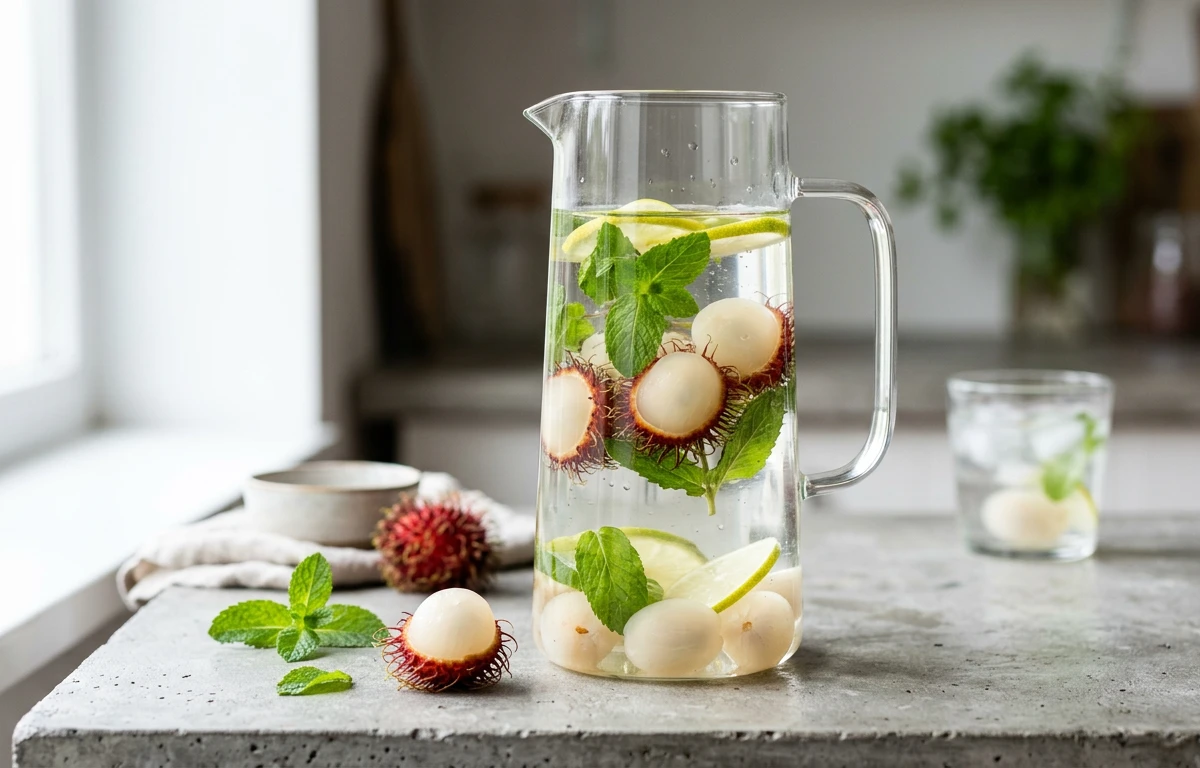
Fruit10 recipes
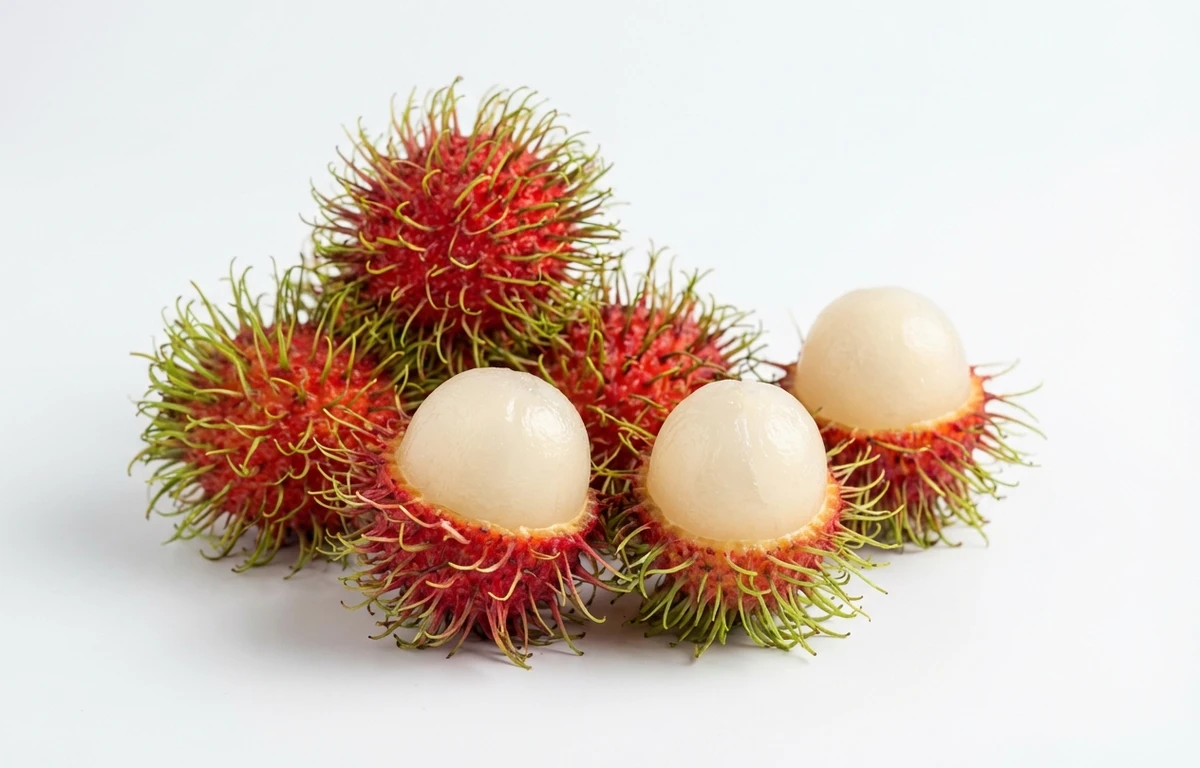
rambutan.
VegetarianVeganGluten-freeDairy-freeNut-freePeanut-freeSoy-freeEgg-freeShellfish-freeHoney-freeAlcohol-free
ALSO KNOWN AS
nephelium lappaceummamon chinochom chomramboutan
SERVING
CALORIES
82
PROTEIN
0.65g
CARBS
20.9g
FAT
0.21g
FIBER
0.90g
NUTRITION PROFILE · per 100 g
Everything in this ingredient.
MACRONUTRIENTS
Calories82kcal—
Protein0.65g1%
Carbohydrates20.9g8%
Fiber0.90g3%
Sugar18.6g37%
Total fat0.21g0%
Saturated fat0.01g0%
Trans fat0g—
Cholesterol0mg0%
Water78g—
MINERALS
Sodium11mg0%
Potassium42mg1%
Calcium22mg2%
Iron0.35mg2%
Magnesium7.0mg2%
Phosphorus9.0mg1%
Zinc0.08mg1%
Copper0.07mg8%
Manganese0.34mg15%
Selenium0.60µg1%
VITAMINS
Vitamin A0µg0%
Vitamin C4.9mg5%
Vitamin D0µg0%
Vitamin E0mg0%
Vitamin K0µg0%
Thiamin (B1)0.01mg1%
Riboflavin (B2)0.02mg2%
Niacin (B3)0.22mg1%
Pantothenic acid (B5)0.02mg0%
Vitamin B60.02mg1%
Biotin (B7)0.64µg2%
Folate (B9)8.0µg2%
Vitamin B120µg0%
%DV based on a 2,000 cal diet. Source: USDA FoodData Central. A dash in the %DV column means there’s no established Daily Value for that nutrient.
MEASUREMENT CONVERSIONS
How much is what.
1 cup150g
1 tablespoon10g
1 teaspoon3g
1 oz28.4g
1 lb453.6g
1 ml0.6g
1 liter640g
1 piece28g
HEALTH BENEFITS
Why eat it.
- ✓High in Vitamin C which supports immune function
- ✓Contains soluble fiber that aids digestive health
- ✓Provides copper which is essential for bone maintenance
- ✓Contains antioxidants that help fight cellular damage
- ✓Good source of quick energy from natural sugars
COOKING TIPS
In the kitchen.
- 1Peel by scoring the skin with a knife or thumbnail and popping the fruit out
- 2Always remove the bitter seed before adding to recipes or salads
- 3Best served chilled or used as a garnish for tropical desserts and cocktails
STORAGE
Keep it fresh.
- Store in a perforated plastic bag in the refrigerator for up to 7-10 days
- Keep at room temperature for no more than 2-3 days to prevent drying out
- Avoid storing in direct sunlight as it causes the spines to turn black
FAQ
Frequently asked questions.
How do I know if a rambutan is ripe?
Look for bright red or yellow skins. If the spines (hairs) are green, it is very fresh; if they are black, the fruit is overripe but the flesh inside may still be good.
Can you eat the seed of a rambutan?
No, the seed is bitter and contains traces of alkaloids that can be mildly toxic if consumed raw.
What is the best substitute for rambutan?
Lychees or longans are the best substitutes as they have a similar translucent texture and sweet floral flavor.
How long does rambutan last in the fridge?
When kept in a sealed or perforated bag, they can last between 7 to 10 days in the refrigerator.
Can you freeze rambutan?
Yes, you can freeze them. It is best to peel and pit them first, then store the flesh in an airtight container for up to 3 months.
Is rambutan high in sugar?
Rambutan contains about 18-20 grams of sugar per 100g, which is relatively high compared to berries but typical for tropical fruits.
How do you clean rambutan?
Rinse the outer skin under cool water to remove any dirt or ants often found in the spines before peeling.
What does rambutan taste like?
It has a sweet, creamy, and slightly acidic flavor, similar to a grape but with a floral hint like a lychee.
Is rambutan good for weight loss?
In moderation, yes. It provides fiber which helps with satiety, though its sugar content should be monitored.
RECIPES
Cook with rambutan.
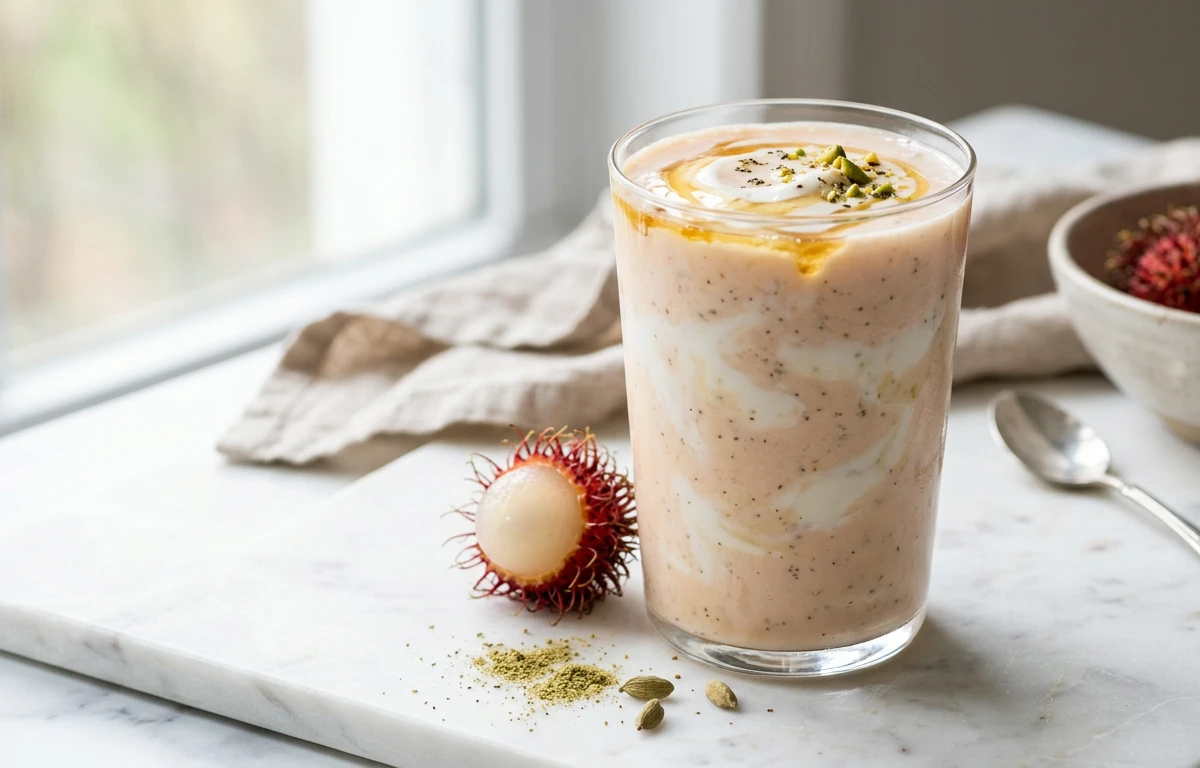
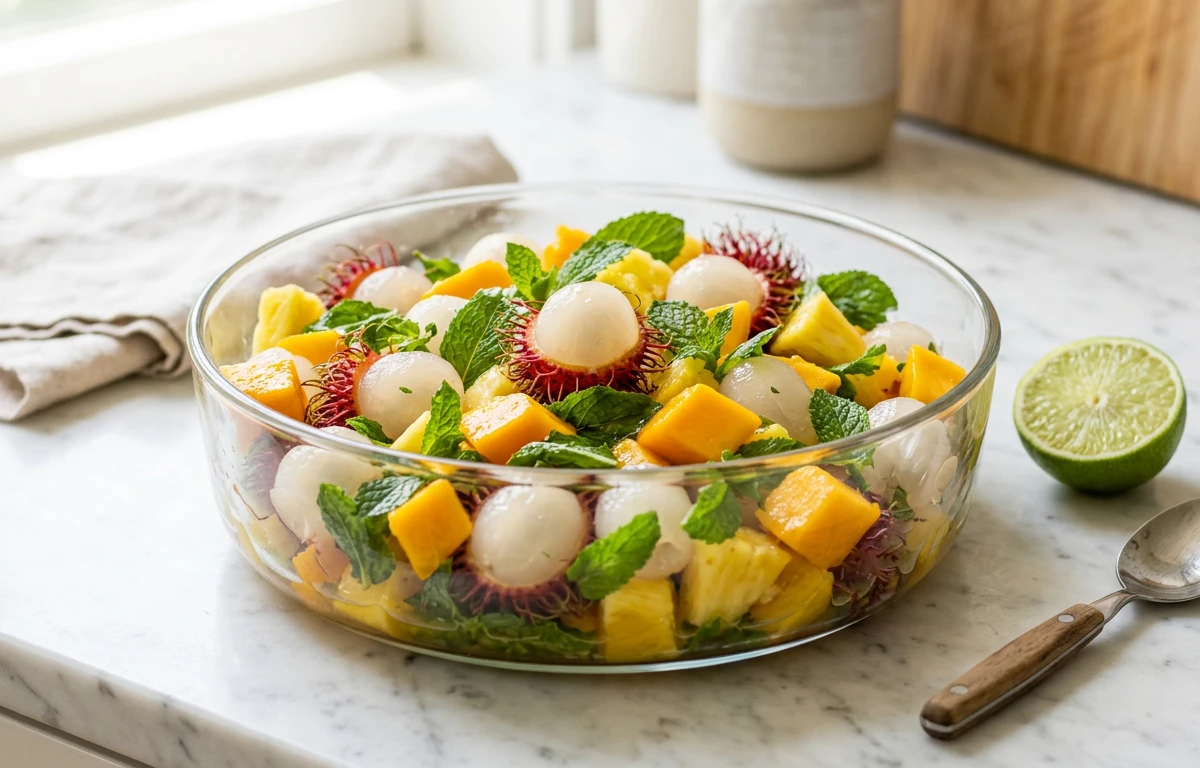
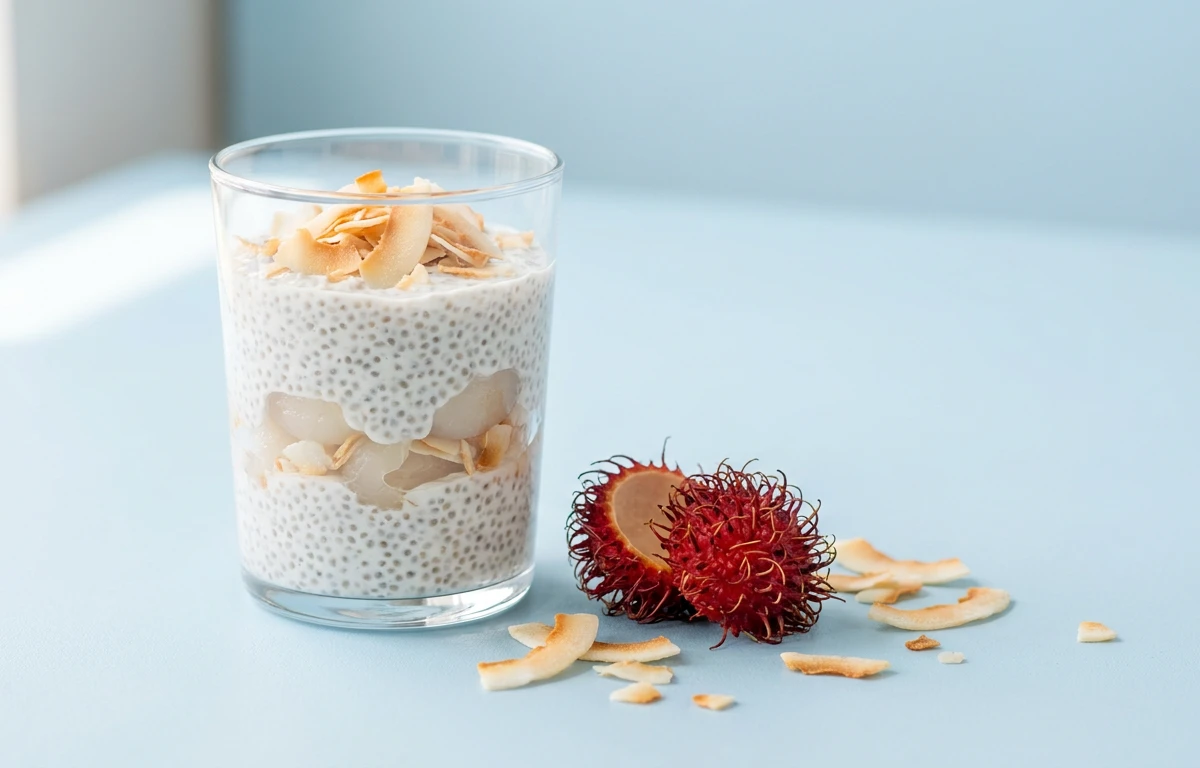
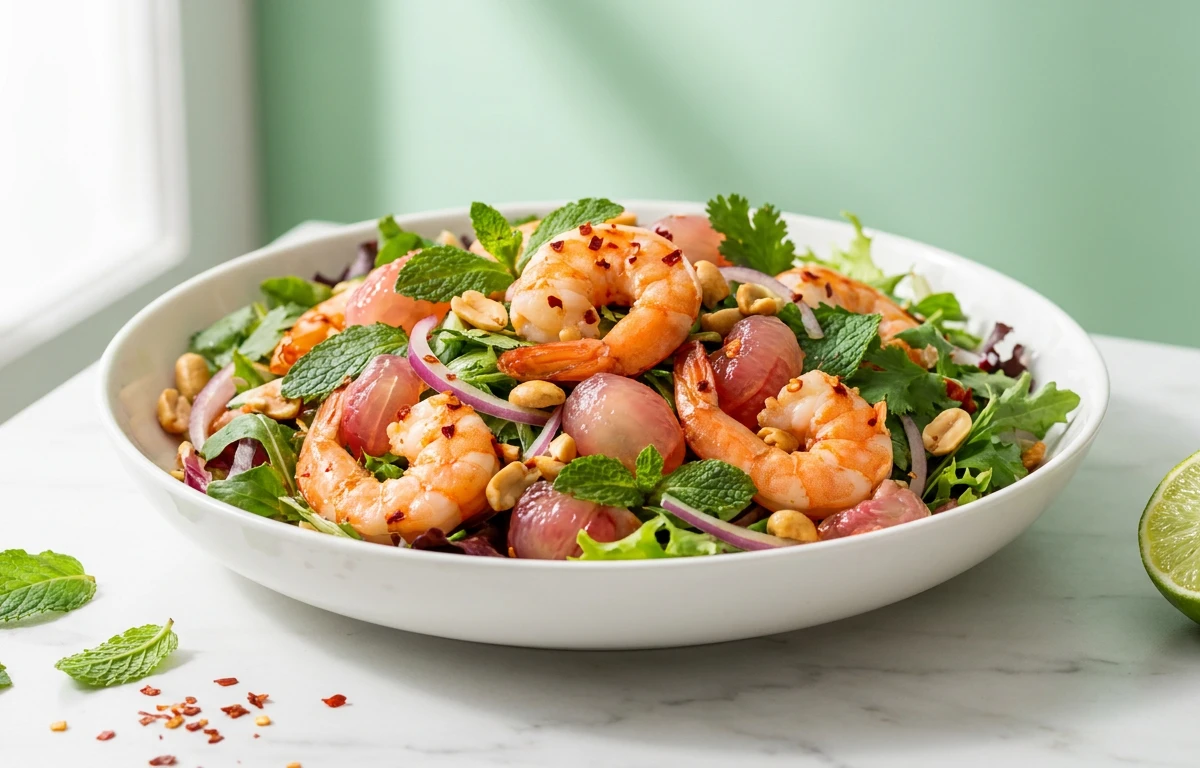
10 recipes · sorted by what’s quick