
Other
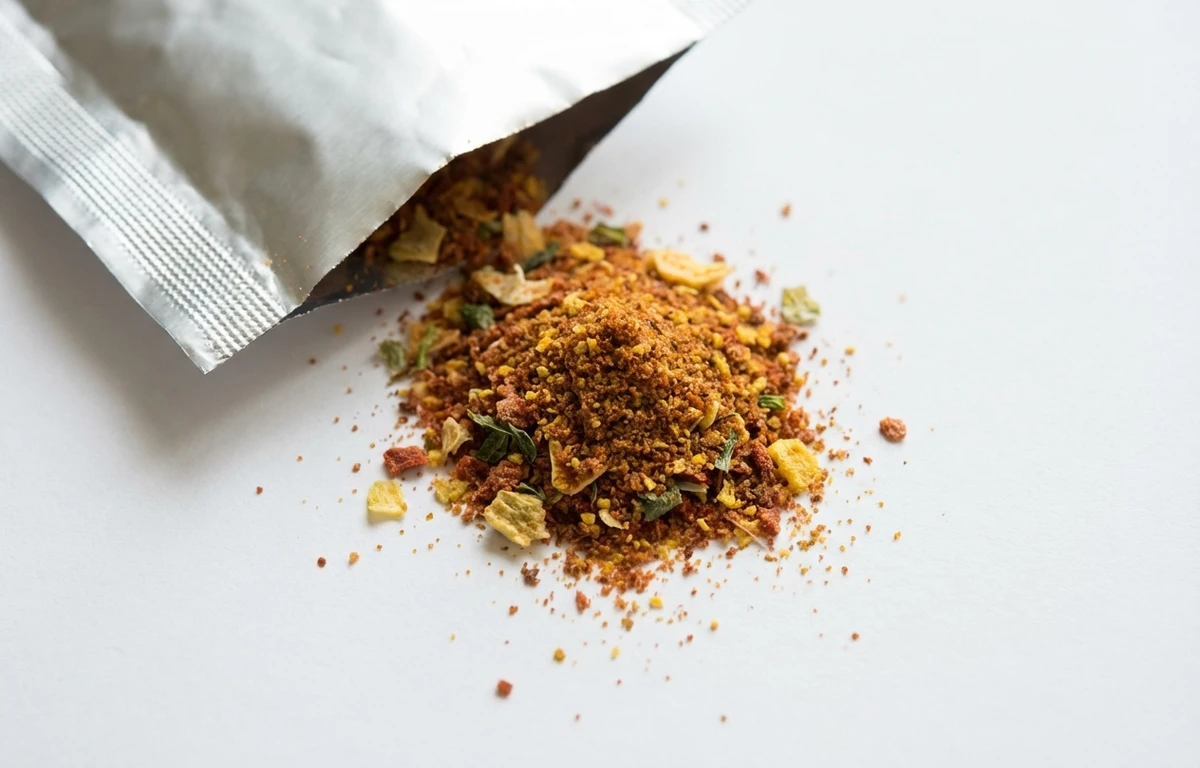
ramen seasoning packet.
VegetarianVeganGluten-freeDairy-freeNut-freePeanut-freeSoy-freeEgg-freeShellfish-freeHoney-freeAlcohol-free
ALSO KNOWN AS
ramen flavor packetramen seasoninginstant noodle seasoning
SERVING
CALORIES
280
PROTEIN
12g
CARBS
50g
FAT
8.0g
FIBER
3.0g
Per 100 g, it provides 8.9 µg of vitamin K.
NUTRITION PROFILE · per 100 g
Everything in this ingredient.
MACRONUTRIENTS
Calories280kcal—
Protein12g24%
Carbohydrates50g18%
Fiber3.0g11%
Sugar10g20%
Total fat8.0g10%
Saturated fat3.0g15%
Trans fat0.07g—
Cholesterol5.0mg2%
Water5.0g—
MINERALS
Sodium18000mg783%
Potassium300mg6%
Calcium30mg2%
Iron2.0mg11%
Magnesium25mg6%
Phosphorus115mg9%
Zinc0.60mg5%
Copper0.13mg14%
Manganese0.63mg27%
Selenium23.1µg42%
VITAMINS
Vitamin A5.0µg1%
Vitamin C1.0mg1%
Vitamin D0µg0%
Vitamin E2.4mg16%
Vitamin K8.9µg7%
Thiamin (B1)0.45mg38%
Riboflavin (B2)0.26mg20%
Niacin (B3)5.4mg34%
Pantothenic acid (B5)0.44mg9%
Vitamin B60.04mg2%
Folate (B9)116µg29%
Vitamin B120.25µg10%
%DV based on a 2,000 cal diet. Source: USDA FoodData Central. A dash in the %DV column means there’s no established Daily Value for that nutrient.
MEASUREMENT CONVERSIONS
How much is what.
1 piece7g
HEALTH BENEFITS
Why eat it.
- ✓Provides a concentrated source of savory and umami flavors to dishes.
- ✓Offers a convenient and quick way to enhance the taste of soups and broths.
- ✓Can be used as a versatile seasoning for various culinary applications.
COOKING TIPS
In the kitchen.
- 1To control sodium intake, start by using only half the packet and adjust the flavor by adding more as needed.
- 2For a richer broth, dissolve the seasoning in a base of low-sodium chicken, beef, or vegetable stock instead of plain water.
- 3Use as a dry rub for meats or a seasoning for roasted vegetables, fried rice, or popcorn to add a savory, umami flavor.
- 4Bloom the seasoning powder in a small amount of hot oil for 30 seconds before adding liquid to intensify its aromatic flavors.
STORAGE
Keep it fresh.
- Store in a cool, dry place such as a pantry, away from direct sunlight and moisture to prevent caking.
- Keep the individual packets sealed until use to maintain maximum flavor and potency.
FAQ
Frequently asked questions.
Is ramen seasoning healthy?
Ramen seasoning packets are primarily designed to add flavor, not nutrition. They are typically very high in sodium, often containing a significant portion of the daily recommended limit in a single serving. While they provide savory and umami notes, they offer minimal vitamins, minerals, or fiber, and should be consumed in moderation as part of a balanced diet.
How much sodium is typically in a ramen seasoning packet?
A single ramen seasoning packet (around 5-10g) can contain anywhere from 1500mg to over 2000mg of sodium. This often exceeds 60-80% of the recommended daily sodium intake for adults, making it a significant source of sodium in a meal.
What are the main ingredients found in ramen seasoning packets?
Common ingredients include salt, monosodium glutamate (MSG), sugar, soy sauce powder, garlic powder, onion powder, various spices (like white pepper or ginger), and sometimes dehydrated vegetables or yeast extract. The exact composition varies by brand and flavor.
Is ramen seasoning gluten-free?
Many ramen seasoning packets are not gluten-free, as they often contain soy sauce powder, which is typically made with wheat. However, some brands offer specific gluten-free versions, so it's essential to check the ingredient list and allergen information on the packaging.
Is ramen seasoning vegan?
While many ramen seasoning packets are vegan, some may contain non-vegan ingredients like beef or chicken extract, dairy derivatives, or other animal products. Always check the ingredient list carefully for specific animal-derived components if you are following a vegan diet.
Can ramen seasoning be used for other dishes besides ramen?
Absolutely! Ramen seasoning is a versatile condiment. It can be used to flavor stir-fries, soups, broths, rice dishes, roasted vegetables, popcorn, or even as a dry rub for meats. Its savory, umami profile enhances a wide range of savory foods.
What does ramen seasoning taste like?
Ramen seasoning typically has a strong savory (umami) flavor, often salty, with notes of garlic, onion, and sometimes a hint of spice or sweetness. The specific taste varies depending on the flavor profile (e.g., chicken, beef, shrimp, soy sauce base).
Does ramen seasoning expire?
Ramen seasoning packets typically have a long shelf life, often 1-2 years, due to their dry nature and high salt content. While they may not 'spoil' in the traditional sense, their flavor and potency can diminish over time past the 'best by' date.
Is ramen seasoning keto-friendly or low-carb?
In small amounts, a single ramen seasoning packet (typically 5-10g) might be considered low-carb, as the carb content per packet would be minimal (e.g., 2.5-5g based on 50g/100g). However, it's not inherently keto-friendly if used in large quantities, and some brands may contain more sugar or starches, so always check the specific nutritional label.



















