Other2 recipes
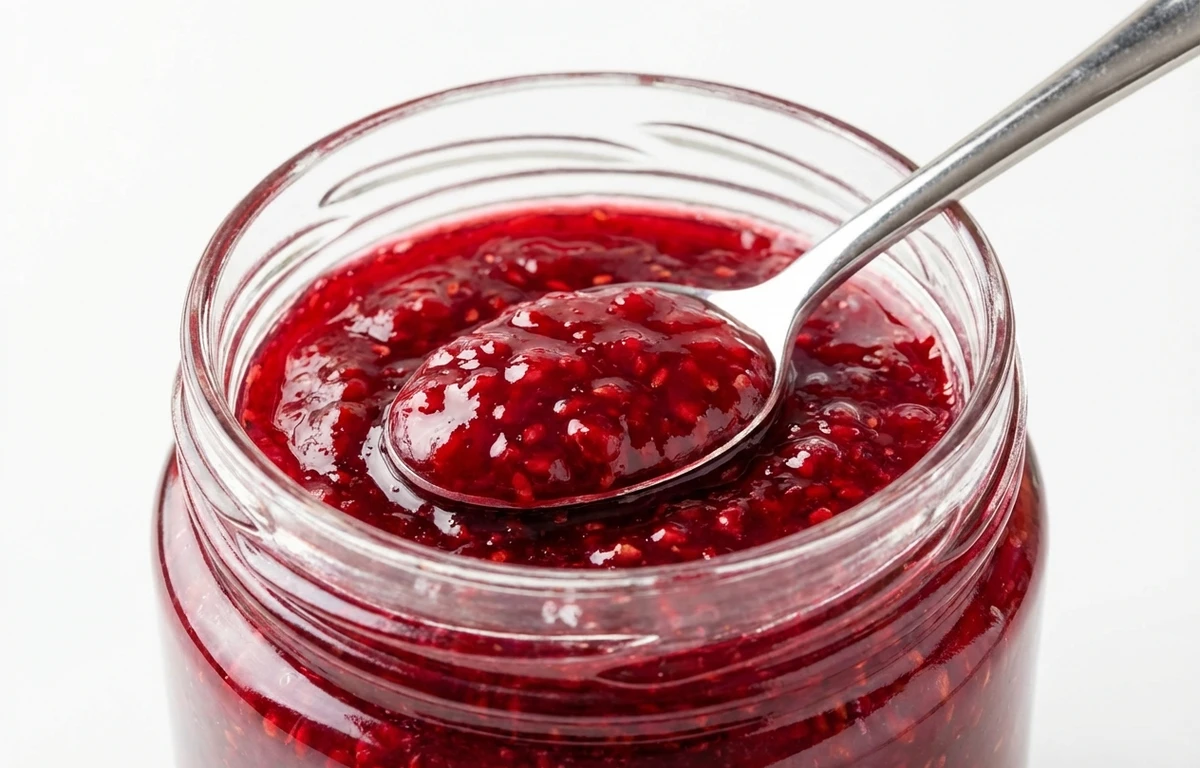
raspberry preserves.
VegetarianVeganGluten-freeDairy-freeNut-freePeanut-freeSoy-freeEgg-freeShellfish-freeHoney-freeAlcohol-free
ALSO KNOWN AS
raspberry jamraspberry fruit spreadraspberry conserveframboise preservessweetened raspberry spread
SERVING
CALORIES
263
PROTEIN
0.40g
CARBS
68.5g
FAT
0.10g
FIBER
1.1g
This ingredient is flagged as naturally gluten-free. Per 100 g, it provides 1.5 µg of vitamin K.
NUTRITION PROFILE · per 100 g
Everything in this ingredient.
MACRONUTRIENTS
Calories263kcal—
Protein0.40g1%
Carbohydrates68.5g25%
Fiber1.1g4%
Sugar58g116%
Total fat0.10g0%
Saturated fat0g0%
Trans fat0g—
Cholesterol0mg0%
Water30.5g—
MINERALS
Sodium12mg1%
Potassium77mg2%
Calcium10mg1%
Iron0.40mg2%
Magnesium8.0mg2%
Phosphorus9.0mg1%
Zinc0.10mg1%
Copper0.05mg6%
Manganese0.20mg9%
Selenium0.20µg0%
VITAMINS
Vitamin A1.0µg0%
Vitamin C8.5mg9%
Vitamin D0µg0%
Vitamin E0.10mg1%
Vitamin K1.5µg1%
Thiamin (B1)0.01mg1%
Riboflavin (B2)0.02mg2%
Niacin (B3)0.10mg1%
Pantothenic acid (B5)0.05mg1%
Vitamin B60.02mg1%
Folate (B9)4.0µg1%
Vitamin B120µg0%
%DV based on a 2,000 cal diet. Source: USDA FoodData Central. A dash in the %DV column means there’s no established Daily Value for that nutrient.
MEASUREMENT CONVERSIONS
How much is what.
1 cup320g
1 tablespoon20g
1 teaspoon7g
1 oz28.4g
1 lb453.6g
1 ml0.8g
1 liter1330g
HEALTH BENEFITS
Why eat it.
- ✓Provides a quick source of energy from carbohydrates
- ✓Contains small amounts of dietary fiber from fruit seeds
- ✓Fat-free and cholesterol-free condiment
- ✓Contains trace amounts of Vitamin C and Manganese
COOKING TIPS
In the kitchen.
- 1Gently warm the preserves to create a smooth glaze for meats or pastries
- 2Whisk into vinaigrettes for a fruity, sweet salad dressing
- 3Strain through a fine-mesh sieve if a seedless consistency is required for baking
STORAGE
Keep it fresh.
- Store unopened jars in a cool, dark pantry for up to 12 months
- Refrigerate immediately after opening to maintain freshness
- Always use a clean spoon to prevent cross-contamination and mold growth
FAQ
Frequently asked questions.
How long do raspberry preserves last after opening?
When stored in the refrigerator, opened raspberry preserves typically stay fresh for 6 to 12 months.
What is the difference between raspberry jam and preserves?
Preserves contain larger chunks of the fruit or whole berries, whereas jam is made from crushed fruit or pulp.
Can I freeze raspberry preserves?
Yes, you can freeze them in an airtight, freezer-safe container for up to a year, though the texture may change slightly upon thawing.
What can I use as a substitute for raspberry preserves?
Strawberry or blackberry preserves are the best alternatives. You can also use fresh raspberries simmered with sugar and a bit of lemon juice.
Are raspberry preserves vegan?
Most commercial raspberry preserves are vegan as they use pectin (a plant-based thickener) rather than gelatin.
How can I tell if the preserves have gone bad?
Look for signs of mold, an off-smell, or significant changes in color and texture. If the lid is bulging, discard it immediately.
Are there many seeds in raspberry preserves?
Yes, traditional preserves contain the natural seeds of the raspberry. If you prefer no seeds, look for 'seedless raspberry jam'.
Can raspberry preserves be used in savory cooking?
Absolutely. They pair excellently with roasted pork, duck, or as a topping for baked brie cheese.
Is there a lot of added sugar in preserves?
Yes, preserves typically contain high amounts of sugar to act as a preservative and to achieve the correct gel set.
How should I pick a high-quality raspberry preserve?
Look for brands where raspberries are listed as the first ingredient and avoid those with high fructose corn syrup.
RECIPES
Cook with raspberry preserves.
2 recipes · sorted by what’s quick