
Fruit
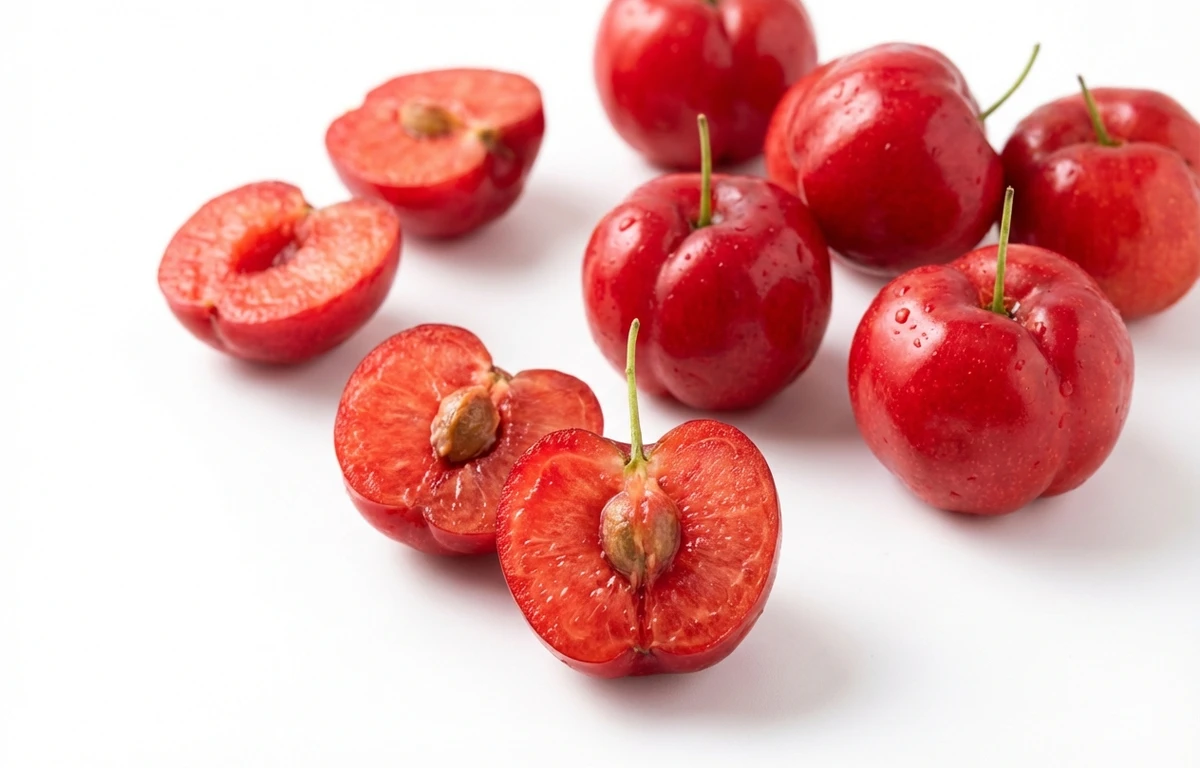
raw acerola.
VegetarianVeganGluten-freeDairy-freeNut-freePeanut-freeSoy-freeEgg-freeShellfish-freeHoney-freeAlcohol-free
ALSO KNOWN AS
raw Barbados cherryraw West Indian cherryraw cerezaraw acerola cherry
SERVING
CALORIES
32
PROTEIN
0.40g
CARBS
7.7g
FAT
0.30g
FIBER
1.1g
NUTRITION PROFILE · per 100 g
Everything in this ingredient.
MACRONUTRIENTS
Calories32kcal—
Protein0.40g1%
Carbohydrates7.7g3%
Fiber1.1g4%
Sugar4.5g9%
Total fat0.30g0%
Saturated fat0.07g0%
Trans fat0g—
Cholesterol0mg0%
Water91.4g—
MINERALS
Sodium7.0mg0%
Potassium146mg3%
Calcium12mg1%
Iron0.20mg1%
Magnesium18mg4%
Phosphorus11mg1%
Zinc0.10mg1%
Copper0.09mg10%
Manganese0.60mg26%
Selenium0.60µg1%
VITAMINS
Vitamin A38µg4%
Vitamin C1678mg1864%
Vitamin D0µg0%
Vitamin E0.18mg1%
Vitamin K0µg0%
Thiamin (B1)0.02mg2%
Riboflavin (B2)0.06mg5%
Niacin (B3)0.40mg3%
Pantothenic acid (B5)0.31mg6%
Vitamin B60.01mg1%
Folate (B9)14µg4%
Vitamin B120µg0%
%DV based on a 2,000 cal diet. Source: USDA FoodData Central. A dash in the %DV column means there’s no established Daily Value for that nutrient.
MEASUREMENT CONVERSIONS
How much is what.
1 cup98g
1 oz28.4g
1 lb453.6g
1 piece5g
HEALTH BENEFITS
Why eat it.
- ✓Extremely high Vitamin C content for immune support
- ✓Rich in antioxidants that fight oxidative stress
- ✓Promotes collagen production for skin health
- ✓May help regulate blood sugar levels
- ✓Supports cardiovascular health through potassium content
COOKING TIPS
In the kitchen.
- 1Best consumed raw or juiced to preserve the heat-sensitive Vitamin C
- 2Add to smoothies or yogurt bowls for a tart nutritional boost
- 3If cooking into jams or syrups, use low heat to minimize nutrient loss
STORAGE
Keep it fresh.
- Highly perishable; store in the refrigerator for no more than 3-5 days
- Can be frozen whole or as a puree for long-term use up to 6 months
- Keep in a breathable container to prevent moisture buildup and mold
FAQ
Frequently asked questions.
How long does raw acerola last?
Raw acerola is very delicate and typically lasts only 3 to 5 days in the refrigerator after being harvested.
Can you freeze raw acerola?
Yes, acerola freezes well. It is best to wash, dry, and freeze them in a single layer before transferring to a freezer bag.
What does raw acerola taste like?
It has a tart, acidic, and slightly sweet flavor, similar to a cross between a tart cherry and a crab apple.
How do I pick the best acerola?
Look for berries that are bright red and firm. Avoid those that are bruised, leaking juice, or showing signs of mold.
What is a good substitute for acerola?
Camu camu, rose hips, or tart cherries are the best substitutes, though they may differ in Vitamin C concentration.
Is the pit of the acerola edible?
The acerola contains three small, winged pits. While not toxic, they are hard and usually discarded or strained out during juicing.
Why is acerola called a 'superfood'?
It is considered a superfood primarily because it contains significantly more Vitamin C than oranges—up to 50-100 times more by weight.
How should I prepare raw acerola for eating?
Rinse them thoroughly in cold water and remove the stems. They can be eaten whole (avoiding the pits) or blended into juices.



















