
Fruit2 recipes
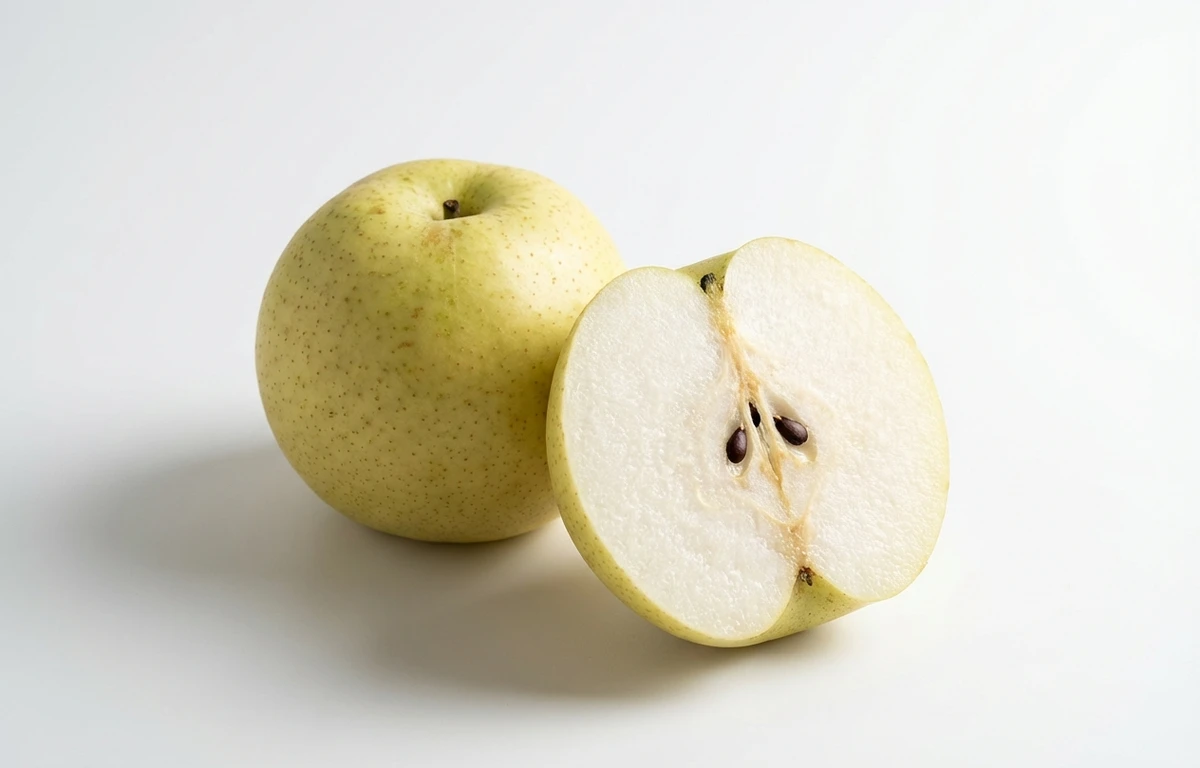
raw asian pear.
VegetarianVeganGluten-freeDairy-freeNut-freePeanut-freeSoy-freeEgg-freeShellfish-freeHoney-freeAlcohol-freeHalalKosher
ALSO KNOWN AS
asian pearnashi pearapple pearsand pearKorean pearJapanese pearChinese pear
SERVING
CALORIES
42
PROTEIN
0.50g
CARBS
10.7g
FAT
0.23g
FIBER
3.6g
NUTRITION PROFILE · per 100 g
Everything in this ingredient.
MACRONUTRIENTS
Calories42kcal—
Protein0.50g1%
Carbohydrates10.7g4%
Fiber3.6g13%
Sugar7.0g14%
Total fat0.23g0%
Saturated fat0.01g0%
Trans fat0g—
Cholesterol0mg0%
Water88.3g—
MINERALS
Sodium0mg0%
Potassium121mg3%
Calcium4.0mg0%
Iron0mg0%
Magnesium8.0mg2%
Phosphorus11mg1%
Zinc0.02mg0%
Copper0.05mg6%
Manganese0.06mg3%
Selenium0.10µg0%
VITAMINS
Vitamin A0µg0%
Vitamin C3.8mg4%
Vitamin D0µg0%
Vitamin E0.12mg1%
Vitamin K4.5µg4%
Thiamin (B1)0.01mg1%
Riboflavin (B2)0.01mg1%
Niacin (B3)0.22mg1%
Pantothenic acid (B5)0.07mg1%
Vitamin B60.02mg1%
Folate (B9)8.0µg2%
Vitamin B120µg0%
%DV based on a 2,000 cal diet. Source: USDA FoodData Central. A dash in the %DV column means there’s no established Daily Value for that nutrient.
MEASUREMENT CONVERSIONS
How much is what.
1 cup130g
1 tablespoon8.1g
1 teaspoon2.7g
1 ml0.5g
1 liter541.7g
1 piece170g
HEALTH BENEFITS
Why eat it.
- ✓Rich in dietary fiber, which aids digestion and promotes gut health.
- ✓Good source of Vitamin C and copper, supporting immune function and collagen formation.
- ✓Contains antioxidants like flavonoids that help reduce inflammation and oxidative stress.
- ✓High water content contributes to hydration.
COOKING TIPS
In the kitchen.
- 1Slice thinly and add to salads, slaws, or cheese boards for a crisp, juicy, and sweet element.
- 2Grated asian pear is a key ingredient in Korean marinades (like for Bulgogi) as its enzymes help tenderize meat.
- 3Their firm texture holds up well to poaching, baking, and roasting.
- 4Enjoy raw as a refreshing snack; they are typically peeled before eating.
STORAGE
Keep it fresh.
- Store at room temperature for up to one week or in the refrigerator's crisper drawer for up to three months.
- Handle gently as they bruise more easily than European pears despite their firm texture.
FAQ
Frequently asked questions.
Is raw Asian pear healthy?
Yes, raw Asian pears are very healthy. They are rich in dietary fiber, which aids digestion and promotes gut health. They also provide Vitamin C and copper, supporting immune function and collagen formation, along with beneficial antioxidants.
How many calories and carbs are in raw Asian pear?
A 100g serving of raw Asian pear contains approximately 42 calories and 10.65g of carbohydrates. It's a relatively low-calorie fruit with a moderate amount of natural sugars.
Is raw Asian pear good for weight loss?
Raw Asian pears can be beneficial for weight loss due to their high water and fiber content. This combination helps you feel full and satisfied, potentially reducing overall calorie intake. They are also low in calories, making them a great snack option.
Is raw Asian pear suitable for diabetics?
Raw Asian pears have a moderate glycemic index and are rich in fiber, which can help regulate blood sugar levels. While they contain natural sugars, their fiber content can mitigate rapid spikes. Diabetics should consume them in moderation as part of a balanced diet and monitor their individual response.
Is raw Asian pear vegan and gluten-free?
Yes, raw Asian pears are naturally vegan as they are a plant-based fruit. They are also naturally gluten-free, making them suitable for individuals with celiac disease or gluten sensitivities.
What does raw Asian pear taste like and how is it typically eaten?
Raw Asian pears have a crisp, juicy texture similar to an apple, but with a milder, sweeter flavor and a slightly grainy mouthfeel. They are often eaten fresh, sliced into salads, or served as a refreshing snack. Their high water content makes them very hydrating.
Do I need to peel raw Asian pear before eating?
No, you do not need to peel raw Asian pears before eating them. The skin is thin, edible, and contains additional fiber and nutrients. Simply wash the pear thoroughly before consuming.
How should I store raw Asian pears?
Store raw Asian pears in the refrigerator, ideally in a plastic bag or crisper drawer, to maintain their crispness and extend their shelf life. They can last for several weeks when stored properly. Avoid storing them with strong-smelling foods, as they can absorb odors.
How do I choose a ripe raw Asian pear?
Look for Asian pears that are firm to the touch and feel heavy for their size. The skin should be smooth and free of major blemishes or soft spots. A slight yellowing of the skin can indicate ripeness, but they are often sold firm and ready to eat.
Can raw Asian pears be used in cooking?
While most commonly enjoyed raw, Asian pears can be used in cooking, though their delicate texture might soften significantly. They are excellent in salads, slaws, or as a fresh component in savory dishes. They can also be lightly grilled or baked, but their crispness will diminish.
RECIPES
Cook with raw asian pear.
2 recipes · sorted by what’s quick



















