
Vegetable
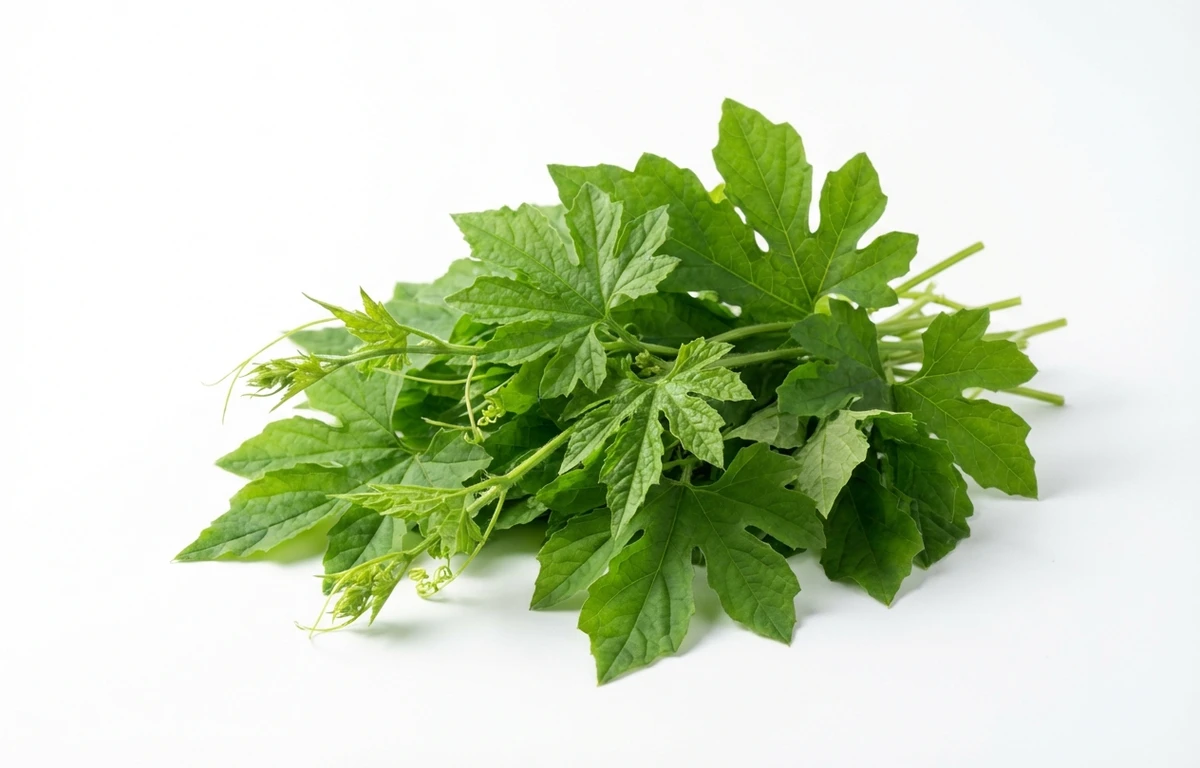
raw balsam-pear leafy tips.
VegetarianVeganGluten-freeDairy-freeNut-freePeanut-freeSoy-freeEgg-freeShellfish-freeHoney-freeAlcohol-freeHalalKosher
ALSO KNOWN AS
bitter gourd leavesbalsam pear leaves
SERVING
CALORIES
41
PROTEIN
5.3g
CARBS
3.3g
FAT
0.69g
FIBER
2.5g
This ingredient is flagged as naturally gluten-free.
NUTRITION PROFILE · per 100 g
Everything in this ingredient.
MACRONUTRIENTS
Calories40.6kcal—
Protein5.3g11%
Carbohydrates3.3g1%
Fiber2.5g9%
Sugar0.50g1%
Total fat0.69g1%
Saturated fat0.16g1%
Trans fat0g—
Cholesterol0mg0%
Water89.3g—
MINERALS
Sodium11mg0%
Potassium608mg13%
Calcium84mg6%
Iron2.0mg11%
Magnesium85mg20%
Phosphorus99mg8%
Zinc0.30mg3%
Copper0.20mg22%
Manganese0.54mg23%
Selenium0.90µg2%
VITAMINS
Vitamin A87µg10%
Vitamin C88mg98%
Vitamin D0µg0%
Thiamin (B1)0.18mg15%
Riboflavin (B2)0.36mg28%
Niacin (B3)1.1mg7%
Pantothenic acid (B5)0.06mg1%
Vitamin B60.80mg47%
Folate (B9)128µg32%
Vitamin B120µg0%
%DV based on a 2,000 cal diet. Source: USDA FoodData Central. A dash in the %DV column means there’s no established Daily Value for that nutrient.
MEASUREMENT CONVERSIONS
How much is what.
1 cup24g
1 tablespoon1.5g
1 teaspoon0.5g
1 ml0.1g
1 liter100g
HEALTH BENEFITS
Why eat it.
- ✓Rich in vitamins and minerals, particularly Vitamin A, Vitamin C, iron, and calcium.
COOKING TIPS
In the kitchen.
- 1To reduce bitterness, blanch the leaves in boiling salted water for 1-2 minutes, then shock them in ice water before using.
- 2Stir-fry with strong flavors like garlic, fermented beans, or shrimp paste to complement their bitter taste.
- 3Incorporate them into soups, stews, or curries during the last few minutes of cooking to preserve nutrients and texture.
- 4The most tender, youngest leaves can be used raw in salads, but use sparingly due to their potent flavor.
STORAGE
Keep it fresh.
- Wrap the leafy tips in a damp paper towel and place them inside a perforated plastic bag.
- Store in the crisper drawer of the refrigerator for up to 3-5 days for optimal freshness.
FAQ
Frequently asked questions.
What are the main nutritional benefits of balsam-pear leafy tips?
Per 100g, balsam-pear leafy tips provide approximately 30 calories, 5.3g protein, 3.29g carbohydrates, and 0.69g fat. They are particularly rich in Vitamin A, Vitamin C, iron, and calcium, supporting overall health, vision, and bone strength.
Are balsam-pear leafy tips suitable for a vegan or vegetarian diet?
Yes, absolutely. As a leafy green vegetable, balsam-pear leafy tips are naturally vegan and vegetarian, making them an excellent plant-based addition to any diet.
Are balsam-pear leafy tips gluten-free and keto-friendly?
Yes, balsam-pear leafy tips are naturally gluten-free. With only 3.29g of carbohydrates per 100g, they are also considered low-carb and can be incorporated into a keto-friendly diet in moderation.
How do you typically prepare and cook balsam-pear leafy tips?
While they can be eaten raw, balsam-pear leafy tips are often blanched to reduce bitterness and tenderize them. They can then be stir-fried, added to soups, stews, or curries, or simply sautéed with garlic and oil.
What do balsam-pear leafy tips taste like?
Balsam-pear leafy tips have a distinct, slightly bitter taste, similar to other bitter greens like dandelion or mustard greens. The bitterness is generally milder than that of the balsam-pear fruit itself, and can be reduced by blanching.
Can I eat balsam-pear leafy tips raw?
Yes, raw balsam-pear leafy tips can be eaten. They are often added to salads or smoothies for a nutritional boost. However, some people prefer to blanch them first to reduce their natural bitterness and improve texture.
How should I store fresh balsam-pear leafy tips?
To keep them fresh, store unwashed balsam-pear leafy tips in a plastic bag in the crisper drawer of your refrigerator. They typically last for 3-5 days when stored properly.
What is the difference between balsam-pear fruit and its leafy tips?
Both come from the same plant (Momordica charantia), but the fruit is known for its intense bitterness and unique texture, often used in stir-fries or juices. The leafy tips, while also bitter, are milder and used more like other leafy greens in various culinary applications.



















