
Meat
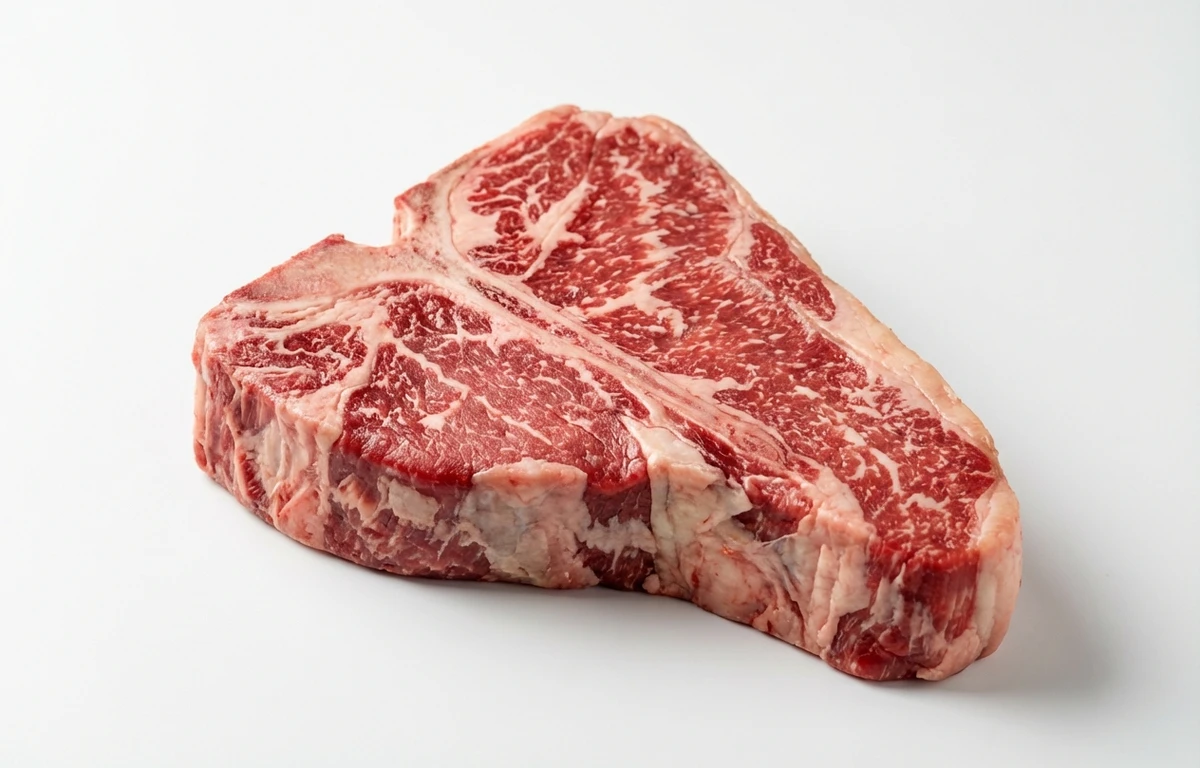
raw beef porterhouse steak.
VegetarianVeganGluten-freeDairy-freeNut-freePeanut-freeSoy-freeEgg-freeShellfish-freeHoney-freeAlcohol-free
ALSO KNOWN AS
raw porterhouseraw beef loin porterhouse steakraw t-bone steak (large tenderloin)raw king of steaks
SERVING
CALORIES
247
PROTEIN
18.6g
CARBS
0g
FAT
19.1g
FIBER
0g
NUTRITION PROFILE · per 100 g
Everything in this ingredient.
MACRONUTRIENTS
Calories247kcal—
Protein18.6g37%
Carbohydrates0g0%
Fiber0g0%
Sugar0g0%
Total fat19.1g24%
Saturated fat7.6g38%
Trans fat1.1g—
Cholesterol60mg20%
Water61.5g—
MINERALS
Sodium52mg2%
Potassium280mg6%
Calcium12mg1%
Iron2.1mg12%
Magnesium19mg5%
Phosphorus175mg14%
Zinc4.2mg38%
Copper0.08mg9%
Manganese0.01mg0%
Selenium22.4µg41%
VITAMINS
Vitamin A0µg0%
Vitamin C0mg0%
Vitamin D0.10µg1%
Vitamin E0.20mg1%
Vitamin K1.2µg1%
Thiamin (B1)0.06mg5%
Riboflavin (B2)0.15mg12%
Niacin (B3)4.8mg30%
Pantothenic acid (B5)0.35mg7%
Vitamin B60.42mg25%
Folate (B9)7.0µg2%
Vitamin B122.1µg88%
%DV based on a 2,000 cal diet. Source: USDA FoodData Central. A dash in the %DV column means there’s no established Daily Value for that nutrient.
MEASUREMENT CONVERSIONS
How much is what.
1 cup240g
1 tablespoon15g
1 teaspoon5g
1 oz28.4g
1 lb453.6g
1 liter1040g
1 piece567g
HEALTH BENEFITS
Why eat it.
- ✓Excellent source of high-quality complete protein for muscle repair
- ✓Rich in Vitamin B12 which is essential for nervous system health
- ✓High in bioavailable heme iron to prevent anemia
- ✓Provides significant amounts of zinc for immune system support
- ✓Contains creatine which can improve physical performance
COOKING TIPS
In the kitchen.
- 1Take the steak out of the fridge 30 minutes before cooking to reach room temperature
- 2Pat the surface completely dry with paper towels to ensure a proper crust/sear
- 3Always let the steak rest for at least 5-10 minutes after cooking to retain juices
STORAGE
Keep it fresh.
- Store in the coldest part of the refrigerator for 3 to 5 days
- Freeze in airtight vacuum-sealed bags for up to 12 months for best quality
- Keep raw meat on the bottom shelf to prevent juices from dripping on other foods
FAQ
Frequently asked questions.
How long does raw porterhouse steak last in the fridge?
It typically stays fresh for 3 to 5 days when kept at or below 40°F (4°C).
Can I freeze porterhouse steak?
Yes, it freezes very well. For best results, wrap it tightly in plastic wrap and then foil, or use a vacuum sealer. It stays good for 6-12 months.
What is the difference between a Porterhouse and a T-bone?
Both come from the short loin and have a T-shaped bone, but a Porterhouse must have a tenderloin section at least 1.25 inches thick, whereas a T-bone is smaller.
Should I wash the steak before cooking?
No, washing raw meat can spread bacteria around your kitchen. Instead, pat it dry with paper towels to help it sear better.
What is the best way to cook a porterhouse?
Pan-searing in a cast-iron skillet followed by finishing in the oven, or direct grilling over high heat are the most popular methods.
How do I know if the steak has gone bad?
Signs of spoilage include a sour or ammonia-like smell, a slimy texture, or a distinct grey/greenish color change.
What can I substitute for a porterhouse steak?
A T-bone steak is the closest substitute. Alternatively, a Ribeye (for fat content) or a combination of Strip steak and Filet Mignon can work.
Is porterhouse steak healthy?
It is nutrient-dense, providing protein, iron, and B-vitamins, but it is also high in saturated fat and calories, so it should be consumed in moderation.
How do I select a high-quality porterhouse?
Look for bright red meat with plenty of white marbling (intramuscular fat) and a thick cut (at least 1.5 inches) for even cooking.



















