
Loading...
Per 100g
Nutrition data source: USDA FoodData Central
Common measurement equivalents in grams
Raw rib eye typically lasts 3 to 5 days in the refrigerator if kept at the proper temperature.
Yes, rib eye freezes very well. For best quality, use within 6 to 12 months, though it remains safe indefinitely if kept frozen.
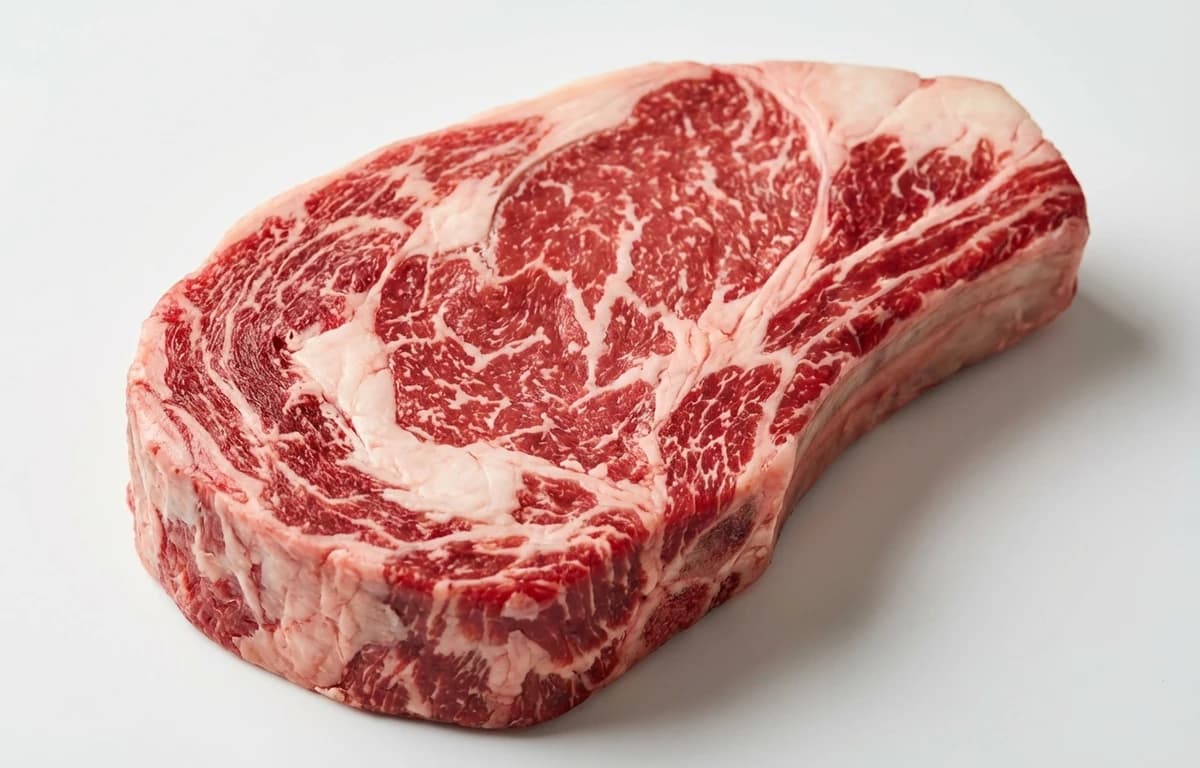
Look for 'marbling'—the small white flecks of intramuscular fat. More marbling generally means more flavor and tenderness.
New York Strip or T-bone steaks are the best substitutes for flavor, while Top Sirloin is a leaner, more affordable alternative.
Pat the meat completely dry with paper towels before seasoning; moisture on the surface prevents a good sear.
It is highly nutritious but also one of the fattier cuts of beef. It should be consumed in moderation as part of a balanced diet.
Pan-searing in a cast-iron skillet or grilling over high heat are the most popular methods to highlight its fat content.
Aim for an internal temperature of 130°F to 135°F (54°C to 57°C) for a perfect medium-rare.
You can trim large chunks of hard exterior fat, but leave the internal marbling as it provides the steak's signature flavor.
raw beef rib eye is a versatile ingredient found in cuisines around the world. With 291 calories per 100g and 24 grams of protein, it's a nutritious addition to many dishes.
Explore more ingredients in the meat category with complete nutrition information.
View all meat →Discover 0 recipes featuring raw beef rib eye with step-by-step instructions.
Browse recipes →Bone-in (often called Cowboy or Tomahawk) may take longer to cook but the bone can help the meat retain moisture and add flavor.