
Vegetable
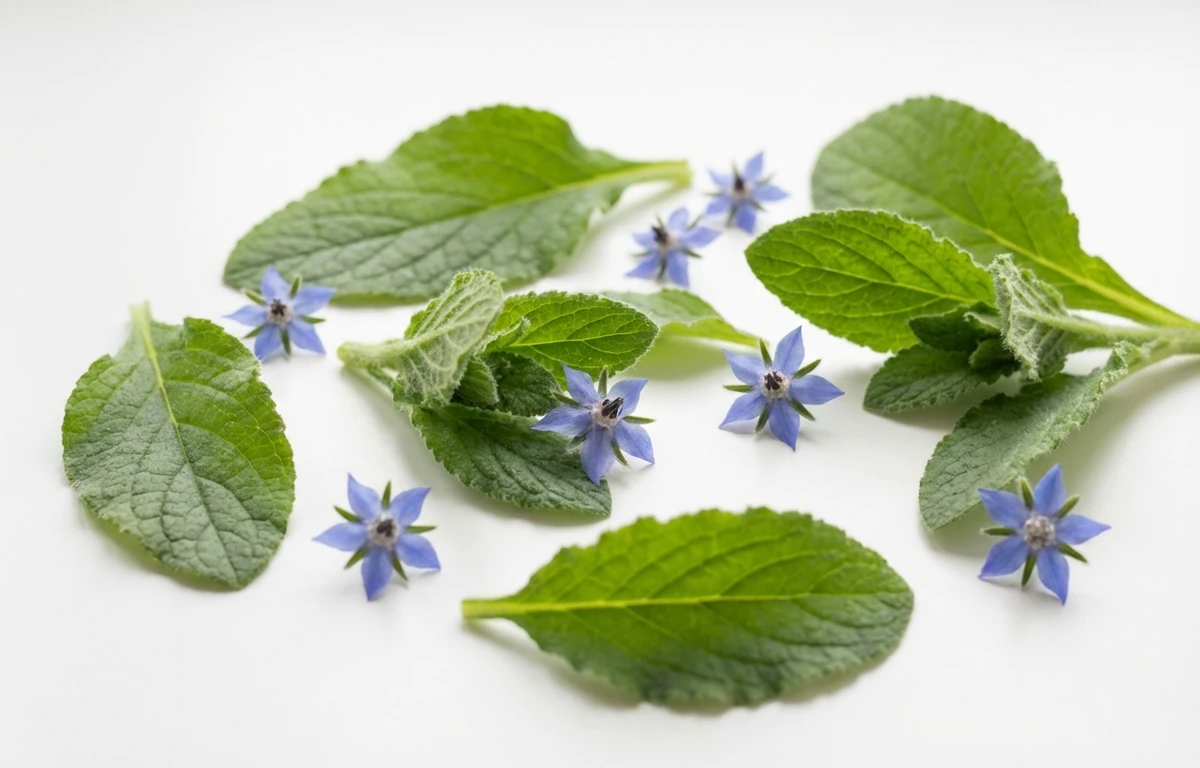
raw borage.
VegetarianVeganGluten-freeDairy-freeNut-freePeanut-freeSoy-freeEgg-freeShellfish-freeHoney-freeAlcohol-freeHalalKosher
ALSO KNOWN AS
raw starflowerraw bee breadraw bee bushfresh borage leavesraw borago officinalis
SERVING
CALORIES
21
PROTEIN
1.8g
CARBS
3.1g
FAT
0.70g
FIBER
2.5g
This ingredient is flagged as naturally gluten-free. Per 100 g, it provides 15 µg of vitamin K.
NUTRITION PROFILE · per 100 g
Everything in this ingredient.
MACRONUTRIENTS
Calories21kcal—
Protein1.8g4%
Carbohydrates3.1g1%
Fiber2.5g9%
Sugar0.10g0%
Total fat0.70g1%
Saturated fat0.17g1%
Trans fat0g—
Cholesterol0mg0%
Water93g—
MINERALS
Sodium80mg3%
Potassium470mg10%
Calcium93mg7%
Iron3.3mg18%
Magnesium52mg12%
Phosphorus53mg4%
Zinc0.20mg2%
Copper0.13mg14%
Manganese0.35mg15%
Selenium0.90µg2%
VITAMINS
Vitamin A210µg23%
Vitamin C35mg39%
Vitamin D0µg0%
Vitamin E0.15mg1%
Vitamin K15µg13%
Thiamin (B1)0.06mg5%
Riboflavin (B2)0.15mg12%
Niacin (B3)0.90mg6%
Pantothenic acid (B5)0.04mg1%
Vitamin B60.08mg5%
Folate (B9)13µg3%
Vitamin B120µg0%
%DV based on a 2,000 cal diet. Source: USDA FoodData Central. A dash in the %DV column means there’s no established Daily Value for that nutrient.
MEASUREMENT CONVERSIONS
How much is what.
1 cup30g
1 tablespoon2g
1 teaspoon0.7g
1 oz28.4g
1 lb453.6g
1 piece1.5g
HEALTH BENEFITS
Why eat it.
- ✓Contains potassium which helps regulate blood pressure
COOKING TIPS
In the kitchen.
- 1Use young, tender leaves for raw salads as older leaves become very prickly
- 2Finely chop the leaves to minimize the texture of the tiny hairs
- 3Blanching the leaves for a few seconds will completely remove the prickly texture
STORAGE
Keep it fresh.
- Wrap fresh leaves in a damp paper towel and place in a plastic bag
- Store in the refrigerator crisper drawer for 2-3 days
- Do not wash until immediately before use to prevent premature wilting
FAQ
Frequently asked questions.
What does raw borage taste like?
Raw borage has a very distinct, refreshing flavor that closely resembles cucumber.
How long does fresh borage last in the fridge?
It is quite delicate and typically lasts only 2 to 3 days when stored properly in a damp paper towel.
Can you eat the prickly hairs on borage leaves?
Yes, they are edible, but many find the texture unpleasant. Chopping finely or cooking removes the sensation.
What is a good substitute for borage?
Cucumber is the best substitute for flavor, while spinach or burnet can substitute for the leafy texture.
How should I clean raw borage?
Gently swish the leaves in a bowl of cold water to remove soil, then pat dry very carefully with a towel.
Are borage flowers edible too?
Yes, the blue star-shaped flowers are edible and are often used as a decorative garnish in salads or frozen into ice cubes.
Is borage high in calories?
No, it is very low in calories, providing only about 21 calories per 100 grams.
Can borage be frozen?
Borage leaves do not freeze well raw as they turn mushy; however, they can be blanched and then frozen for use in soups.
What are the best culinary uses for raw borage?
It is excellent in summer salads, infused in cold drinks like lemonade, or used as a garnish for chilled soups.
How do I pick the best borage at the market?
Look for bright green leaves that are firm and not wilting. Smaller, younger leaves are much more palatable for raw consumption.



















