
Meat
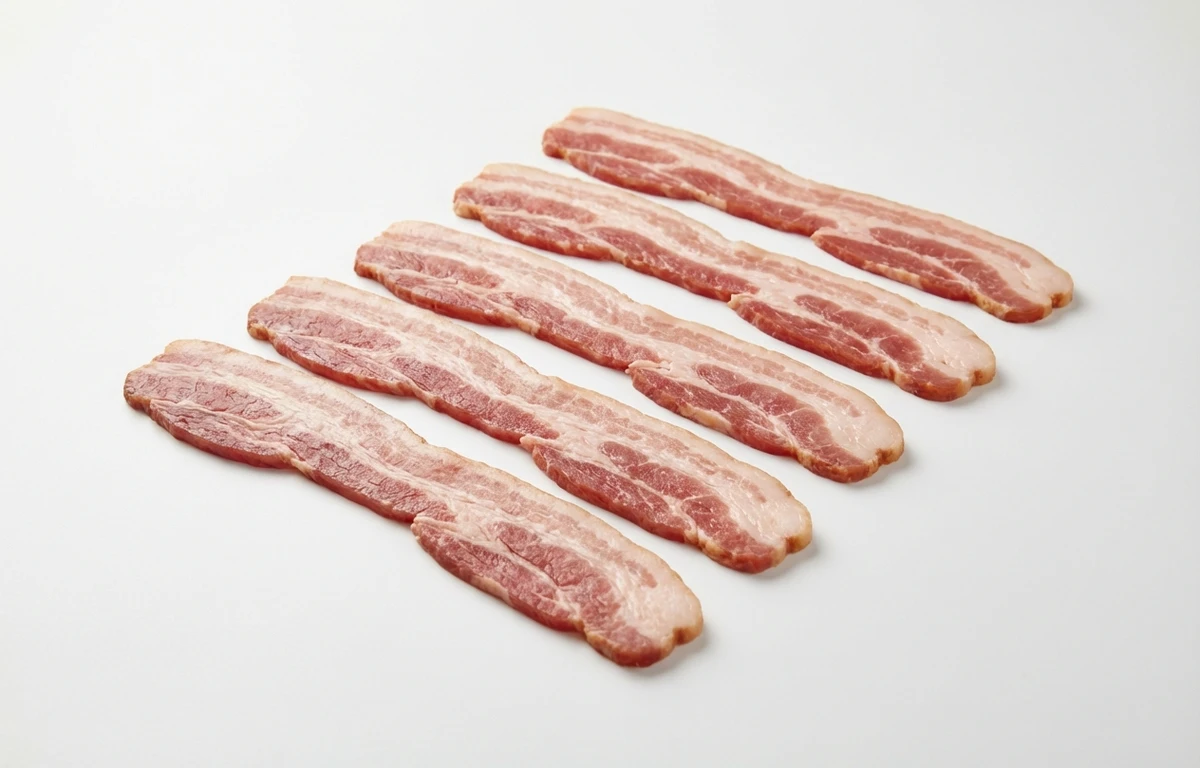
raw breakfast strips.
VegetarianVeganGluten-freeDairy-freeNut-freePeanut-freeSoy-freeEgg-freeShellfish-freeHoney-freeAlcohol-freeHalalKosher
ALSO KNOWN AS
raw bacon stripsuncooked breakfast stripsraw rashersraw pork stripsuncooked bacon
SERVING
CALORIES
458
PROTEIN
12.6g
CARBS
0.70g
FAT
45g
FIBER
0g
NUTRITION PROFILE · per 100 g
Everything in this ingredient.
MACRONUTRIENTS
Calories458kcal—
Protein12.6g25%
Carbohydrates0.70g0%
Fiber0g0%
Sugar0g0%
Total fat45g58%
Saturated fat15.2g76%
Trans fat0.10g—
Cholesterol72mg24%
Water38g—
MINERALS
Sodium1720mg75%
Potassium220mg5%
Calcium6.0mg0%
Iron0.90mg5%
Magnesium12mg3%
Phosphorus150mg12%
Zinc1.8mg16%
Copper0.06mg7%
Manganese0.01mg0%
Selenium32µg58%
VITAMINS
Vitamin A0µg0%
Vitamin C0mg0%
Vitamin D0.80µg4%
Vitamin E0.20mg1%
Vitamin K0µg0%
Thiamin (B1)0.40mg33%
Riboflavin (B2)0.20mg15%
Niacin (B3)4.5mg28%
Pantothenic acid (B5)0.60mg12%
Vitamin B60.30mg18%
Folate (B9)1.0µg0%
Vitamin B121.1µg46%
%DV based on a 2,000 cal diet. Source: USDA FoodData Central. A dash in the %DV column means there’s no established Daily Value for that nutrient.
MEASUREMENT CONVERSIONS
How much is what.
1 oz28.4g
1 lb453.6g
1 piece18g
HEALTH BENEFITS
Why eat it.
- ✓High quality animal protein source
- ✓Rich in B-complex vitamins for energy metabolism
- ✓Good source of selenium, a powerful antioxidant
- ✓Contains phosphorus for bone health
- ✓Provides essential amino acids
COOKING TIPS
In the kitchen.
- 1Start in a cold pan to allow fat to render slowly for maximum crispiness
- 2Bake on a wire rack over a sheet pan at 400°F (200°C) for even cooking and less mess
- 3Save the rendered fat (liquid gold) for sautéing vegetables or frying eggs
STORAGE
Keep it fresh.
- Keep refrigerated in original vacuum-sealed packaging until use
- Once opened, wrap tightly in foil or plastic wrap and use within 5-7 days
- Can be frozen for up to 1-2 months for best quality
FAQ
Frequently asked questions.
How long do raw breakfast strips last in the fridge?
Unopened vacuum-sealed packages last until the use-by date. Once opened, they should be consumed within 5 to 7 days.
Can you freeze raw breakfast strips?
Yes, they freeze very well. For convenience, freeze individual slices between layers of parchment paper so you can defrost only what you need.
How can I tell if the strips have gone bad?
Look for a slimy texture, a sour or off-smell, or a change in color from pink to grey or greenish hues.
What is the best way to cook them for maximum crispiness?
The oven method (400°F/200°C for 15-20 mins) or starting in a cold skillet on medium heat allows the fat to render out, resulting in the crispiest texture.
Are breakfast strips high in sodium?
Yes, most breakfast strips are cured with salt and nitrates, making them very high in sodium (approx. 1700mg per 100g).
What can I use as a substitute for pork breakfast strips?
Turkey bacon, beef bacon, or plant-based 'facon' strips are common alternatives, though they differ in fat content and texture.
Do I need to add oil to the pan when cooking?
No, breakfast strips have a high fat content that will render out and act as the cooking oil.
What is the difference between 'cured' and 'uncured' strips?
Cured strips use synthetic nitrates, while 'uncured' strips typically use natural nitrates from celery powder, though both are technically cured.



















