
Loading...
Per 100g
Nutrition data source: USDA FoodData Central
Common measurement equivalents in grams
Fresh pods last about 5 to 7 days in the refrigerator. Once shelled, they should be eaten within 2 days.
While edible, the outer skins of individual beans can be tough and bitter, especially in larger beans. Most recipes recommend 'double-shelling' them.
Lima beans (butter beans) or edamame are the best substitutes due to their similar texture and size.
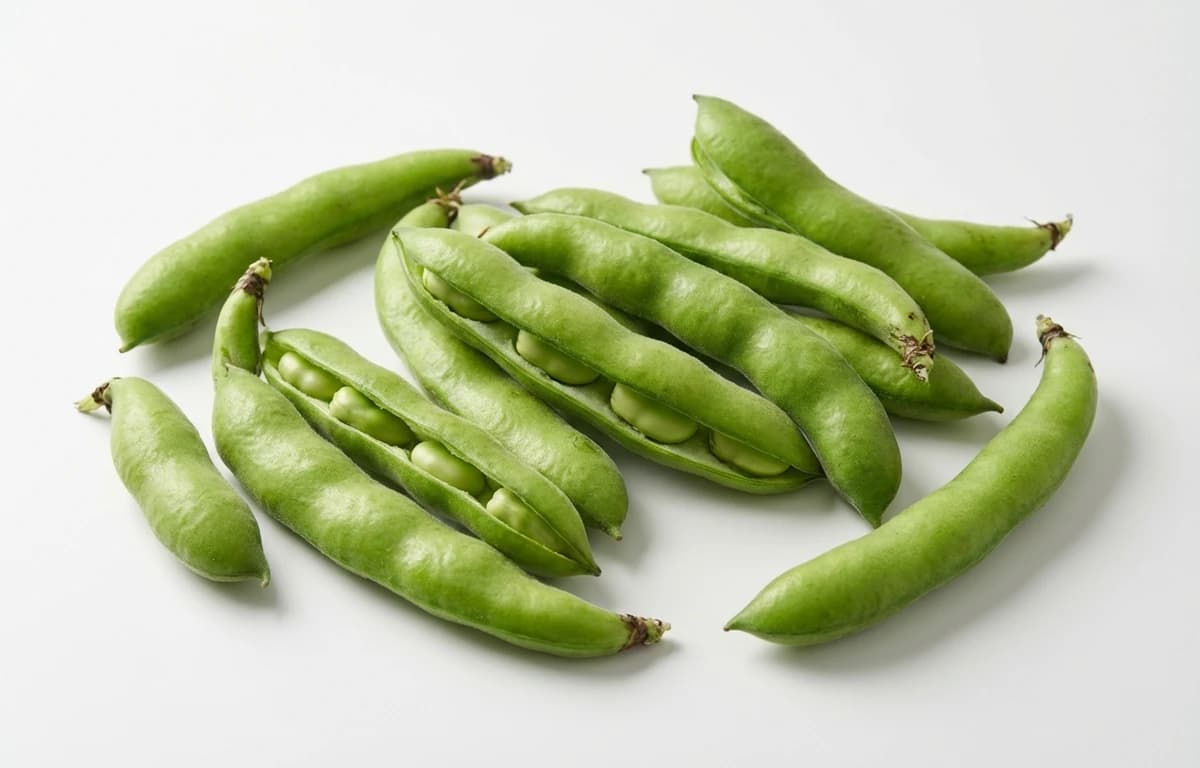
Look for pods that are firm, crisp, and bright green. Avoid pods that are bulging significantly, as this indicates the beans inside are old and starchy.
Yes, they freeze very well. Shell them, blanch for 2 minutes, plunge into ice water, peel the skins, and freeze in airtight bags.
Yes, they are one of the higher-protein vegetables, providing about 8g of protein per 100g serving.
Favism is a genetic condition (G6PD deficiency) where eating fava beans can cause a reaction leading to hemolytic anemia. People with this deficiency must avoid them.
Snap off the end of the pod, pull the string down, and pop the beans out. Blanch the beans in boiling water for 2 minutes to easily remove the tough outer skins.
Yes, 'broadbean' and 'fava bean' are different names for the same legume (Vicia faba).
raw broadbeans is a versatile ingredient found in cuisines around the world. With 88 calories per 100g and 7.9 grams of protein, it's a nutritious addition to many dishes.
Explore more ingredients in the vegetable category with complete nutrition information.
View all vegetable →Discover 0 recipes featuring raw broadbeans with step-by-step instructions.
Browse recipes →They pair excellently with mint, lemon, garlic, pecorino cheese, bacon, and olive oil.