
Vegetable
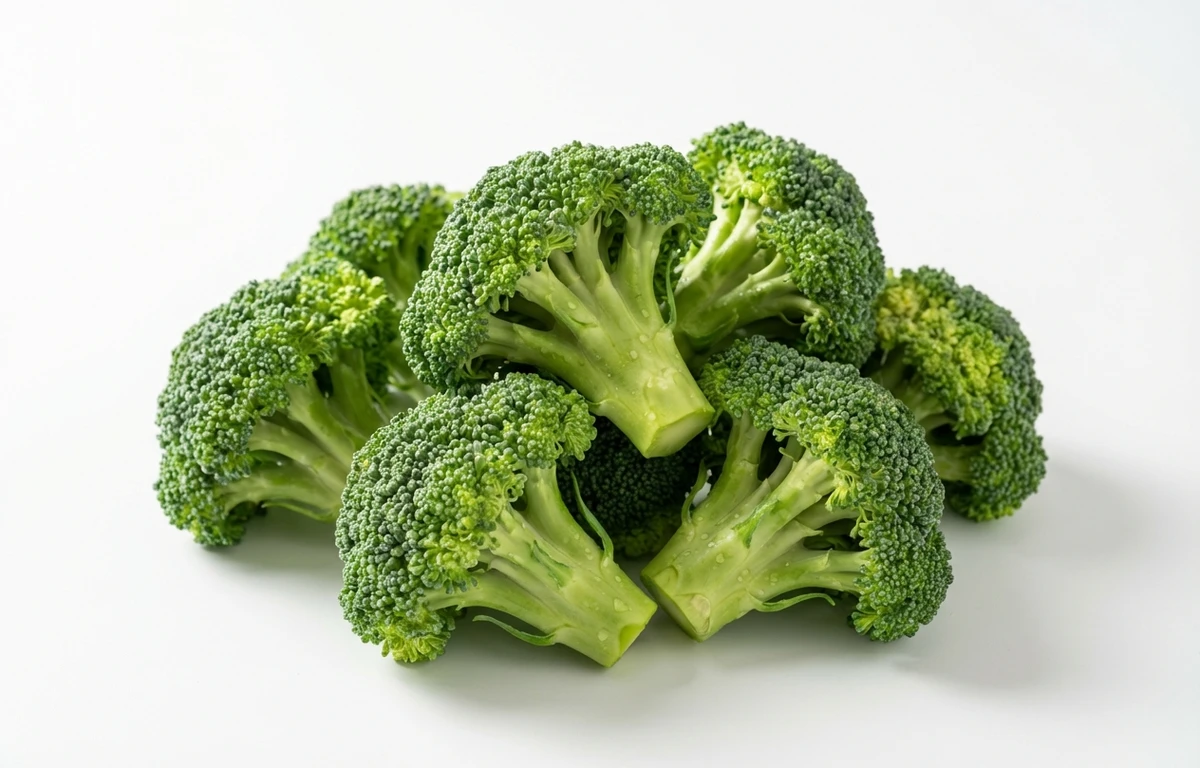
raw broccoli leaves.
VegetarianVeganGluten-freeDairy-freeNut-freePeanut-freeSoy-freeEgg-freeShellfish-freeHoney-freeAlcohol-freeHalalKosher
ALSO KNOWN AS
broccoli leaves
SERVING
CALORIES
35
PROTEIN
3.0g
CARBS
5.1g
FAT
0.35g
FIBER
2.3g
This ingredient is flagged as naturally gluten-free.
NUTRITION PROFILE · per 100 g
Everything in this ingredient.
MACRONUTRIENTS
Calories35.3kcal—
Protein3.0g6%
Carbohydrates5.1g2%
Fiber2.3g8%
Sugar1.5g3%
Total fat0.35g0%
Saturated fat0.05g0%
Trans fat0g—
Cholesterol0mg0%
Water90.7g—
MINERALS
Sodium27mg1%
Potassium325mg7%
Calcium48mg4%
Iron0.88mg5%
Magnesium25mg6%
Phosphorus66mg5%
Zinc0.40mg4%
Copper0.05mg6%
Manganese0.23mg10%
Selenium3.0µg5%
VITAMINS
Vitamin A800µg89%
Vitamin C93.2mg104%
Vitamin D0µg0%
Thiamin (B1)0.07mg6%
Riboflavin (B2)0.12mg9%
Niacin (B3)0.64mg4%
Pantothenic acid (B5)0.54mg11%
Vitamin B60.16mg9%
Folate (B9)71µg18%
Vitamin B120µg0%
%DV based on a 2,000 cal diet. Source: USDA FoodData Central. A dash in the %DV column means there’s no established Daily Value for that nutrient.
MEASUREMENT CONVERSIONS
How much is what.
1 cup36g
1 tablespoon2.3g
1 teaspoon0.8g
1 oz28.4g
1 lb453.6g
1 ml0.2g
1 liter150g
COOKING TIPS
In the kitchen.
- 1Sauté with garlic, olive oil, and a pinch of chili flakes until tender, similar to preparing kale or collard greens.
- 2Finely chop and add to soups, stews, frittatas, or smoothies for an added nutrient boost.
- 3Toss with olive oil and salt, then roast at 400°F (200°C) until crispy to create nutritious 'chips'.
STORAGE
Keep it fresh.
- Wrap unwashed leaves in a damp paper towel, place in a plastic bag, and store in the refrigerator's crisper drawer for up to a week.
- For long-term storage, blanch leaves for 2 minutes, shock in ice water, drain thoroughly, and freeze in an airtight container for up to 6 months.
FAQ
Frequently asked questions.
How many calories and how much protein are in raw broccoli leaves?
Per 100 grams, raw broccoli leaves contain approximately 28 calories, making them a very low-calorie food. They also provide about 2.98 grams of protein, contributing to your daily protein intake, especially for a leafy green vegetable.
Are raw broccoli leaves safe to eat raw?
Yes, raw broccoli leaves are perfectly safe and nutritious to eat raw. They can be enjoyed in salads, smoothies, or as a wrap. Some people may find them slightly bitter, but this can be balanced with other flavors.
Are raw broccoli leaves vegan and gluten-free?
Yes, raw broccoli leaves are naturally vegan, as they are a plant-based vegetable. They are also inherently gluten-free, making them suitable for individuals following a gluten-free diet.
Are raw broccoli leaves keto-friendly or low-carb?
With approximately 5.06 grams of carbohydrates per 100 grams, raw broccoli leaves are considered low-carb and can be a suitable addition to a ketogenic diet in moderation. Their high fiber content also contributes to a lower net carb count.
How can I use raw broccoli leaves in my cooking?
Raw broccoli leaves are versatile and can be used in many ways. Try them as a base for salads, blended into green smoothies, used as wraps for sandwiches, or finely chopped and added to pestos or salsas. Their robust texture holds up well.
What do raw broccoli leaves taste like?
Raw broccoli leaves have a flavor profile similar to other hearty greens like kale or collard greens, often described as slightly bitter, earthy, and peppery. The taste can vary depending on the maturity of the leaves, with younger leaves being milder.
How should I store raw broccoli leaves to keep them fresh?
To keep raw broccoli leaves fresh, wash and thoroughly dry them, then wrap them in a paper towel and place them in a sealed plastic bag or airtight container in the refrigerator's crisper drawer. Stored this way, they can last for about 5-7 days.
Do raw broccoli leaves offer the same health benefits as broccoli florets?
While both are highly nutritious, raw broccoli leaves often surpass florets in certain nutrients. They are particularly richer in Vitamin A (beta-carotene) and Vitamin K. Both contain beneficial glucosinolates, but the concentration can vary, making the leaves a valuable and distinct nutritional powerhouse.



















