
Vegetable
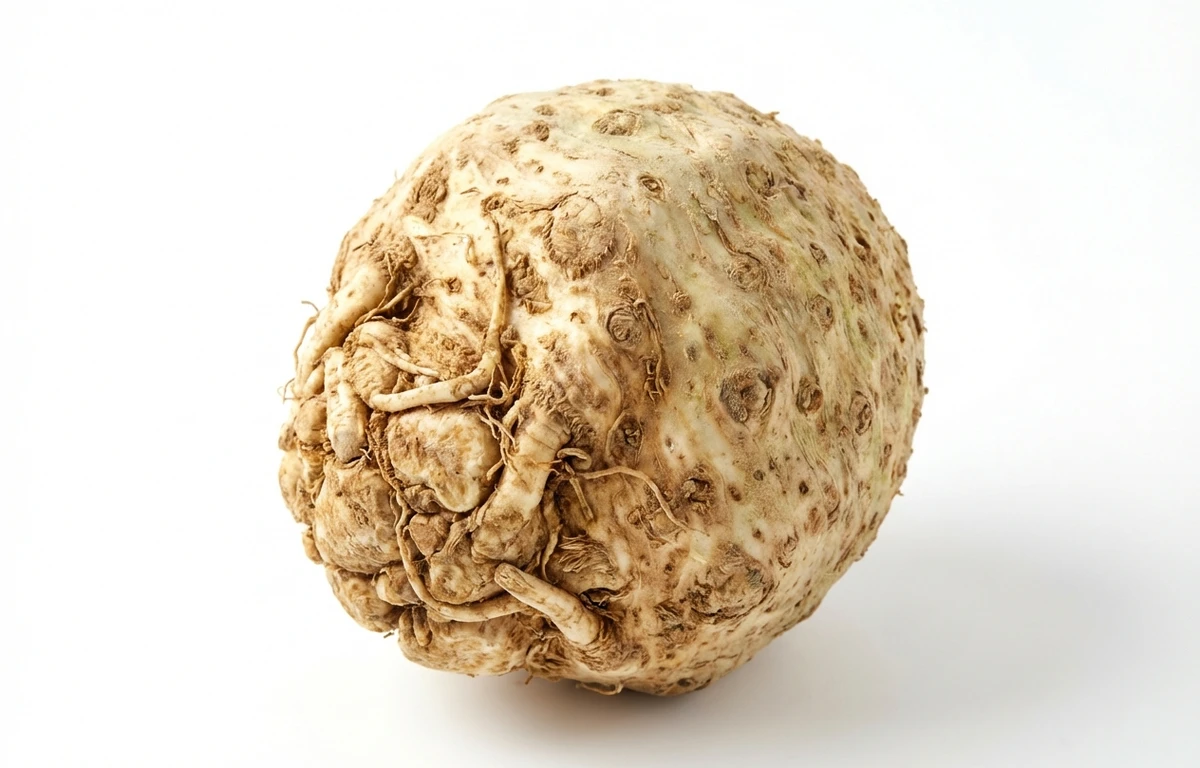
raw celeriac.
VegetarianVeganGluten-freeDairy-freeNut-freePeanut-freeSoy-freeEgg-freeShellfish-freeHoney-freeAlcohol-freeHalalKosher
ALSO KNOWN AS
celeriac
SERVING
CALORIES
42
PROTEIN
1.5g
CARBS
9.2g
FAT
0.30g
FIBER
1.8g
This ingredient is flagged as naturally gluten-free. Per 100 g, it provides 41 µg of vitamin K.
NUTRITION PROFILE · per 100 g
Everything in this ingredient.
MACRONUTRIENTS
Calories42kcal—
Protein1.5g3%
Carbohydrates9.2g3%
Fiber1.8g6%
Sugar1.6g3%
Total fat0.30g0%
Saturated fat0.08g0%
Trans fat0g—
Cholesterol0mg0%
Water88g—
MINERALS
Sodium100mg4%
Potassium300mg6%
Calcium43mg3%
Iron0.70mg4%
Magnesium20mg5%
Phosphorus115mg9%
Zinc0.33mg3%
Copper0.07mg8%
Manganese0.16mg7%
Selenium0.70µg1%
VITAMINS
Vitamin A0µg0%
Vitamin C8.0mg9%
Vitamin D0µg0%
Vitamin E0.36mg2%
Vitamin K41µg34%
Thiamin (B1)0.05mg4%
Riboflavin (B2)0.06mg5%
Niacin (B3)0.70mg4%
Pantothenic acid (B5)0.35mg7%
Vitamin B60.17mg10%
Folate (B9)8.0µg2%
Vitamin B120µg0%
%DV based on a 2,000 cal diet. Source: USDA FoodData Central. A dash in the %DV column means there’s no established Daily Value for that nutrient.
MEASUREMENT CONVERSIONS
How much is what.
1 cup156g
1 tablespoon9.8g
1 teaspoon3.3g
1 ml0.7g
1 liter650g
HEALTH BENEFITS
Why eat it.
- ✓Provides essential minerals like phosphorus, potassium, and manganese.
COOKING TIPS
In the kitchen.
- 1Peel the tough, knobby exterior thoroughly with a sharp knife or a sturdy vegetable peeler before use.
- 2Celeriac can be eaten raw, thinly sliced or grated into salads and slaws for a crisp texture and celery-like flavor.
- 3It is excellent when roasted, boiled and mashed as a low-carb alternative to potatoes, or puréed into creamy soups.
- 4Its flavor pairs well with apples, potatoes, cream, thyme, and mustard.
STORAGE
Keep it fresh.
- Store whole, unwashed celeriac in the crisper drawer of your refrigerator for up to 3-4 weeks.
- Once cut, prevent browning by submerging pieces in acidulated water (water with lemon juice or vinegar) and use within a few days.
FAQ
Frequently asked questions.
Is celeriac healthy?
Yes, celeriac is a very healthy and nutritious root vegetable. It's low in calories and fat, while being a good source of dietary fiber, vitamins (especially K), and essential minerals. Its nutrient profile supports overall well-being.
How many calories and carbs are in celeriac?
Per 100g, raw celeriac contains approximately 42 calories and 9.2g of carbohydrates. It also provides 1.5g of protein and a minimal 0.3g of fat, making it a relatively low-calorie and low-fat option.
Is celeriac keto-friendly or low-carb?
With 9.2g of carbs per 100g, celeriac is lower in carbohydrates than potatoes but still contains a moderate amount. While not strictly 'keto' in large quantities, it can be enjoyed in moderation on a low-carb diet, especially as a substitute for higher-carb vegetables.
Can you eat celeriac raw?
Absolutely! Raw celeriac has a crisp texture and a mild, slightly nutty, celery-like flavor. It's excellent grated into salads, slaws, or thinly sliced for carpaccio, offering a refreshing crunch and retaining all its nutrients.
How do you prepare and cook celeriac?
First, peel the tough, knobby skin with a sharp knife or peeler. Celeriac can be roasted, boiled, mashed, pureed into soups, or added to stews. It's a versatile vegetable that can replace potatoes in many dishes for a lower-carb option.
What does celeriac taste like?
Celeriac has a unique flavor profile often described as a cross between celery and parsley, with earthy, nutty, and slightly peppery notes. When cooked, its flavor mellows and becomes sweeter, similar to a mild turnip or potato.
How should you store celeriac?
Store whole, unpeeled celeriac in a cool, dark place or in the crisper drawer of your refrigerator. Wrapped loosely in a plastic bag, it can last for several weeks. Once cut, wrap tightly in plastic wrap and use within a few days.



















