
Vegetable10 recipes
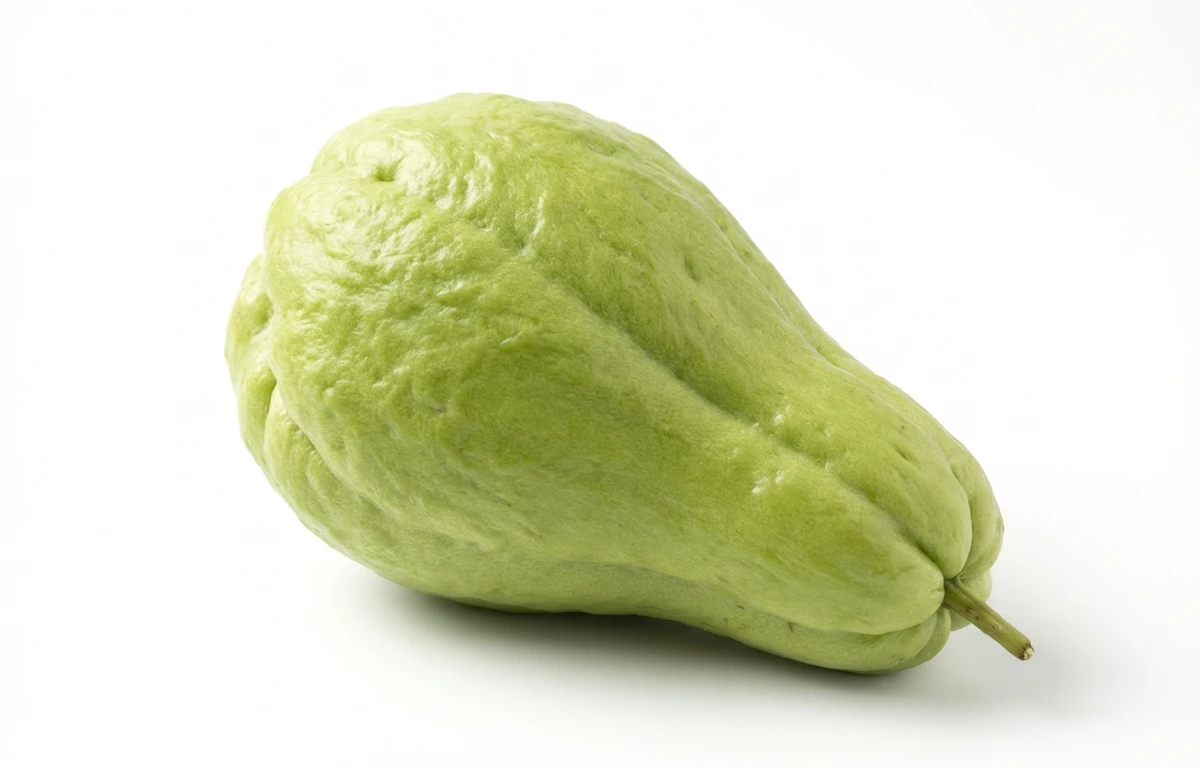
raw chayote.
VegetarianVeganGluten-freeDairy-freeNut-freePeanut-freeSoy-freeEgg-freeShellfish-freeHoney-freeAlcohol-freeHalalKosher
ALSO KNOWN AS
chayote
SERVING
CALORIES
19
PROTEIN
0.82g
CARBS
4.5g
FAT
0.13g
FIBER
1.7g
This ingredient is flagged as naturally gluten-free. Per 100 g, it provides 4.1 µg of vitamin K.
NUTRITION PROFILE · per 100 g
Everything in this ingredient.
MACRONUTRIENTS
Calories19kcal—
Protein0.82g2%
Carbohydrates4.5g2%
Fiber1.7g6%
Sugar1.7g3%
Total fat0.13g0%
Saturated fat0.03g0%
Trans fat0g—
Cholesterol0mg0%
Water94.2g—
MINERALS
Sodium2.0mg0%
Potassium125mg3%
Calcium17mg1%
Iron0.34mg2%
Magnesium12mg3%
Phosphorus18mg1%
Zinc0.74mg7%
Copper0.12mg13%
Manganese0.19mg8%
Selenium0.20µg0%
VITAMINS
Vitamin A0µg0%
Vitamin C7.7mg9%
Vitamin D0µg0%
Vitamin E0.12mg1%
Vitamin K4.1µg3%
Thiamin (B1)0.03mg3%
Riboflavin (B2)0.03mg2%
Niacin (B3)0.47mg3%
Pantothenic acid (B5)0.25mg5%
Vitamin B60.08mg5%
Folate (B9)93µg23%
Vitamin B120µg0%
%DV based on a 2,000 cal diet. Source: USDA FoodData Central. A dash in the %DV column means there’s no established Daily Value for that nutrient.
MEASUREMENT CONVERSIONS
How much is what.
1 cup132g
1 tablespoon8.3g
1 teaspoon2.8g
1 ml0.6g
1 liter550g
1 piece200g
HEALTH BENEFITS
Why eat it.
- ✓A good source of folate (Vitamin B9), which is essential for healthy cell division and is particularly important during pregnancy.
COOKING TIPS
In the kitchen.
- 1Chayote can be eaten raw or cooked. When raw, slice or julienne it for salads and slaws to add a crisp, mild crunch similar to a cucumber or jicama.
- 2The skin is edible, but can be tough on mature chayotes; peeling is often preferred. The single, soft seed in the center is also edible and can be cooked with the flesh.
- 3Its mild flavor readily absorbs the tastes of other ingredients, making it a versatile addition to soups, stews, stir-fries, and casseroles.
- 4When sautéing or stir-frying, cook chayote until it is tender-crisp to maintain some of its texture.
STORAGE
Keep it fresh.
- Store whole, unwashed chayote in a plastic bag in the refrigerator's crisper drawer where it can last for up to four weeks.
- Once cut, wrap the pieces tightly in plastic wrap or place them in an airtight container in the refrigerator and use within 3-5 days.
FAQ
Frequently asked questions.
Is chayote suitable for a keto or low-carb diet?
Yes, chayote is suitable for low-carb and keto diets. With only 4.51g of carbohydrates per 100g, it can be incorporated into these eating plans. Its low net carb count makes it a versatile vegetable for those managing carb intake.
Is chayote vegan and gluten-free?
Yes, as a natural vegetable, chayote is inherently vegan and gluten-free. It is a plant-based food that fits perfectly into both vegan and gluten-free dietary lifestyles without any processing or additives.
How do you prepare raw chayote?
To prepare raw chayote, first wash it thoroughly. You can peel it if desired, though the skin is edible, especially when young. Then, you can slice, dice, or shred it for salads, slaws, or as a crunchy addition to sandwiches.
What does raw chayote taste like and what is its texture?
Raw chayote has a very mild, slightly sweet, and refreshing taste, often compared to a cucumber or jicama. Its texture is crisp and firm, making it a great addition to salads for a satisfying crunch.
Do I need to peel chayote before eating it?
Peeling chayote is optional. The skin is thin and edible, especially on younger chayotes, and contains additional fiber. However, some people prefer to peel it for a smoother texture or if the skin feels tougher on older chayotes.
RECIPES
Cook with raw chayote.
10 recipes · sorted by what’s quick
RELATED GUIDES



















