
Poultry
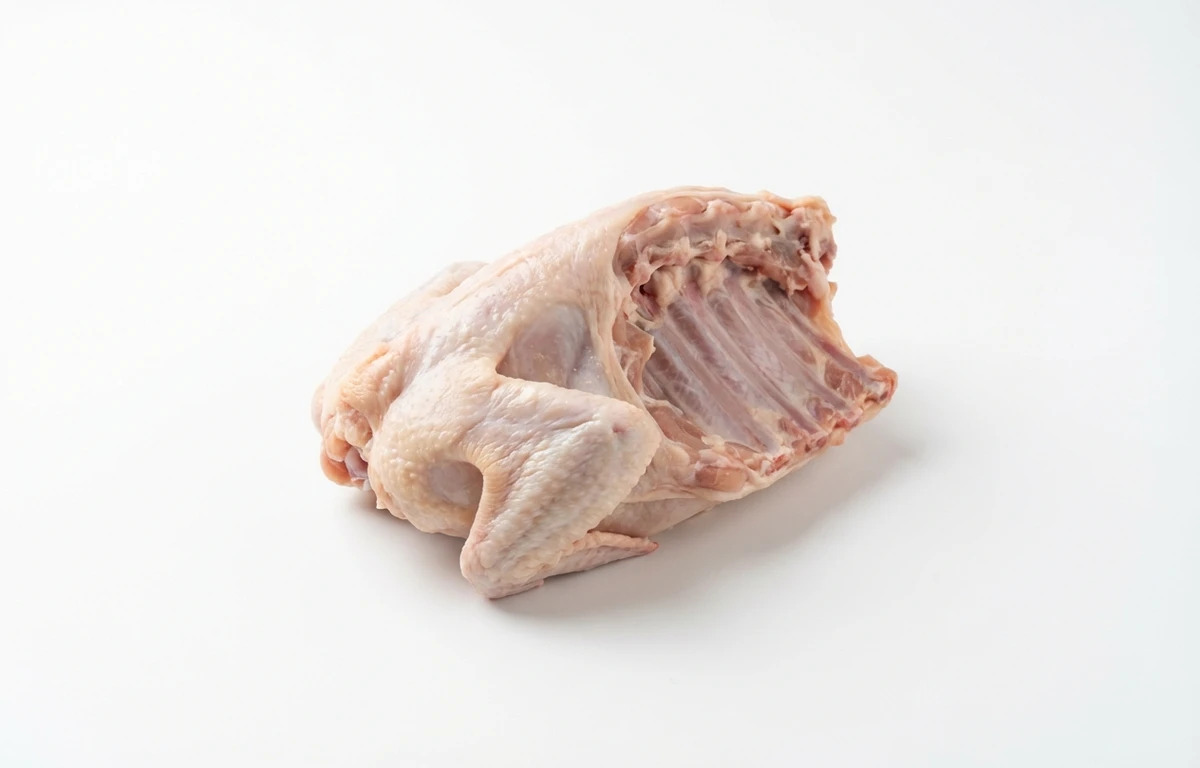
raw chicken back.
VegetarianVeganGluten-freeDairy-freeNut-freePeanut-freeSoy-freeEgg-freeShellfish-freeHoney-freeAlcohol-free
SERVING
CALORIES
281
PROTEIN
14.1g
CARBS
0g
FAT
24.8g
FIBER
0g
NUTRITION PROFILE · per 100 g
Everything in this ingredient.
MACRONUTRIENTS
Calories281kcal—
Protein14.1g28%
Carbohydrates0g0%
Fiber0g0%
Sugar0g0%
Total fat24.8g32%
Saturated fat7.0g35%
Trans fat0g—
Cholesterol82mg27%
Water60.5g—
MINERALS
Sodium63mg3%
Potassium162mg3%
Calcium12mg1%
Iron1.1mg6%
Magnesium15mg4%
Phosphorus125mg10%
Zinc1.4mg13%
Copper0.06mg7%
Manganese0.02mg1%
Selenium14.5µg26%
VITAMINS
Vitamin A41µg5%
Vitamin C0mg0%
Vitamin D0.10µg1%
Vitamin E0.25mg2%
Vitamin K1.8µg2%
Thiamin (B1)0.05mg4%
Riboflavin (B2)0.14mg11%
Niacin (B3)4.8mg30%
Pantothenic acid (B5)0.80mg16%
Vitamin B60.25mg15%
Folate (B9)5.0µg1%
Vitamin B120.32µg13%
%DV based on a 2,000 cal diet. Source: USDA FoodData Central. A dash in the %DV column means there’s no established Daily Value for that nutrient.
MEASUREMENT CONVERSIONS
How much is what.
1 oz28.4g
1 lb453.6g
1 piece150g
HEALTH BENEFITS
Why eat it.
- ✓Excellent source of natural collagen for joint health
- ✓Rich in minerals like calcium and phosphorus when used for broth
- ✓Provides essential amino acids for muscle repair
- ✓High fat content provides a dense energy source
- ✓Contains B vitamins that support metabolic function
COOKING TIPS
In the kitchen.
- 1Ideal for making rich, gelatinous chicken stock or bone broth
- 2Roast the backs in the oven before boiling to develop a deeper flavor
- 3Simmer on low heat for several hours to extract maximum nutrients from the bones
STORAGE
Keep it fresh.
- Store in the coldest part of the refrigerator at or below 40°F (4°C)
- Use within 1 to 2 days of purchase for maximum freshness
- Freeze in airtight packaging for up to 9 months for long-term storage
FAQ
Frequently asked questions.
How long can I keep raw chicken backs in the fridge?
Raw chicken backs should be used within 1 to 2 days of purchase if kept refrigerated.
Can I freeze raw chicken backs?
Yes, they can be frozen for up to 9 months. Ensure they are wrapped tightly in moisture-proof freezer bags.
What is the best way to use chicken backs?
They are most commonly used to make chicken stock, soup base, or bone broth due to their high bone and skin content.
Should I wash chicken backs before cooking?
No, washing raw poultry can spread bacteria to your sink and kitchen surfaces. Cooking to the proper temperature kills bacteria.
What is a good substitute for chicken backs in a stock recipe?
Chicken necks, wings, or the remaining carcass from a whole roasted chicken are excellent substitutes.
How do I know if the chicken back has gone bad?
Signs of spoilage include a sour or ammonia-like smell, a slimy texture, or a greyish-green color.
Are chicken backs high in fat?
Yes, compared to the breast, chicken backs have a higher proportion of skin and fat, which makes them very flavorful for stocks.
What temperature should chicken be cooked to?
Chicken should always be cooked to a minimum internal temperature of 165°F (74°C) to ensure safety.
Can I eat the meat off the chicken back?
Yes, while there isn't much meat, the small amount found along the spine is very tender and flavorful after simmering.



















