
Poultry1 recipes
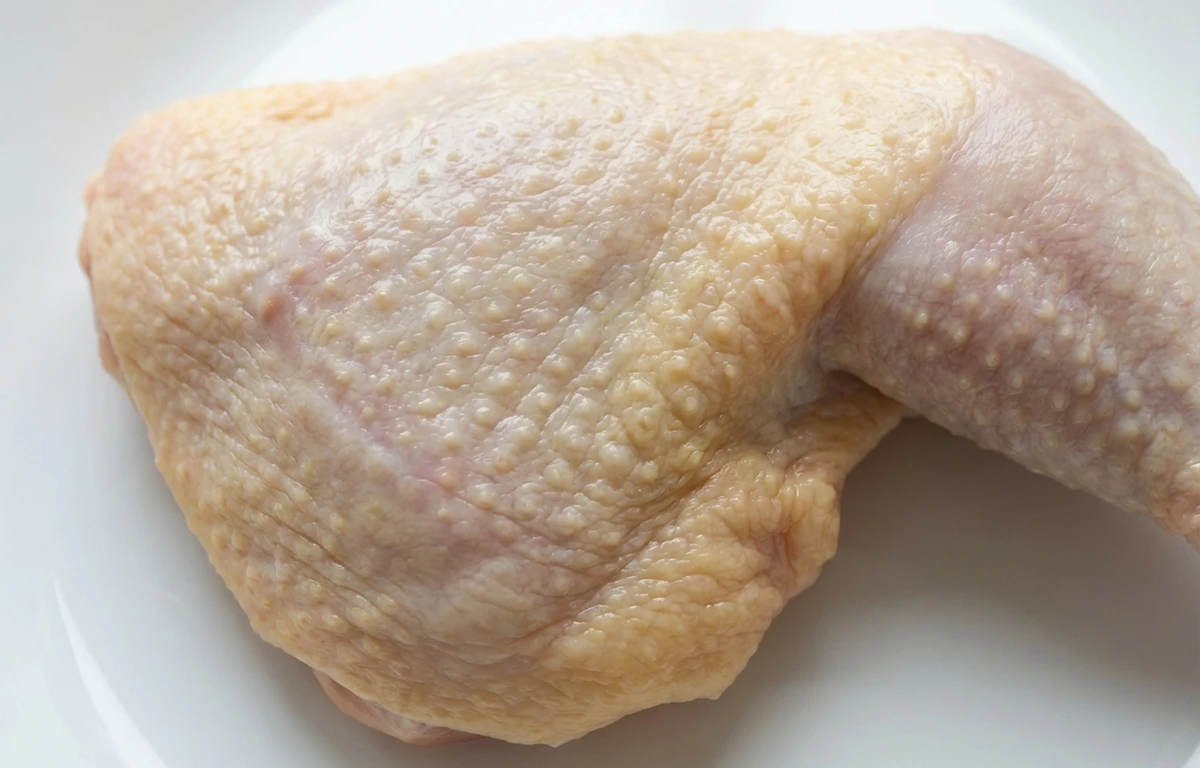
raw chicken skin.
VegetarianVeganGluten-freeDairy-freeNut-freePeanut-freeSoy-freeEgg-freeShellfish-freeHoney-freeAlcohol-free
ALSO KNOWN AS
raw poultry skinuncooked chicken skinmurgh ki khalfresh chicken skin
SERVING
CALORIES
454
PROTEIN
13.3g
CARBS
0g
FAT
44.1g
FIBER
0g
NUTRITION PROFILE · per 100 g
Everything in this ingredient.
MACRONUTRIENTS
Calories454kcal—
Protein13.3g27%
Carbohydrates0g0%
Fiber0g0%
Sugar0g0%
Total fat44.1g57%
Saturated fat12.4g62%
Trans fat0g—
Cholesterol109mg36%
Water42.1g—
MINERALS
Sodium63mg3%
Potassium121mg3%
Calcium11mg1%
Iron0.90mg5%
Magnesium9.0mg2%
Phosphorus98mg8%
Zinc0.80mg7%
Copper0.04mg4%
Manganese0.02mg1%
Selenium14.2µg26%
VITAMINS
Vitamin A41µg5%
Vitamin C0mg0%
Vitamin D0.10µg1%
Vitamin E0.30mg2%
Vitamin K1.8µg2%
Thiamin (B1)0.04mg3%
Riboflavin (B2)0.10mg8%
Niacin (B3)4.2mg26%
Pantothenic acid (B5)0.60mg12%
Vitamin B60.15mg9%
Folate (B9)3.0µg1%
Vitamin B120.30µg13%
%DV based on a 2,000 cal diet. Source: USDA FoodData Central. A dash in the %DV column means there’s no established Daily Value for that nutrient.
MEASUREMENT CONVERSIONS
How much is what.
1 cup218g
1 tablespoon13.8g
1 teaspoon4.6g
1 oz28.4g
1 lb453.6g
1 ml0.9g
1 liter920g
1 piece40g
HEALTH BENEFITS
Why eat it.
- ✓High in monounsaturated fats like oleic acid
- ✓Good source of dietary collagen
- ✓Provides essential selenium for thyroid health
- ✓Concentrated source of energy
- ✓Contains Vitamin B3 (Niacin) for metabolism
COOKING TIPS
In the kitchen.
- 1Render slowly over low heat to create schmaltz (chicken fat) and crispy cracklings.
- 2Pat extremely dry with paper towels before cooking to ensure maximum crispiness.
- 3Use as a natural wrap for lean meats like chicken breast to keep them moist during roasting.
STORAGE
Keep it fresh.
- Store in the coldest part of the refrigerator for no more than 1-2 days.
- Freeze in airtight bags for up to 9 months for long-term storage.
- Keep strictly separated from cooked foods to prevent cross-contamination.
FAQ
Frequently asked questions.
How long does raw chicken skin last in the fridge?
Raw chicken skin is highly perishable and should be used within 1 to 2 days when stored at 40°F (4°C) or below.
Can you freeze raw chicken skin?
Yes, it freezes very well. Wrap it tightly in plastic wrap or place in a freezer bag to prevent freezer burn; it will stay good for up to 9 months.
What should I look for when buying chicken skin?
Look for skin that is creamy white to deep yellow in color. It should not have a strong odor, feel excessively slimy, or have any greyish tint.
Is chicken skin healthy?
While high in calories, most of the fat in chicken skin is heart-healthy monounsaturated fat. However, it should be consumed in moderation due to its high caloric density.
How do you clean raw chicken skin?
Do not wash it under running water as this spreads bacteria. Instead, pat it dry with paper towels and remove any stray feathers with tweezers.
What can I use as a substitute for chicken skin?
Duck skin is the closest substitute. For the fat content in cooking, you can use chicken fat (schmaltz), lard, or a high-smoke point vegetable oil.
What are common uses for chicken skin?
It is commonly rendered for fat (schmaltz), fried into crispy snacks (cracklings or gribenes), or left on the bird to provide moisture and flavor during roasting.
Does chicken skin contain gluten?
No, raw chicken skin is naturally gluten-free. Gluten is only present if it has been breaded or floured.
How do I make chicken skin crispy?
The key is removing moisture. Salt the skin and leave it uncovered in the fridge for a few hours, then cook it starting in a cold pan or a hot oven.
Is chicken skin high in cholesterol?
Yes, it contains about 109mg of cholesterol per 100g, which is significant, so those monitoring cholesterol should limit intake.



















