
Vegetable
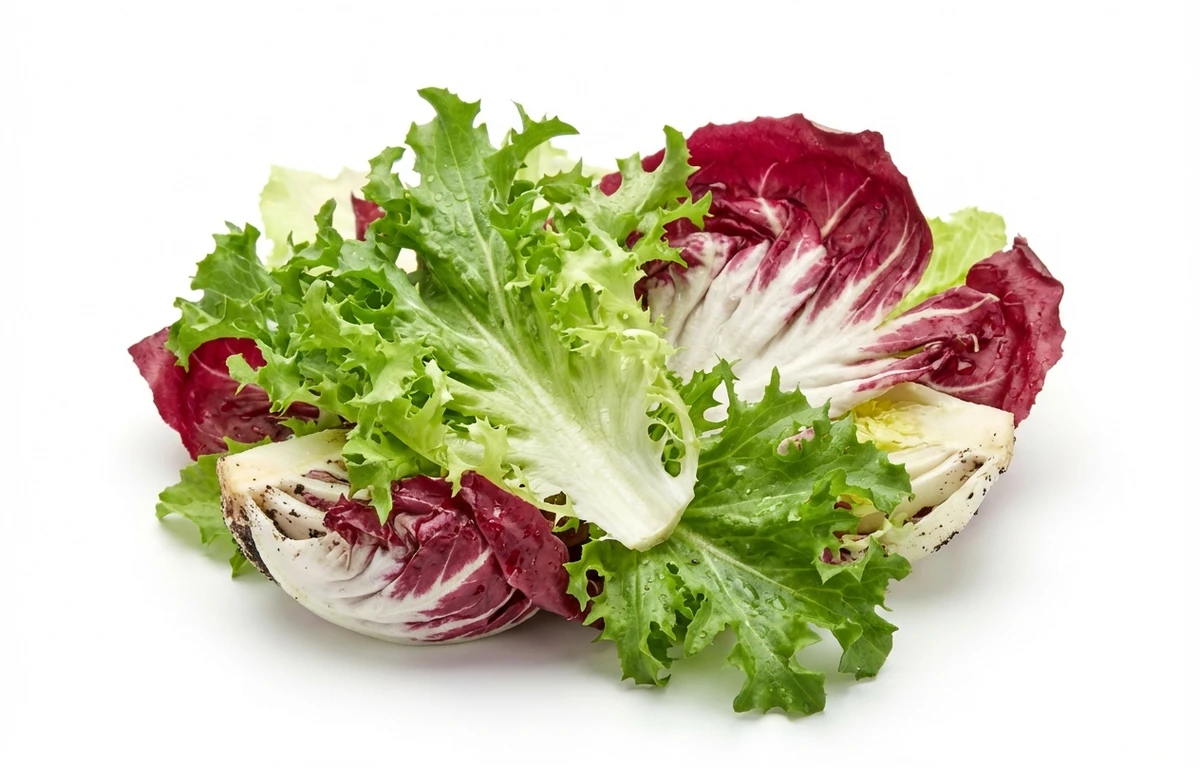
raw chicory greens.
VegetarianVeganGluten-freeDairy-freeNut-freePeanut-freeSoy-freeEgg-freeShellfish-freeHoney-freeAlcohol-freeHalalKosher
ALSO KNOWN AS
curly endiveescarolefrisée
SERVING
CALORIES
23
PROTEIN
1.7g
CARBS
4.7g
FAT
0.30g
FIBER
4.0g
This ingredient is flagged as naturally gluten-free. Per 100 g, it provides 297 µg of vitamin K.
NUTRITION PROFILE · per 100 g
Everything in this ingredient.
MACRONUTRIENTS
Calories23kcal—
Protein1.7g3%
Carbohydrates4.7g2%
Fiber4.0g14%
Sugar0.70g1%
Total fat0.30g0%
Saturated fat0.05g0%
Trans fat0g—
Cholesterol0mg0%
Water92g—
MINERALS
Sodium45mg2%
Potassium420mg9%
Calcium100mg8%
Iron0.90mg5%
Magnesium30mg7%
Phosphorus26mg2%
Zinc0.33mg3%
Copper0.13mg14%
Manganese0.43mg19%
Selenium0.30µg1%
VITAMINS
Vitamin A286µg32%
Vitamin C24mg27%
Vitamin D0µg0%
Vitamin E2.3mg15%
Vitamin K297µg248%
Thiamin (B1)0.06mg5%
Riboflavin (B2)0.10mg8%
Niacin (B3)0.50mg3%
Pantothenic acid (B5)0.29mg6%
Vitamin B60.10mg6%
Folate (B9)110µg28%
Vitamin B120µg0%
%DV based on a 2,000 cal diet. Source: USDA FoodData Central. A dash in the %DV column means there’s no established Daily Value for that nutrient.
MEASUREMENT CONVERSIONS
How much is what.
1 cup45g
1 oz28.4g
1 lb453.6g
HEALTH BENEFITS
Why eat it.
- ✓High fiber content supports healthy digestion and gut microbiome
COOKING TIPS
In the kitchen.
- 1Blanch the greens in boiling water for 2 minutes to significantly reduce their natural bitterness
- 2Sauté with bold flavors like garlic, lemon juice, or red pepper flakes to balance the sharp taste
- 3Massage raw leaves with an acidic dressing (vinegar or citrus) to soften the texture for salads
STORAGE
Keep it fresh.
- Wrap unwashed greens in a damp paper towel and place in a perforated plastic bag
- Store in the refrigerator crisper drawer for 3 to 5 days
- Keep away from ethylene-producing fruits like apples to prevent rapid yellowing
FAQ
Frequently asked questions.
How do I reduce the bitterness of chicory greens?
Bitterness can be reduced by blanching the leaves in boiling water before cooking, or by pairing them with acidic, salty, or fatty ingredients like lemon, parmesan, or olive oil.
Can chicory greens be eaten raw?
Yes, they are often used raw in salads, particularly the younger, more tender leaves. Frisée and escarole are common raw varieties.
What is a good substitute for chicory greens?
Dandelion greens, radicchio, or Belgian endive are the best substitutes due to their similar bitter profile. For a milder option, use kale or mustard greens.
How do I select the best chicory greens at the market?
Look for crisp, bright green leaves without any signs of wilting, yellowing, or slimy brown spots on the stems.
Can you freeze chicory greens?
Yes, but they must be blanched first. Squeeze out excess moisture after blanching and store in an airtight bag for up to 6 months; they are best used in cooked dishes after freezing.
Are chicory greens the same as chicory root?
They come from the same plant family, but the greens are the leafy foliage used as a vegetable, while the root is often roasted and ground as a coffee substitute.
How should I clean chicory greens?
Submerge the leaves in a large bowl of cold water, swish them around to let grit sink to the bottom, then lift the greens out and pat dry or use a salad spinner.
What are the main vitamins found in chicory greens?
They are exceptionally high in Vitamin K, Vitamin A (as beta-carotene), and Vitamin C, along with significant amounts of folate (B9).



















