
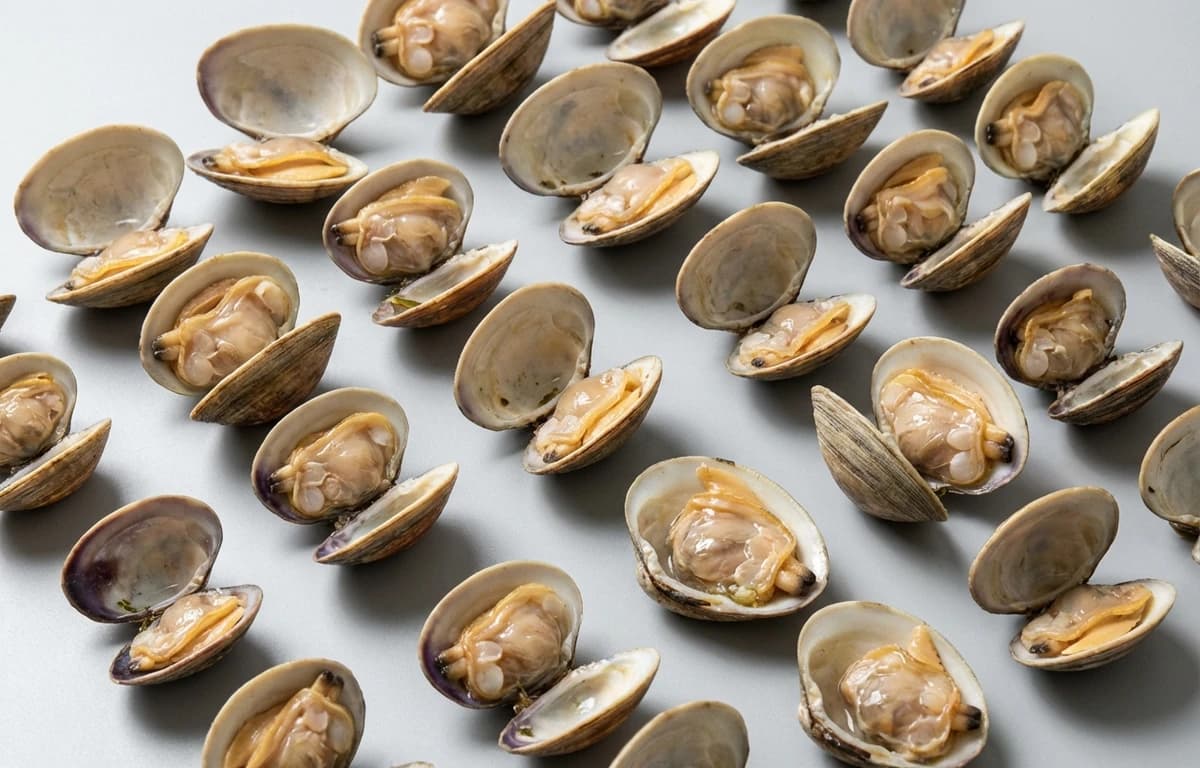
raw clam
Also known as: clam
Loading...
Also known as: clam
Per 100g
Nutrition data source: USDA FoodData Central
Common measurement equivalents in grams
Yes, raw clams are exceptionally nutrient-dense. They are one of the best natural sources of Vitamin B12 for nerve health and are packed with iron to support energy levels and prevent anemia.
Raw clams provide approximately 14.67g of high-quality lean protein per 100g serving. This makes them an excellent low-calorie option for muscle building and repair.
Clams are very weight-loss friendly as they contain only 86 calories per 100g. Their high protein content helps promote satiety, while their low fat content (less than 1g) keeps overall calorie intake low.
Yes, clams are keto-friendly. While they contain a small amount of carbohydrates (3.57g per 100g), they are low enough to fit into most ketogenic and low-carb diets when consumed in moderation.
While raw clams are a delicacy, they carry a risk of foodborne illnesses like Vibrio bacteria. It is safest to cook them to an internal temperature of 145°F, especially for children, the elderly, or those with weakened immune systems.
Fresh, live clams should have tightly closed shells. If a shell is slightly open, tap it; if it doesn't snap shut immediately, the clam is dead and should be discarded. They should also smell like the fresh ocean, not 'fishy' or like ammonia.
Scrub the shells under cold running water to remove debris. To remove internal sand, soak them in a bowl of cool salted water for 20-30 minutes, which encourages the clams to 'purge' or spit out any grit.
raw clam is a versatile ingredient found in cuisines around the world. With 86 calories per 100g and 14.67 grams of protein, it's a nutritious addition to many dishes.
Explore more ingredients in the seafood category with complete nutrition information.
View all seafood →Store live clams in the refrigerator in a bowl covered with a damp cloth to keep them moist. Never store them in an airtight container or submerged in fresh water, as they are living organisms that need to breathe.
In their natural raw state, clams are 100% gluten-free. However, be cautious with prepared dishes like clam chowder or fried clams, as these often contain flour or breading that contains gluten.
Yes, clams are a good source of heart-healthy omega-3 fatty acids. These essential fats help reduce inflammation and support both cardiovascular and brain health.