
Fruit
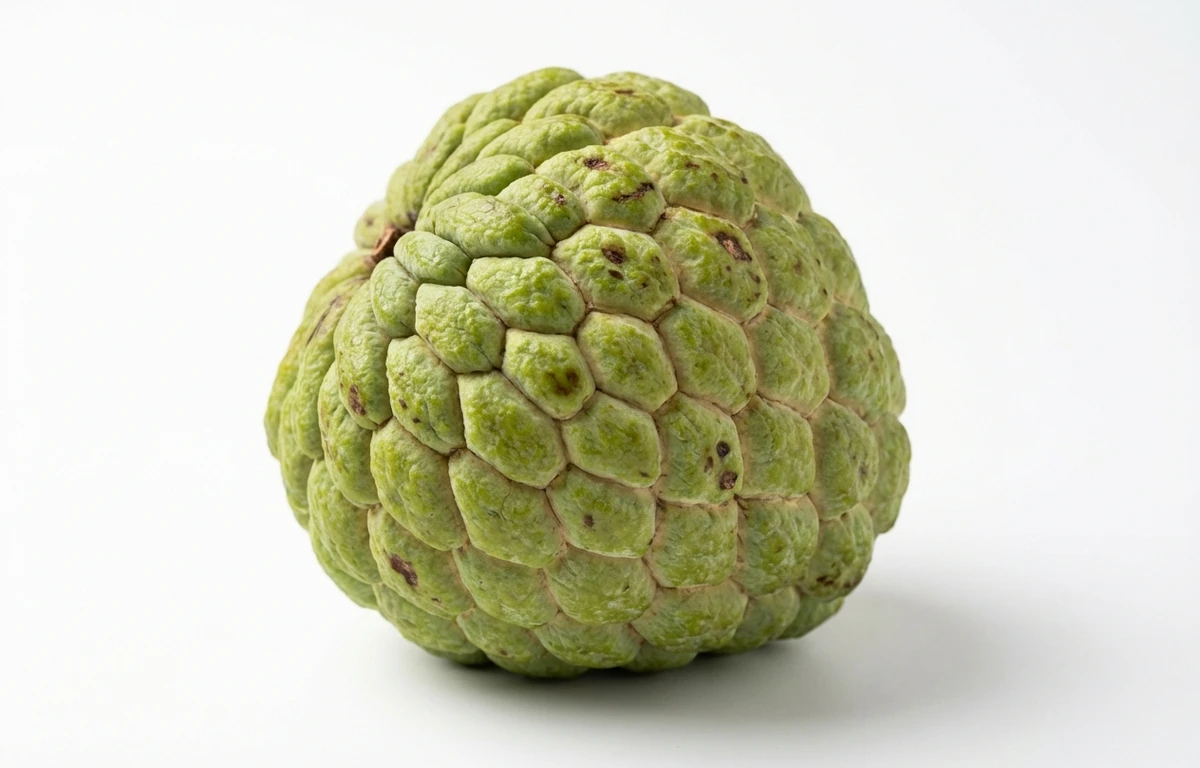
raw custard-apple.
VegetarianVeganGluten-freeDairy-freeNut-freePeanut-freeSoy-freeEgg-freeShellfish-freeHoney-freeAlcohol-free
ALSO KNOWN AS
raw sugar-appleraw sitaphalraw sweetsopraw sharifa
SERVING
CALORIES
94
PROTEIN
2.1g
CARBS
23.6g
FAT
0.29g
FIBER
4.4g
NUTRITION PROFILE · per 100 g
Everything in this ingredient.
MACRONUTRIENTS
Calories94kcal—
Protein2.1g4%
Carbohydrates23.6g9%
Fiber4.4g16%
Sugar18.1g36%
Total fat0.29g0%
Saturated fat0.07g0%
Trans fat0g—
Cholesterol0mg0%
Water73.2g—
MINERALS
Sodium9.0mg0%
Potassium247mg5%
Calcium24mg2%
Iron0.60mg3%
Magnesium21mg5%
Phosphorus32mg3%
Zinc0.10mg1%
Copper0.07mg8%
Manganese0.09mg4%
Selenium0.60µg1%
VITAMINS
Vitamin A0µg0%
Vitamin C36.3mg40%
Vitamin D0µg0%
Vitamin E0mg0%
Vitamin K0µg0%
Thiamin (B1)0.11mg9%
Riboflavin (B2)0.11mg8%
Niacin (B3)0.88mg6%
Pantothenic acid (B5)0.23mg5%
Vitamin B60.20mg12%
Folate (B9)14µg4%
Vitamin B120µg0%
%DV based on a 2,000 cal diet. Source: USDA FoodData Central. A dash in the %DV column means there’s no established Daily Value for that nutrient.
MEASUREMENT CONVERSIONS
How much is what.
1 cup160g
1 oz28.4g
1 lb453.6g
1 piece180g
HEALTH BENEFITS
Why eat it.
- ✓High in Vitamin C which boosts immunity and skin health
- ✓Rich in magnesium which helps maintain heart health
- ✓Contains dietary fiber that aids in digestion and prevents constipation
- ✓Good source of potassium which helps regulate blood pressure
- ✓Contains antioxidants like lutein that support eye health
COOKING TIPS
In the kitchen.
- 1Always remove the black seeds before consuming as they are toxic if ingested
- 2The skin is not edible; scoop out the creamy white pulp with a spoon
- 3Best enjoyed raw or blended into smoothies, ice creams, and milkshakes
STORAGE
Keep it fresh.
- Keep unripe fruit at room temperature until it becomes soft to the touch
- Store ripe custard-apples in the refrigerator for up to 2-3 days
- Do not freeze the whole fruit; only freeze the deseeded pulp if necessary
FAQ
Frequently asked questions.
How do I know if a custard-apple is ripe?
A ripe custard-apple will feel soft when gently pressed and the skin may show slight separation between the bumps, revealing a pale yellow or white color.
Are custard-apple seeds edible?
No, the seeds are toxic and should never be eaten or crushed. Always discard them carefully.
Can I eat the skin of a custard-apple?
No, the skin is thick, bitter, and inedible. Only the soft, white fleshy pulp inside is consumed.
What is the best way to store a ripe custard-apple?
Once ripe, store it in the refrigerator in a plastic bag or container to prevent it from over-ripening too quickly. It will last 2-3 days.
What can I use as a substitute for custard-apple?
Cherimoya or Atemoya are the closest substitutes. In some recipes, a very ripe pear or a blend of banana and pineapple can mimic the texture.
Is custard-apple high in sugar?
Yes, custard-apples are relatively high in natural sugars compared to other fruits, providing a quick energy boost.
How do I remove the seeds easily?
The easiest way is to scoop the pulp into a bowl and use a fork to gently pull the seeds away, or press the pulp through a coarse sieve.
Can custard-apple be cooked?
It is rarely cooked as heat can change its delicate flavor and texture. It is almost exclusively used in raw preparations or added to warm desserts at the very end.
Is custard-apple good for weight loss?
While it contains fiber, it is also calorie-dense and high in sugar, so it should be consumed in moderation as part of a weight loss diet.



















