
Other
raw defatted soy meal.
VegetarianVeganGluten-freeDairy-freeNut-freePeanut-freeSoy-freeEgg-freeShellfish-freeHoney-freeAlcohol-free
ALSO KNOWN AS
soy meal
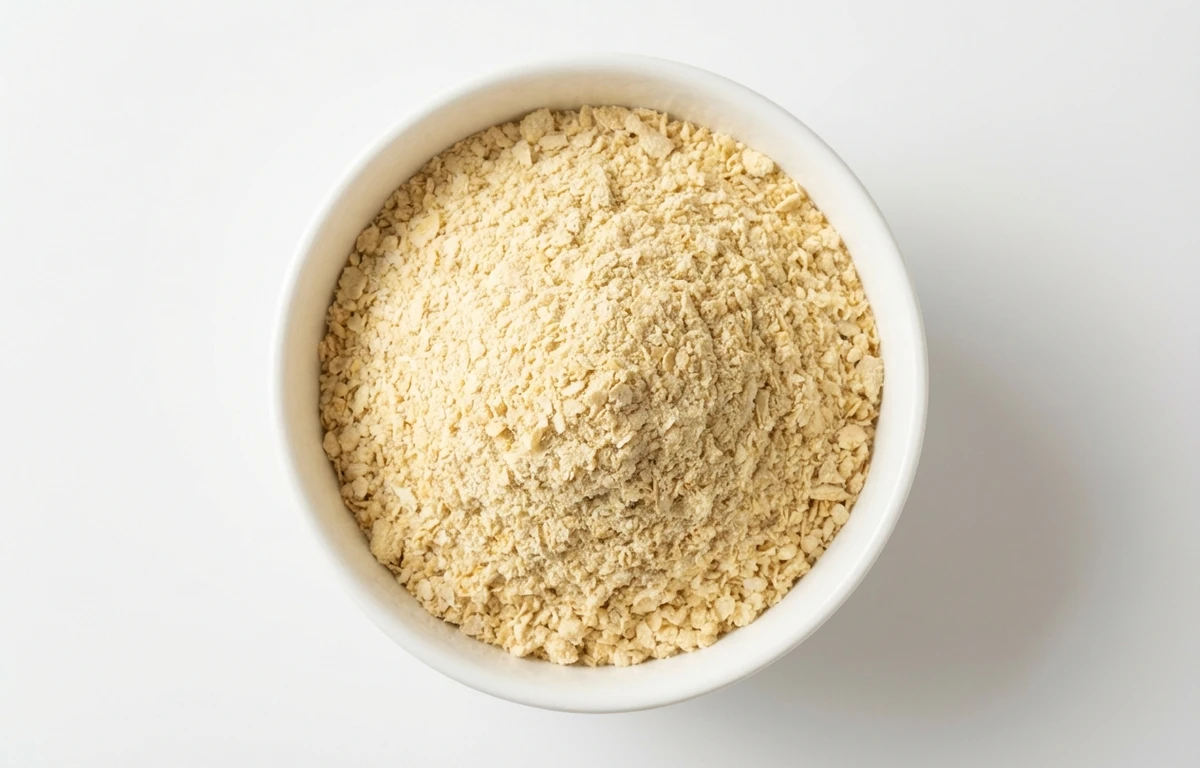
SERVING
CALORIES
329
PROTEIN
47g
CARBS
34g
FAT
1.2g
FIBER
17.5g
This ingredient is flagged as naturally gluten-free. Per 100 g, it provides 0.50 µg of vitamin K.
NUTRITION PROFILE · per 100 g
Everything in this ingredient.
MACRONUTRIENTS
Calories329kcal—
Protein47g94%
Carbohydrates34g12%
Fiber17.5g63%
Sugar8.0g16%
Total fat1.2g2%
Saturated fat0.20g1%
Trans fat0g—
Cholesterol0mg0%
Water8.5g—
MINERALS
Sodium20mg1%
Potassium2100mg45%
Calcium241mg19%
Iron9.2mg51%
Magnesium290mg69%
Phosphorus670mg54%
Zinc4.8mg44%
Copper1.5mg167%
Manganese3.0mg130%
Selenium0.80µg1%
VITAMINS
Vitamin A4.0µg0%
Vitamin C0mg0%
Vitamin D0µg0%
Vitamin E0.10mg1%
Vitamin K0.50µg0%
Thiamin (B1)0.70mg58%
Riboflavin (B2)0.30mg23%
Niacin (B3)2.6mg16%
Pantothenic acid (B5)2.0mg40%
Vitamin B60.60mg35%
Folate (B9)300µg75%
Vitamin B120µg0%
%DV based on a 2,000 cal diet. Source: USDA FoodData Central. A dash in the %DV column means there’s no established Daily Value for that nutrient.
MEASUREMENT CONVERSIONS
How much is what.
1 cup122g
1 tablespoon7.6g
1 teaspoon2.5g
1 ml0.5g
1 liter508.3g
HEALTH BENEFITS
Why eat it.
- ✓Excellent source of high-quality plant-based protein, supporting muscle growth and repair.
- ✓Low in fat and cholesterol-free, contributing to cardiovascular health by potentially lowering LDL ('bad') cholesterol levels.
COOKING TIPS
In the kitchen.
- 1Must be cooked thoroughly before consumption to neutralize anti-nutritional factors like trypsin inhibitors.
- 2Rehydrate with water or broth (typically a 1:2 ratio of meal to liquid) to create a texture suitable for veggie burgers or meat extenders.
- 3Can be used as a protein-rich flour substitute or additive in baked goods, but will affect texture and moisture.
- 4Acts as a base ingredient for producing textured vegetable protein (TVP) through extrusion cooking.
STORAGE
Keep it fresh.
- Store in a cool, dry, dark place in an airtight container to prevent moisture absorption and spoilage.
- For long-term storage (over 6 months), consider refrigerating or freezing to maintain freshness and prevent pest infestation.
FAQ
Frequently asked questions.
How much protein is in raw defatted soy meal?
Raw defatted soy meal is exceptionally high in protein, containing approximately 47 grams per 100-gram serving. This makes it one of the most potent plant-based protein sources available for muscle growth and repair.
How do I use raw defatted soy meal in cooking?
It is most commonly used as a high-protein additive in baking, such as in breads, muffins, and cookies. It can also be used to fortify smoothies, cereals, or processed into meat substitutes like soy nuggets and textured vegetable protein (TVP).
Is raw defatted soy meal keto-friendly?
With 34g of carbohydrates per 100g, it is not strictly low-carb, but it can be used in moderation on a keto diet due to its massive protein content. It is often used in small amounts to improve the texture of keto-friendly baked goods.
What does raw defatted soy meal taste like?
It has a very mild, slightly nutty, and earthy flavor. Because the fat has been removed, it lacks the richness of full-fat soy products, allowing it to blend easily into recipes without significantly altering the taste profile.
Is raw defatted soy meal vegan?
Yes, it is 100% plant-based. It is a byproduct of the soybean oil extraction process and is a staple ingredient for vegan and vegetarian diets looking to boost protein intake.
How should I store raw defatted soy meal?
Store it in an airtight container in a cool, dry, and dark place. Because it is defatted, it is less prone to rancidity than full-fat soy flour and can typically last for 6 to 12 months when kept away from moisture.



















