
Vegetable7 recipes
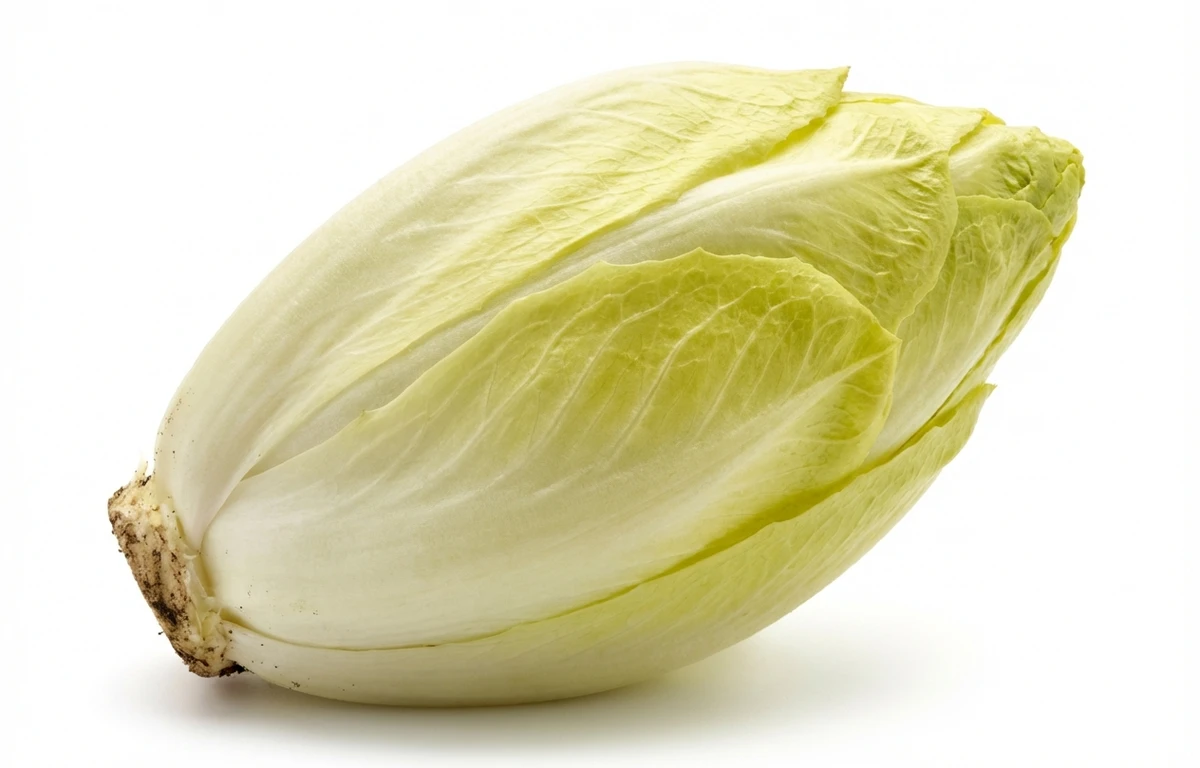
raw endive.
VegetarianVeganGluten-freeDairy-freeNut-freePeanut-freeSoy-freeEgg-freeShellfish-freeHoney-freeAlcohol-freeHalalKosher
ALSO KNOWN AS
raw Belgian endiveraw witloofraw chicoryraw witloof chicoryraw endiviaraw white chicoryraw dutch chicoryraw chicon
SERVING
CALORIES
17
PROTEIN
1.3g
CARBS
3.4g
FAT
0.20g
FIBER
3.1g
This ingredient is flagged as naturally gluten-free. Per 100 g, it provides 231 µg of vitamin K.
NUTRITION PROFILE · per 100 g
Everything in this ingredient.
MACRONUTRIENTS
Calories17kcal—
Protein1.3g3%
Carbohydrates3.4g1%
Fiber3.1g11%
Sugar0.25g1%
Total fat0.20g0%
Saturated fat0.04g0%
Trans fat0g—
Cholesterol0mg0%
Water94.1g—
MINERALS
Sodium22mg1%
Potassium314mg7%
Calcium52mg4%
Iron0.83mg5%
Magnesium15mg4%
Phosphorus28mg2%
Zinc0.16mg1%
Copper0.10mg11%
Manganese0.42mg18%
Selenium0.20µg0%
VITAMINS
Vitamin A108µg12%
Vitamin C6.5mg7%
Vitamin D0µg0%
Vitamin E0.44mg3%
Vitamin K231µg193%
Thiamin (B1)0.06mg5%
Riboflavin (B2)0.07mg5%
Niacin (B3)0.40mg3%
Pantothenic acid (B5)0.90mg18%
Vitamin B60.02mg1%
Folate (B9)142µg36%
Vitamin B120µg0%
%DV based on a 2,000 cal diet. Source: USDA FoodData Central. A dash in the %DV column means there’s no established Daily Value for that nutrient.
MEASUREMENT CONVERSIONS
How much is what.
1 cup50g
1 oz28.4g
1 lb453.6g
1 piece150g
HEALTH BENEFITS
Why eat it.
- ✓High in folate which supports healthy cell growth
- ✓Rich in fiber to aid digestive regularity
COOKING TIPS
In the kitchen.
- 1To reduce bitterness, remove the small cone-shaped core at the base of the head
- 2Use raw leaves as sturdy, low-carb 'boats' or cups for appetizers and dips
- 3If the flavor is too sharp, soak sliced endive in cold water for 15 minutes before serving
STORAGE
Keep it fresh.
- Wrap in a damp paper towel and store in a plastic bag in the refrigerator crisper drawer
- Keep endives in the dark; exposure to light increases bitterness and turns them green
- Use within 3 to 5 days for optimal freshness and crispness
FAQ
Frequently asked questions.
How long does raw endive last in the fridge?
When stored properly in a damp paper towel and plastic bag, raw endive typically lasts 3 to 5 days.
How do I pick the best endive at the store?
Look for heads that are firm, heavy for their size, and have tightly packed leaves. The tips should be pale yellow; avoid those with green or brown edges.
What can I use as a substitute for endive?
Radicchio, escarole, or romaine hearts are the best substitutes for raw endive in salads or as scoops.
Is endive bitter?
Yes, endive has a naturally bitter, peppery flavor. The bitterness is most concentrated in the core and increases with exposure to light.
Can you freeze raw endive?
Freezing raw endive is not recommended as it has a high water content and will become mushy and lose its crisp texture upon thawing.
How do you prepare endive for a salad?
Trim the bottom half-inch of the root end, separate the leaves, and rinse them under cold water. Pat dry before using.
Is endive high in vitamins?
Yes, it is particularly high in Vitamin K, Vitamin A, and Folate (Vitamin B9).
What are common dishes using raw endive?
It is commonly used in Waldorf salads, as appetizer 'boats' filled with goat cheese or tuna, or simply sliced in mixed green salads.
Is endive the same as chicory?
Endive is a member of the chicory family. In some regions, 'endive' refers to what others call 'chicory' and vice versa, but Belgian endive is the specific torpedo-shaped variety.
RECIPES
Cook with raw endive.
7 recipes · sorted by what’s quick
RELATED GUIDES



















